




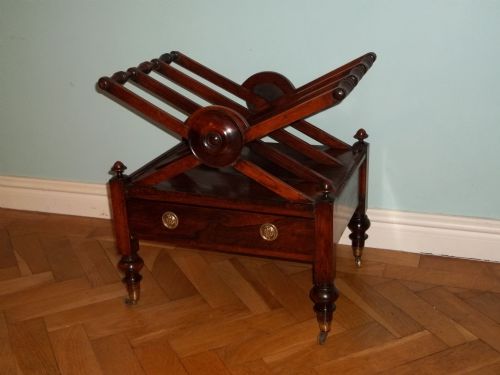


Victorian Music Rack Drawer
A victorian music rack drawer organises folios and periodicals with a fitted base compartment, bringing traditional craftsmanship into daily use.
Victorian Music Rack Drawer
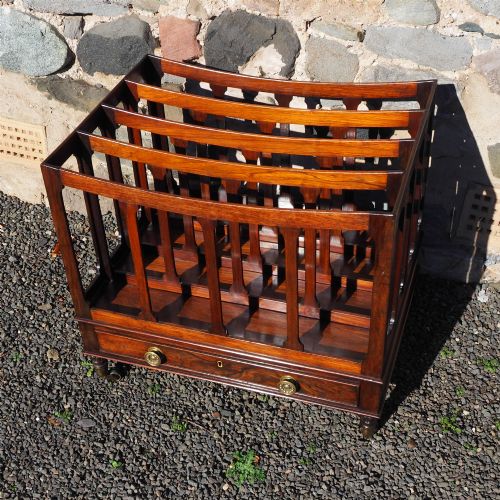
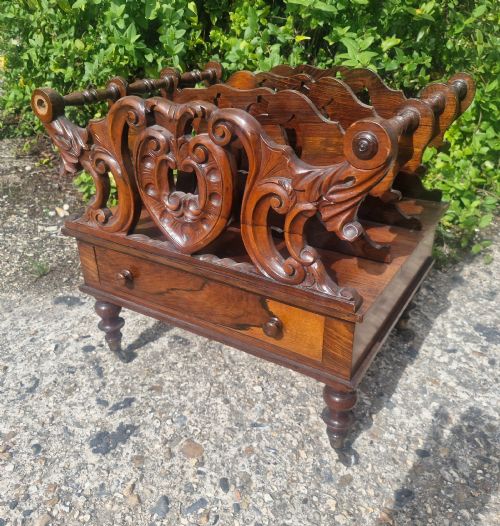
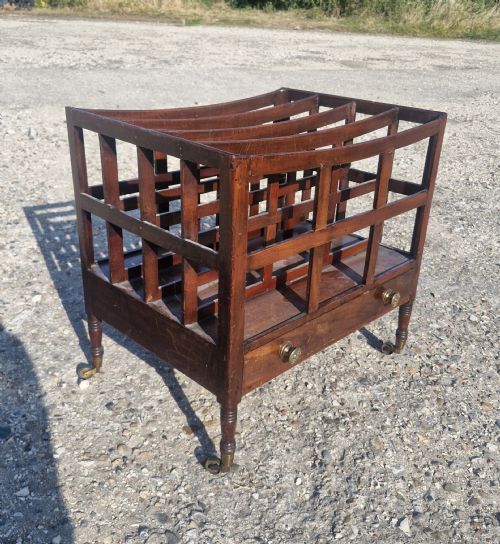
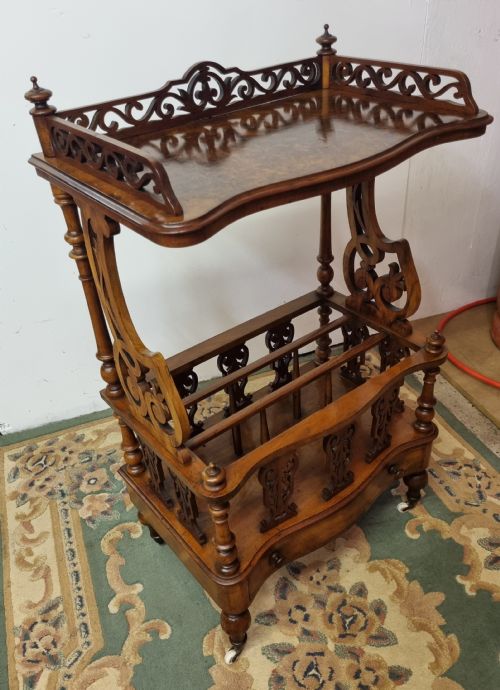
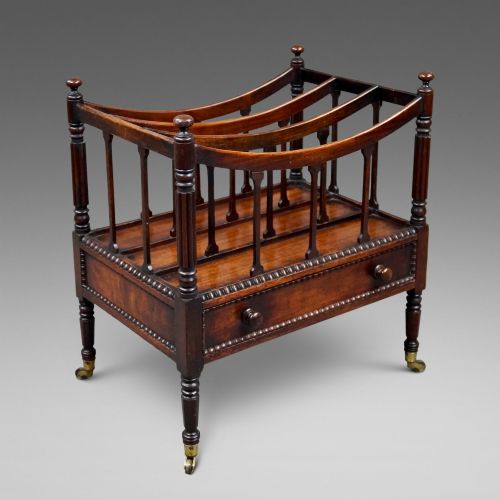
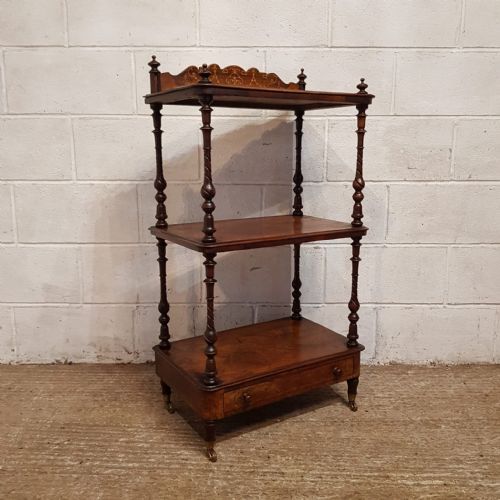
When searching for a victorian music rack drawer, collectors encounter multiple forms including canterburys, magazine racks, music stands, and whatnots. These pieces serve to hold sheets, books, and papers close to a piano or in a parlour.
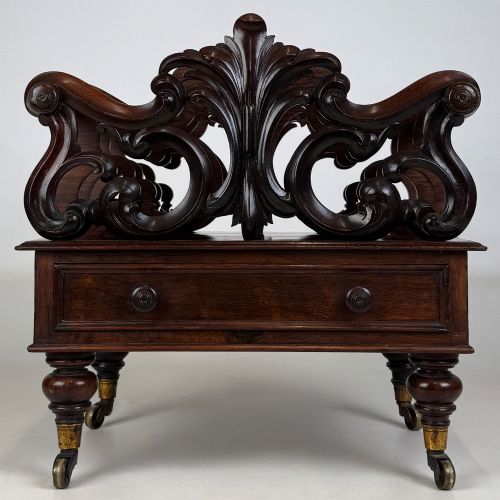
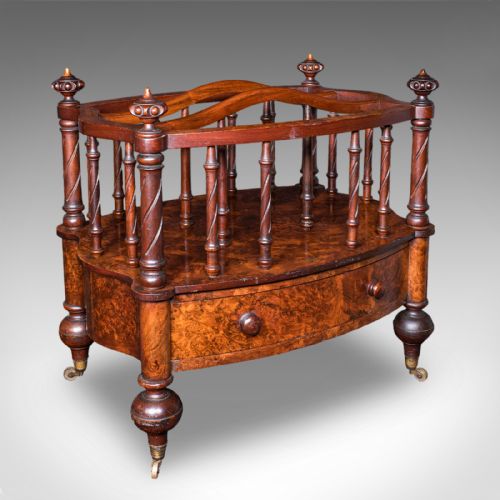
The dominant examples found here are mahogany, rosewood, and burr walnut canterburys, frequently featuring an integrated lower drawer for smaller items.
Origins span the nineteenth century, encompassing Regency, William IV, Victorian, and Edwardian eras, with many items displaying distinct turned supports or fretwork divisions.
Materials and Construction
Cabinetmakers utilised dense timbers such as mahogany, rosewood, and burr walnut, often highlighting rich grain patterns across flat surfaces and drawer fronts.
Structural details frequently incorporate turned brass castors, ebony inlay, and intricate pierced fretwork or scroll divisions to separate the storage compartments.
Victorian Music Rack Drawer Retail Price Guide 2026
Typical asking prices for victorian music rack drawer among the pieces listed under this phrase on Sellingantiques today, from the lower quarter to the upper quarter. They describe what is for sale here now, not the wider market.
Listings feature pieces spanning the Regency, William IV, Victorian, and Edwardian periods, constructed in mahogany, rosewood, and burr walnut.
Judging Quality and Execution
Superior examples display precise joinery in the compartment dividers and smooth operation within the integrated drawer mechanisms.
The choice of veneer, such as figured walnut or rosewood, combined with delicate details like serpentine shapes or ebony stringing, separates standard items from finer cabinetwork.
Edwards and Roberts·Howard and Sons·Shoolbred
The Victorian Music Rack Drawer Glossary
- Canterbury
- A low stand with divisions for holding sheet music, books, or periodicals, usually incorporating a drawer beneath.
- Whatnot
- An open set of multi-tiered shelves used for displaying ornaments or holding books, sometimes combined with a canterbury base.
- Fretwork
- Ornamental work consisting of interlaced or perforated patterns cut into wood, often seen on the partitions of these stands.
- Serpentine
- A curved line or edge shaped like a horizontal 'S', appearing on the outlines of tabletops and shelves.
Victorian Music Rack Drawer: Frequently Asked Questions
What is a Canterbury?
A Canterbury is a low stand designed with upright partitions to hold music sheets, newspapers, and magazines. Many incorporate a shallow drawer at the base for smaller accessories.
Originally developed in the eighteenth century, these items became staple furnishings in nineteenth-century drawing rooms and parlours.
How do I date these pieces?
Dating relies on timber selection, hardware, and stylistic markers such as Regency curves or Victorian burr walnut veneers. Cabinetmakers of different decades applied distinct decorative accents.
Examining construction methods inside the drawer and the style of the turned feet provides further clues regarding the manufacturing period.
Where were they placed?
These stands sat beside pianos, music cabinets, or seating areas to keep folios and reading material accessible. Their compact footprint suited nineteenth-century domestic spaces.
Today, they function similarly beside contemporary sofas or as occasional tables holding current periodicals.
What is a whatnot combination?
A whatnot combination integrates open display shelves above the traditional music rack or drawer base. This dual purpose provided space for both decorative objects and reading materials.
Such pieces utilise materials like burr walnut and mahogany to match other high-status parlour furniture of the period.