


Victorian Mountain Landscape Art
Victorian mountain landscape art captures dramatic peaks, rugged terrain, and tranquil lochs through the lens of nineteenth-century romanticism.
Victorian Mountain Landscape Art
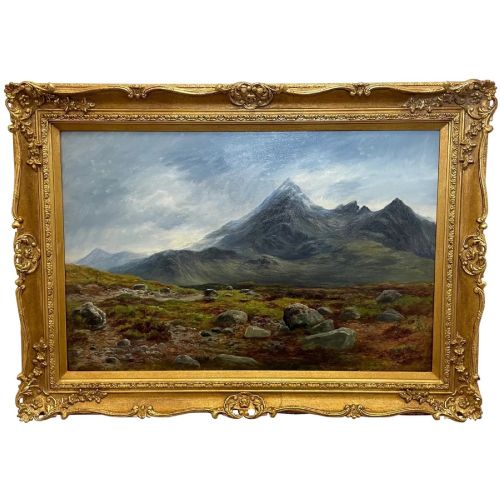
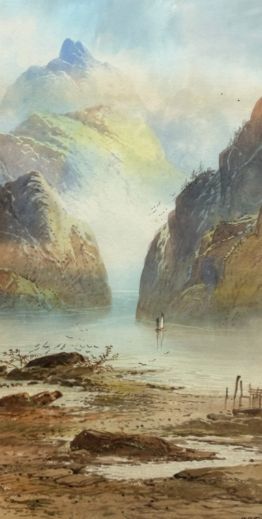
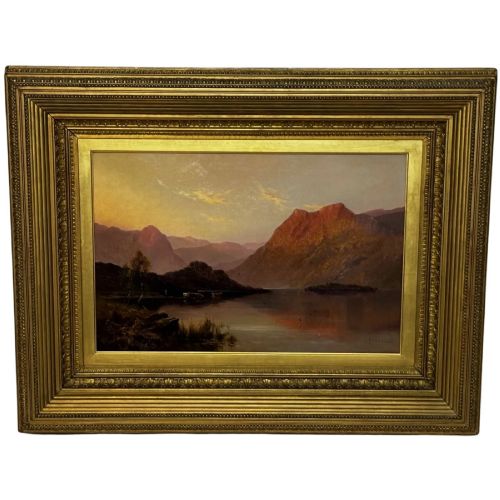
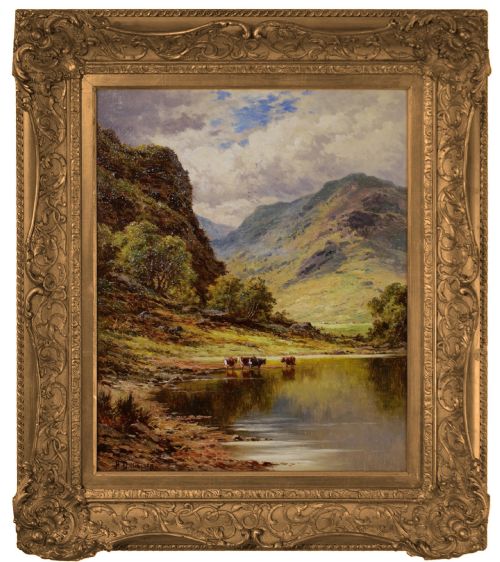
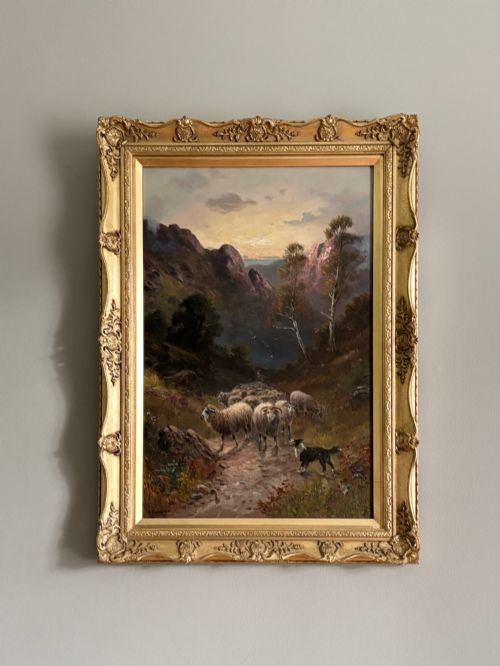
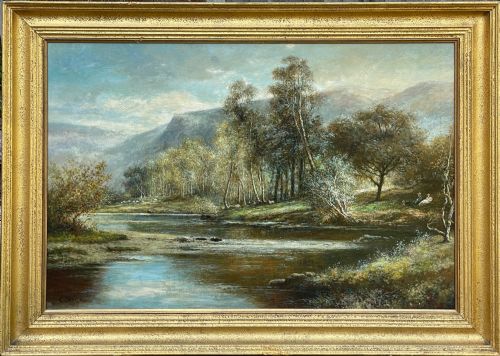
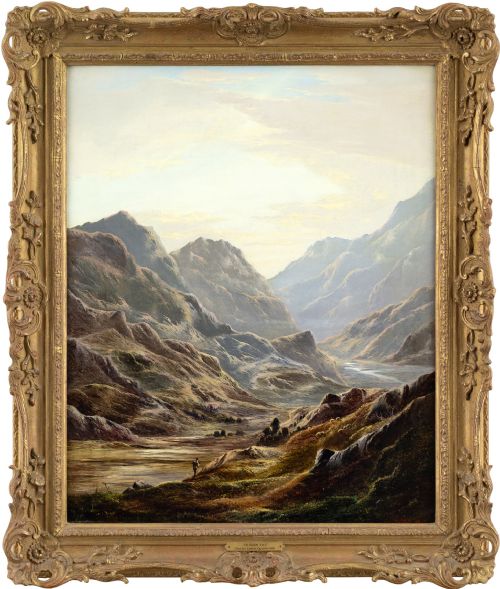
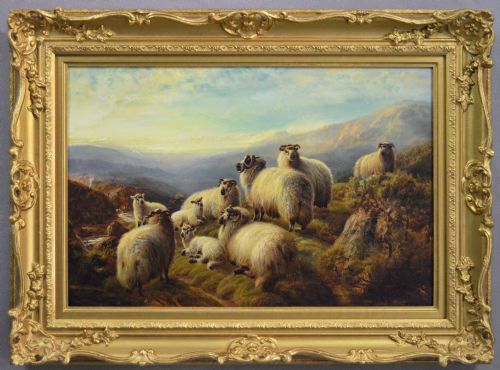
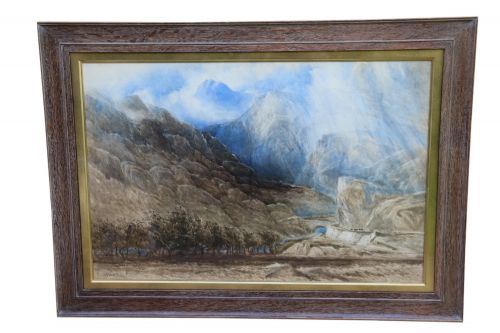
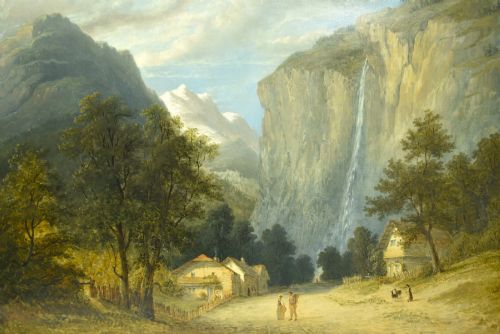
Victorian mountain landscape art encompasses oil paintings and watercolour paintings produced during the nineteenth century and the early decades of the twentieth century. These works depict regional British, Scottish, Welsh, and Alpine scenery, often featuring rivers, waterfalls, and grazing sheep or cattle.
The selections available here range from intimate watercolours on paper to large canvas works housed in giltwood frames. Artists recorded specific topography across Wales, Scotland, Switzerland, and Italy, reflecting a period of intense fascination with wild natural beauty.
How they were made
Makers applied oil paint to canvas or panel, or used watercolour on paper, frequently building layered compositions to convey atmospheric mist and mountainous depth. Many surviving examples retain their original gesso and gilt wood frames.
Techniques combined careful topographical observation with the expressive ideals of nineteenth-century romanticism. Hand-mixed pigments captured shifting daylight on highland terrain and alpine valleys.
Materials recorded across the inventory include oil on canvas, watercolour, gesso, and giltwood framing.
What varies in quality
Quality rests upon the artist's ability to render light, scale, and atmospheric perspective convincingly across rugged terrain. Finer examples balance minute botanical or animal detail with the grand scale of distant peaks.
The handling of the original frame also influences the overall integrity of the piece, as period giltwood and gesso settings complement the depth of the painted landscape.
William Beattie-Brown·William Henry Earp·Alfred Fontville de Breanski Jr·Henry H Parker·Charles Leslie·Robert Watson·Henry Martin Pope·Sidney Richard Percy·Walter J Watson·John Syer·John Douglas Perrett·Karl Herrle·Thomas Lound·Stephen Enoch Hogley·George Turner·Alfred de Breanski Snr·Gustave De Brianski·William Henry Mander
The Victorian Mountain Landscape Art Glossary
- Gesso
- A plaster-like mixture applied to wood frames before gilding. It provides a smooth base for intricate moulded decoration.
- Giltwood
- Timber coated with a thin layer of gold leaf or gold paint. This material was standard for framing nineteenth-century fine art.
- Watercolour
- A painting method where fine pigments are suspended in a water-based solution. Paper serves as the primary ground for these translucent works.
- Romanticism
- An artistic movement emphasising emotion, individualism, and awe of the natural world. Mountain vistas became a central subject for this aesthetic.
Victorian Mountain Landscape Art: Frequently Asked Questions
Where were these mountain views painted?
Artists travelled extensively across the Scottish Highlands, Welsh national parks, and European mountain ranges such as the Alps to record authentic topography.
Many compositions focus on specific lakes, rivers, and mountain passes, including Snowdonia, the Lake District, and Swiss valleys.
How should I display an antique oil painting?
Hang paintings away from direct sunlight and steady heat sources to protect the canvas and the original giltwood frame from damage.
Ensure the wall fixings can support the weight of heavy wooden frames typical of nineteenth-century art.
What is the difference between oil and watercolour?
Oil paintings utilise pigment bound in drying oil applied to canvas or panels, offering rich texture and deep colour layering. Watercolours employ water-soluble pigments on paper, creating lighter and more translucent atmospheric effects.
Are these paintings usually signed?
Many nineteenth-century works feature artist signatures, monograms, or inscriptions detailing the specific geographic location on the reverse or front. Unsigned examples also appear, reflecting studio production or the loss of stretcher bar markings over time.