




Waterfall Canvas Artwork
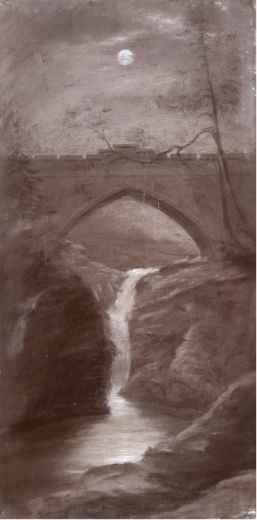
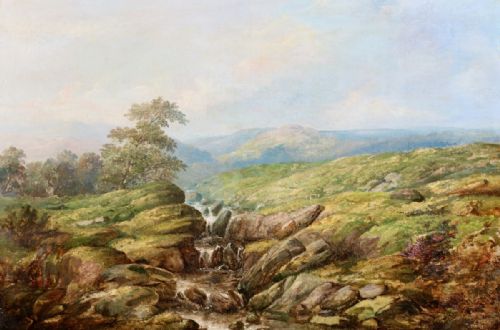
These waterfall canvas artwork pieces capture roaring torrents and quiet cascades from the nineteenth century in oil and charcoal.
Waterfall Canvas Artwork
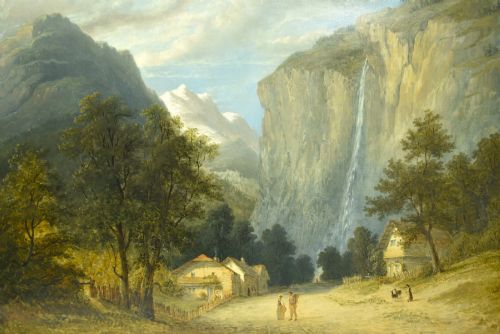
When you search for waterfall canvas artwork, you encounter nineteenth century paintings depicting celebrated cascades in Scotland, Switzerland, North Wales, and North America. These works range from intimate charcoal sketches to large continental school landscapes housed in original gilded wood frames.
You are most likely to meet Victorian oil paintings on canvas that portray natural vistas with notable realism and romanticism. Artists of this era focused on dramatic topographical sites, such as the Staubbach Falls or the Linn of Dee, rendering rushing water amid wooded glens and rocky crags.
How they were made
These works rely primarily on oil on canvas, utilising rich pigments to build depth in the swirling water and dense foliage. Some examples employ charcoal on canvas, capturing tonal shifts through direct line and shadow.
Many of these paintings retain their original gilt and gilded wood frames, constructed from wood and finished with heavy gold leaf to complement the romantic or Victorian aesthetic of the landscape within.
The listings on this site exclusively feature nineteenth century periods, including Victorian, 1890, 1870, 1850, and 1900.
What varies in quality
The distinction between standard works and exceptional examples lies in the precision of brushwork and the handling of atmospheric light. Finer pieces demonstrate careful observation of moving water and landscape geology, whereas simpler compositions rely on formulaic foliage and generalized backgrounds.
The condition and authenticity of the original giltwood frame heavily influence the integrity of the piece. Frames with untouched gilding and period construction elevate the presentation of the canvas significantly compared to later replacements.
Alexandre Le Bihan·Clarence Henry Roe·William Mellor·John Syer junior·Frederick Richard Lee·James Poole·Peter de Wint
The Waterfall Canvas Artwork Glossary
- Oil on Canvas
- A painting medium where pigments suspended in drying oils are applied to a stretched canvas support. This technique allowed artists to achieve rich textures and subtle tonal gradations in landscape scenes.
- Giltwood
- Wood that has been coated with a thin layer of gold leaf or gold paint. This material was widely utilised for nineteenth century picture frames to enhance the visual impact of the artwork.
- Victorian Naturalism
- An artistic approach in the nineteenth century that prioritised detailed and accurate representation of the natural world. Painters working in this style observed flora, rock formations, and flowing water with close fidelity.
- Continental School
- A term used to describe artists active in mainland Europe during the nineteenth century. These painters often shared academic techniques and romantic subject matter distinct from British traditions.
- Charcoal on Canvas
- A drawing medium applied directly to a canvas ground rather than paper. It offers a soft, monochromatic tonal range well suited for atmospheric landscape studies.
Waterfall Canvas Artwork: Frequently Asked Questions
Where were these waterfall scenes painted?
Artists during the nineteenth century travelled widely across Britain, continental Europe, and North America to record famous natural landmarks. Common locations include Swiss alpine falls, Scottish rivers, and Welsh valleys.
These depictions served both as travel records and as dramatic subjects for romantic landscape painting.
Are original frames important for these artworks?
Original gilded wood frames contribute significantly to the historical integrity of nineteenth century paintings. They demonstrate how the maker or contemporary owner intended the piece to be displayed.
Matching the patina of the frame to the age of the canvas helps confirm the overall authenticity of the piece.
How should I care for an oil painting on canvas?
Keep the artwork away from direct sunlight, high humidity, and rapid temperature fluctuations to prevent the canvas from sagging and the oil paint from cracking. Dust the surface gently with a soft, dry brush.
Avoid using liquid cleaners or touching the painted surface directly.