


Victorian Mountain Lake Oil
These Victorian mountain lake oil paintings capture dramatic highland waters and craggy peaks on canvas for the home.
Victorian Mountain Lake Oil
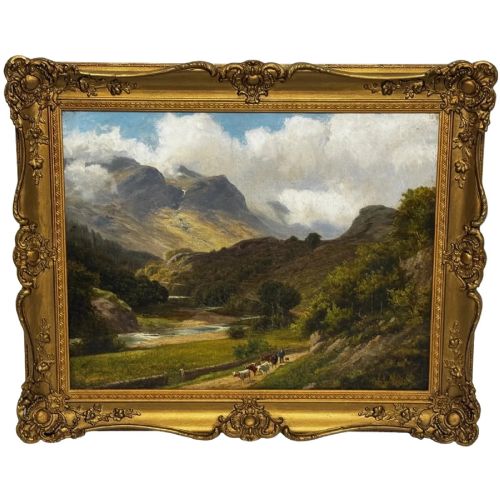
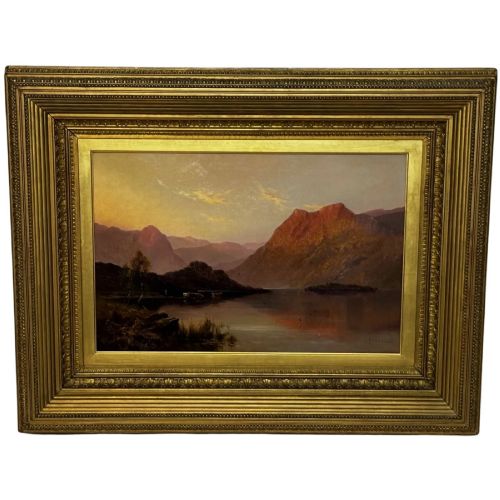
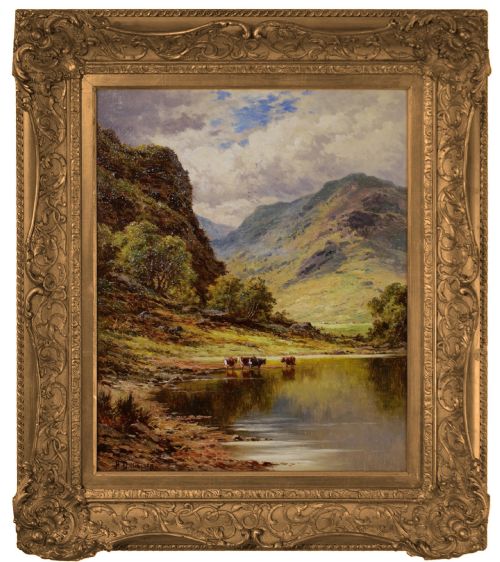
When you search for a Victorian mountain lake oil painting, you encounter nineteenth-century canvases depicting sweeping landscapes from Scotland, Wales, the Lake District, and continental ranges. These works span the Victorian and Edwardian eras, capturing specific locations such as Snowdon, Windermere, and Loch Lubnaig under varying weather conditions. Most pieces present serene or dramatic expanses of water set against towering peaks, often framed in gesso and giltwood.
The compositions reflect dominant aesthetic movements of the period, including Victorian Romanticism, British Realism, and the Italian School. Canvases range from unsigned topographical studies to signed works by recognised painters such as Alfred de Breanski Snr and Benjamin Williams Leader. Buyers meet both grand scale landscape scenes and smaller framed views designed for domestic wall display.
Elements of quality
Quality rests upon the handling of light, atmospheric depth, and topographical precision across the canvas. Superior works capture changing weather, such as passing summer showers or sunrise, with skilled brushwork that distinguishes between rocky strata and soft water.
The execution of the surrounding frame also influences the overall standard of the piece. Hand-finished giltwood and gesso frames with intact moulded detail complement higher-grade canvases, whereas plain or later replacements alter the integrity of the object.
Materials recorded across the inventory include oil paint, canvas, wood, gesso, and gilt.
Alfred Fontville de Breanski Jr·Henry H Parker·John Douglas Perrett·Stephen Enoch Hogley·Alfred de Breanski·Alfred de Breanski Snr·Benjamin Williams Leader·Sidney Richard Percy·Gustave De Breanski·William Mellor·Samuel Hart Turpin·Charles Pettitt
The Victorian Mountain Lake Oil Glossary
- Oil on Canvas
- Pigments bound in a drying oil medium applied directly to a woven fabric support stretched across a wooden frame. This combination provides a durable surface capable of retaining rich colour and textured brushstrokes over centuries.
- Giltwood
- Timber that has been coated with a thin layer of gold leaf or gold paint for decorative effect. It forms the lustrous finish seen on traditional Victorian picture frames.
- Gesso
- A plaster-like mixture applied to wooden frame mouldings as a base for gilding or painting. It allows craftsmen to carve intricate decorative patterns around the perimeter of the canvas.
- Victorian Romanticism
- An artistic movement focusing on emotion, awe, and the sublime power of nature. Paintings in this style emphasise dramatic mountain scenery and atmospheric lighting.
Victorian Mountain Lake Oil: Frequently Asked Questions
How do I date a mountain lake oil painting?
Dating relies on stylistic evidence, artist signatures, framing materials, and inscriptions on the reverse of the canvas or stretcher bars. Nineteenth-century works often display specific technical characteristics in the preparation layers of the cloth.
Contextual clues such as dress codes in staffage figures or period framing techniques further narrow the decade of production. Many pieces carry direct signatures or biographical dates corresponding to the active years of the painter.
Where were these landscape paintings displayed?
These works hung primarily in domestic reception rooms, parlours, and libraries of nineteenth-century homes. Their expansive subject matter brought natural scenery indoors.
Large framed oils served as focal points above mantelpieces or within panelled drawing rooms. Smaller canvases offered versatile wall art options for more intimate residential spaces.
What frames are original to these works?
Original frames typically consist of moulded wood coated in gesso and gilt, designed to complement the aesthetic of the Victorian period. They often show age-related craquelure or minor losses to the plaster ornamentation.
Replacement frames lack the period-specific joinery and finish found on contemporary mountings. Matching the style of the frame to the date of the canvas ensures historical consistency.