





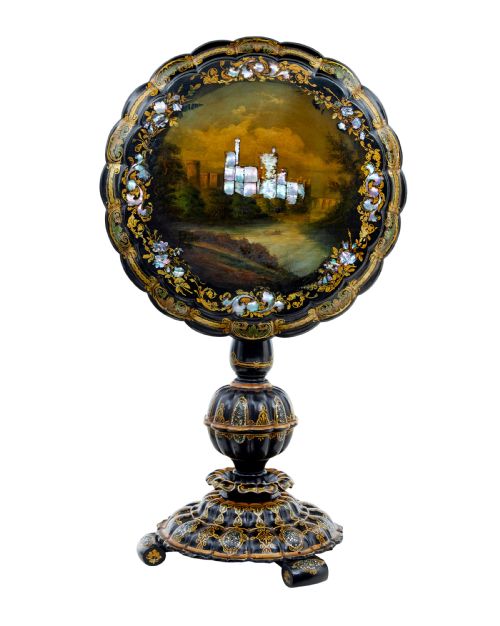


Victorian Mother of Pearl Table
When you search for a victorian mother of pearl table, you are looking for an ornate nineteenth-century surface distinguished by shimmering iridescent shell inlays.
Victorian Mother of Pearl Table
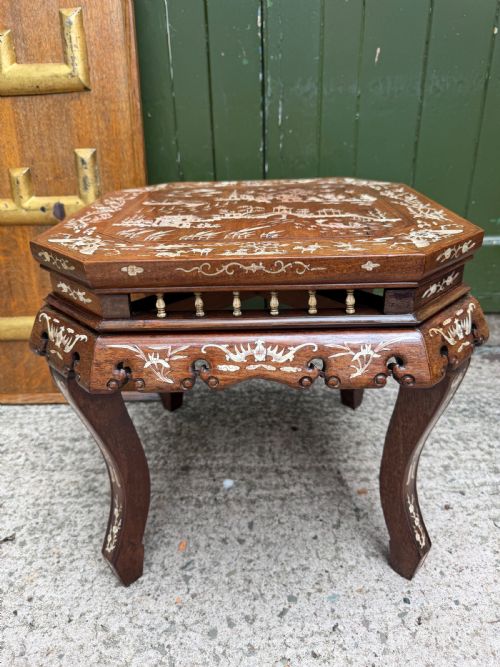
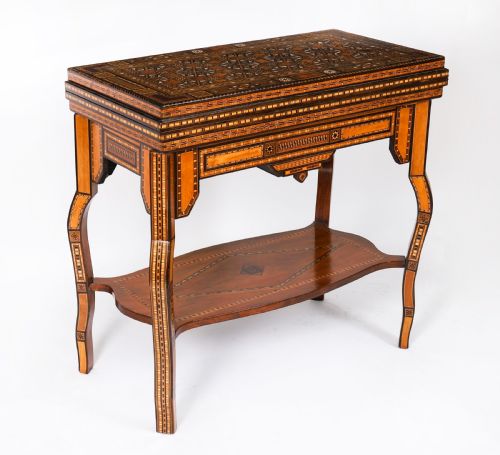
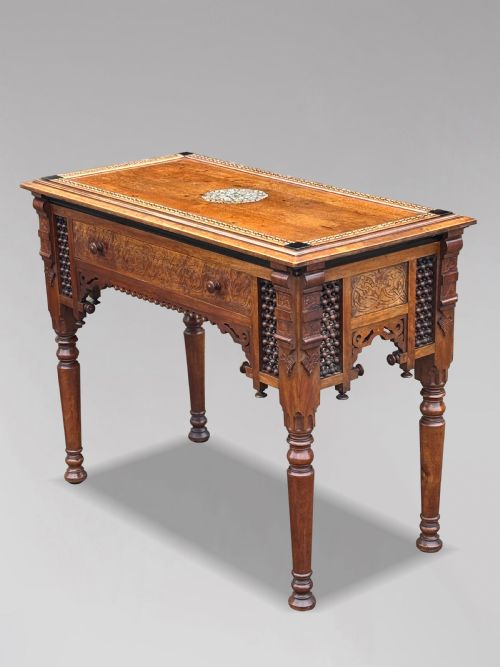
A victorian mother of pearl table appears in several distinct forms across the nineteenth century, most frequently as tilt-top wine tables, occasional tables, and games tables intended for drawing rooms. These pieces bridge British cabinet-making traditions and global influences, encompassing Moorish Revival, Syrian Ottoman, Anglo-Indian, and Aesthetic Movement designs alongside standard Victorian styles.
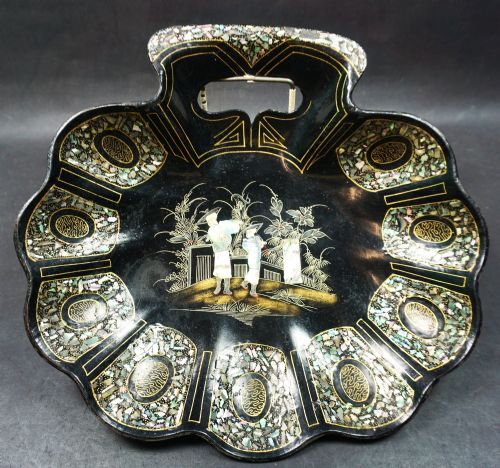
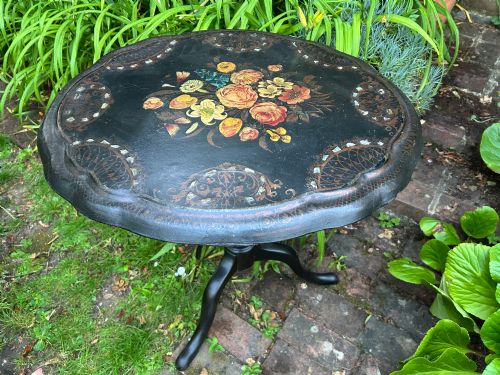
The material vocabulary of these tables spans papier-mâché, ebonised wood, walnut, rosewood, and lacquer. Papier-mâché examples often feature painted decoration combined with shell inlay, whilst wooden frames rely on intricate geometric or floral mosaic patterns built from shell, bone, and brass.
Construction and materials
Makers constructed these tables using solid and veneered timbers such as walnut, rosewood, and coromandel, or moulded papier-mâché for tilt-top surfaces. The structural carcase provided a stable base for complex decorative schemes.
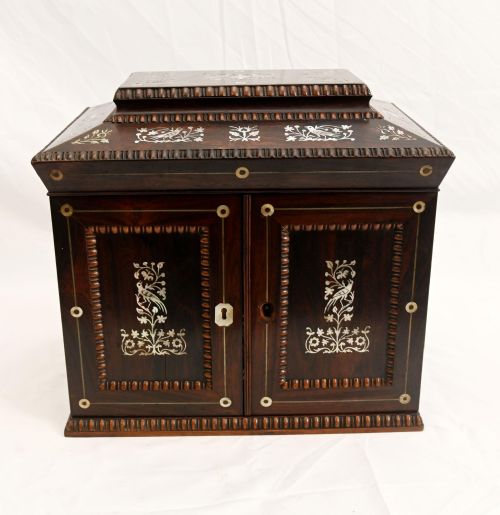
Inlay work relied on thin sheets of mother-of-pearl cut into geometric tiles, floral motifs, or figurative elements, pressed into recesses and secured with adhesive before polishing flush with the surrounding surface.
Victorian Mother of Pearl Table Retail Price Guide 2026
Typical asking prices for victorian mother of pearl table among the pieces listed under this phrase on Sellingantiques today, from the lower quarter to the upper quarter. They describe what is for sale here now, not the wider market.
Some workboxes feature intricate inlaid cockerel designs executed entirely in shimmering shell.
Judging the standard of execution
Quality rests in the precision of the inlay and the integrity of the ground material. Fine examples show tight joints between the mother-of-pearl pieces and the surrounding wood or papier-mâché, with minimal filler.
The artistry of the painted or carved elements alongside the shell work dictates the distinction between standard production pieces and exceptional workshop commissions.
Liberty & Co.·Jennings and Betteridge·Walker and Hall
The Victorian Mother of Pearl Table Glossary
- Mother-of-Pearl
- The iridescent inner layer of certain mollusc shells, used extensively for decorative inlay on nineteenth-century furniture and boxes. It reflects light in shifting tones of pink, green, and silver.
- Papier-mâché
- A composite material made from paper pulp or layers of paper bonded with glue, pressed and dried to form rigid table tops and boxes. It provides a smooth dark ground for painted designs and shell inlay.
- Tilt-Top
- A table mechanism allowing the surface to pivot to a vertical position when not in use, saving space in crowded nineteenth-century interiors. Also referred to as a snap-top table.
- Moorish Revival
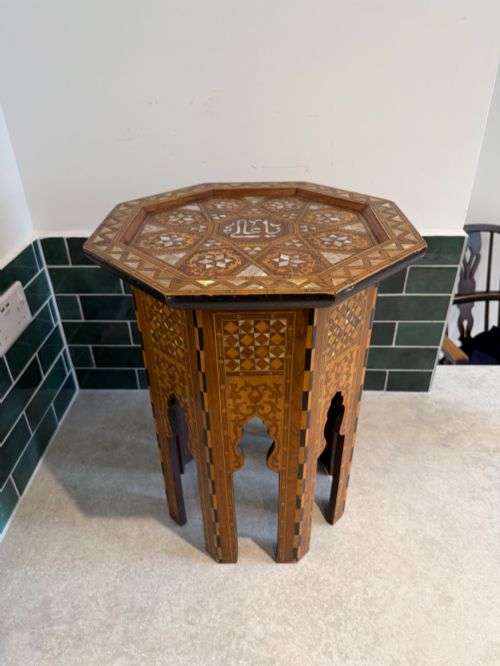
- A nineteenth-century design style incorporating Islamic architectural and decorative motifs, frequently applied to octagonal occasional tables inlaid with mother-of-pearl and bone.
Victorian Mother of Pearl Table: Frequently Asked Questions
How do I identify Moorish style tables?
Moorish style tables typically present an octagonal top with dense geometric inlay work composed of mother-of-pearl, bone, and contrasting woods.
These pieces reflect late nineteenth-century interest in Middle Eastern design, often associated with Liberty & Co. retail output.
What is papier-mâché?
Papier-mâché is a durable composite formed from layers of paper or pulp mixed with binder, then baked and lacquered.
In Victorian furniture, it offered a stable, dark foundation that accepted painted scenes and shimmering mother-of-pearl inlay without warping.
Where were these tables used?
These tables served primarily in Victorian drawing rooms as occasional surfaces for holding small decorative objects, writing materials, or games.
Their decorative surfaces were intended to catch candlelight and demonstrate the refined taste of the household.