



Victorian Mosaic Inlay Box
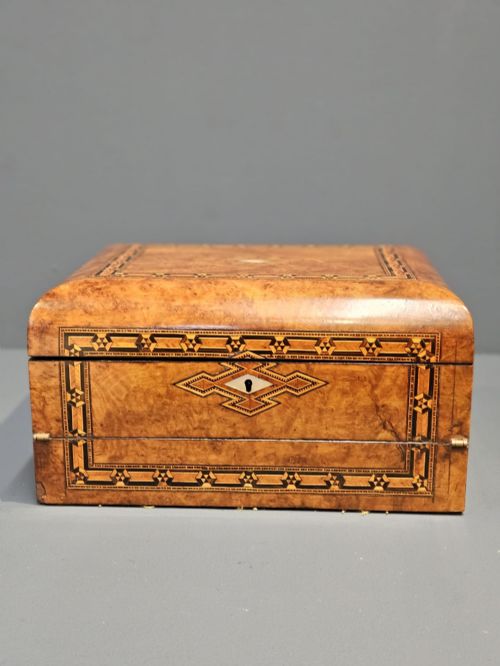
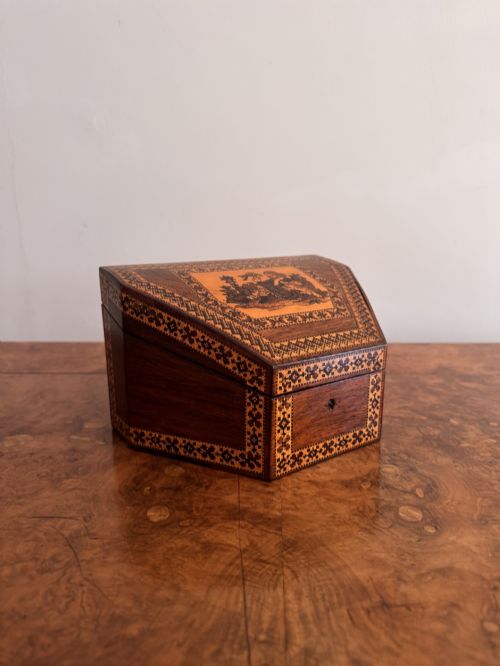
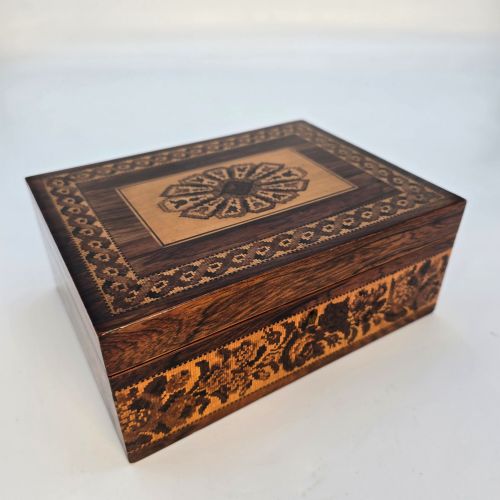
These nineteenth-century boxes display intricate mosaic inlay work across rosewood, walnut, and mixed woods, offering a tangible connection to the detailed craft of the Victorian period.
Victorian Mosaic Inlay Box
A victorian mosaic inlay box serves as a functional container for letters, tea, or jewellery, constructed with small geometric tesserae or stone fragments arranged into pictorial and abstract patterns. The examples appearing most often on this page originate from nineteenth-century English workshops, particularly associated with Tunbridge Wells, alongside select Italian and Anglo-Indian variants.
The forms range from compact trinket boxes and octagonal baskets to larger tea caddies, stationery boxes, and fitted sewing boxes. Rosewood and walnut provide the primary carcases, whilst interior fittings often retain original silk linings, compartments, and bone or brass mounts.
Most pieces date from the mid to late nineteenth century, reflecting the height of domestic decorative arts in Britain and continental Europe. Buyers frequently select these items to bring tactile historical detail and intricate geometric woodwork into a modern room.
Materials and Construction
Tunbridge ware pieces utilise thousands of tiny blocks of naturally coloured woods such as holly, boxwood, and rosewood, glued together in bundles and sliced across the grain to repeat a mosaic motif. Makers applied these mosaic bands as veneers onto solid timber carcases.
Italian examples employ pietra dura techniques, setting polished hardstones like lapis lazuli and marble into mounted ebonised wood or ormolu frames. Anglo-Indian variants incorporate intricate bone and micro-mosaic Sadeli work carved into dense tropical woods.
Victorian Mosaic Inlay Box Retail Price Guide 2026
Typical asking prices for victorian mosaic inlay box among the pieces listed under this phrase on Sellingantiques today, from the lower quarter to the upper quarter. They describe what is for sale here now, not the wider market.
Assessing Quality
Quality rests in the tightness of the mosaic tesserae and the precision of the geometric alignment across the lid and sides. Finer items maintain intact veneers without missing wood blocks or cracked stone panels, preserving the original crispness of the architectural or floral designs.
The sophistication of the internal fittings, such as tiered compartments in sewing boxes or original foil linings in tea caddies, distinguishes standard production from superior workshop output. The choice of base timber, whether richly figured burr walnut or dense rosewood, further elevates the piece.
Edmund Nye·Henry Hollamby
The Victorian Mosaic Inlay Box Glossary
- Tunbridge Ware
- A type of woodwork originating from Kent, featuring mosaic veneers made from differently coloured woods arranged to form pictorial or geometric designs. This technique reached its peak popularity during the Victorian era.
- Pietra Dura
- An Italian method of inlaying cut and polished coloured stones into a base material to create a flat picture or pattern. The term translates from Italian as hard stone.
- Sadeli Mosaic
- A complex form of micro-mosaic woodwork produced in India using minute sections of bone, horn, and metal. These geometric strips form intricate repeating patterns on box exteriors.
- Tessera
- An individual small block of wood or stone used in the composition of a mosaic pattern. Thousands of these components form the detailed lids of nineteenth-century caddies.
- Tea Caddy
- A container designed to store loose tea leaves securely, often featuring internal compartments and a lock. Victorian versions frequently showcase elaborate marquetry or mosaic decoration.
Victorian Mosaic Inlay Box: Frequently Asked Questions
How do I clean a mosaic box?
Dust the exterior gently with a soft, dry brush to prevent moisture from entering the micro-mosaic joints or lifting the delicate wood veneers.
Avoid liquid polishes and commercial cleaners entirely, as they can damage the historic timber and dislodge loose tesserae.
Were these boxes used daily?
Victorian households utilised these containers to store precious items such as stationery, letters, jewellery, and expensive tea leaves. They sat on desks, dressing tables, and parlour sideboards as both functional objects and decorative displays.
Fitted interiors with velvet linings or compartments helped protect fragile personal possessions from dust and handling.
How can I date a Tunbridge box?
Examine the style of the mosaic motifs, the timber used for the carcase, and any internal paper labels or maker signatures. Mid-Victorian examples from the eighteen-fifties and sixties often feature architectural castle designs, while later pieces tend towards floral sprays.
Hardware such as brass hinges and locks can also offer clues regarding the decade of manufacture.
What is the difference between Tunbridge and Pietra Dura?
Tunbridge work relies entirely on tiny, precisely cut blocks of naturally coloured wood assembled into wooden mosaic veneers. This English craft creates intricate wooden pictures and geometric borders.
Pietra Dura involves embedding polished hardstones and marbles into a rigid backing, producing a smooth, stone-based mosaic common in nineteenth-century Italian export items.