

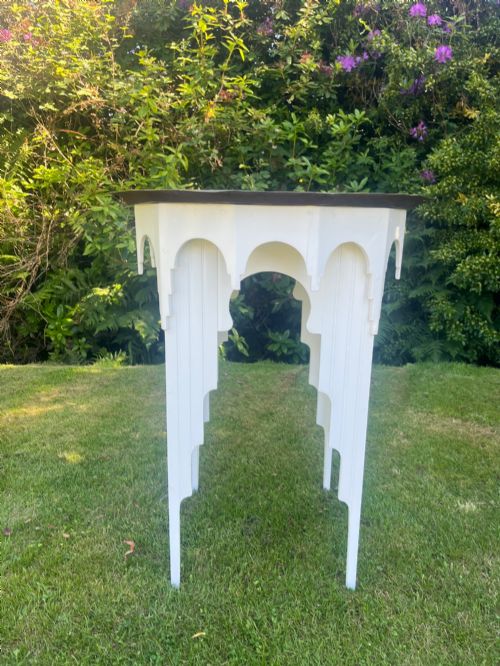
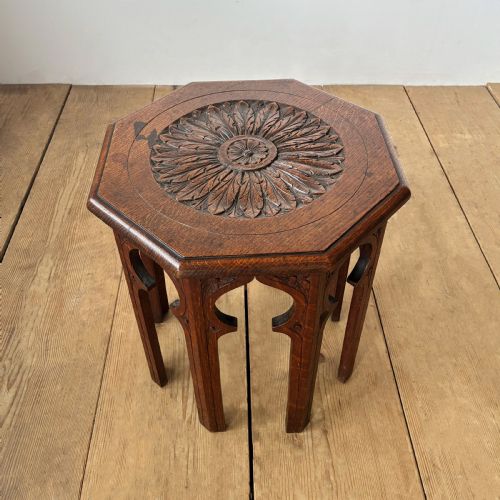


Victorian Moorish Side Table
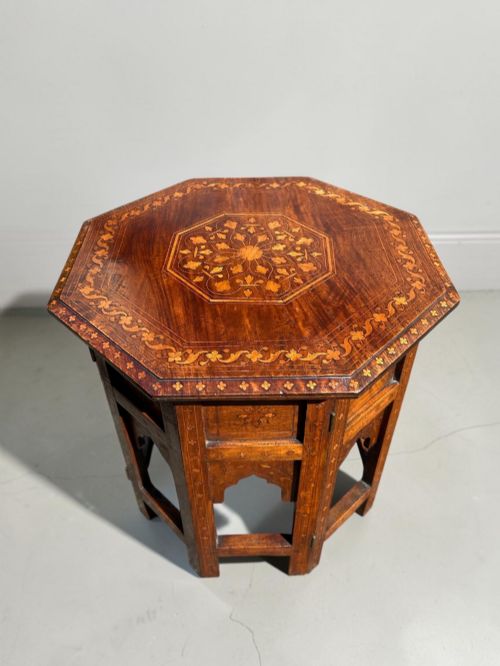
A victorian moorish side table brings geometric intricacy and exotic flair into a room through carved timber and dense inlay.
Victorian Moorish Side Table
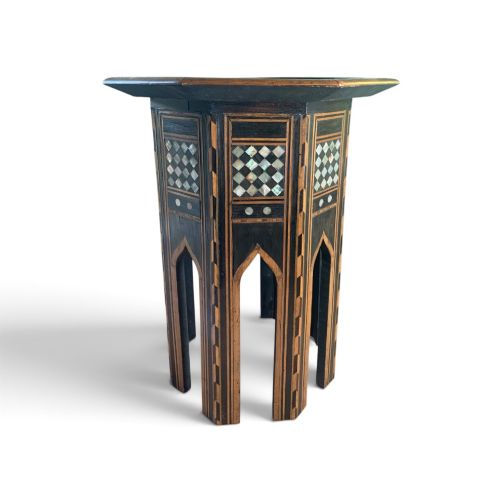
When you search for a victorian moorish side table, you encounter distinct octagonal and occasional forms from the nineteenth century. These pieces reflect a fascination with Islamic design, often adopting styles described as Moorish Revival, Anglo-Indian, or Aesthetic Movement.
The pieces on this page typically manifest as side tables or lamp tables created through British retail houses such as Liberty and Co, alongside imported examples from Hoshiarpur, Syria, and Morocco.
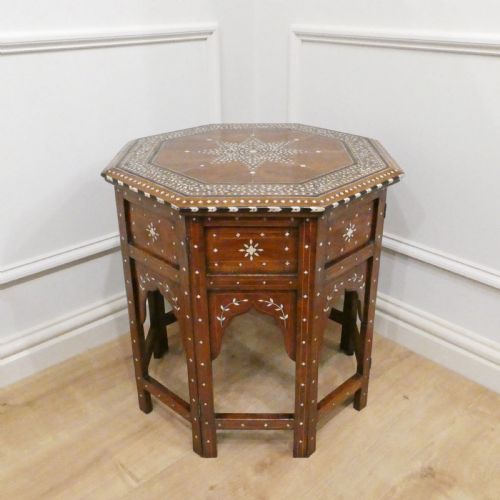
Most examples rely on a characteristic multi-sided top supported by folding or panelled bases, serving as compact focal points for a corner or beside a chair.
Materials and construction
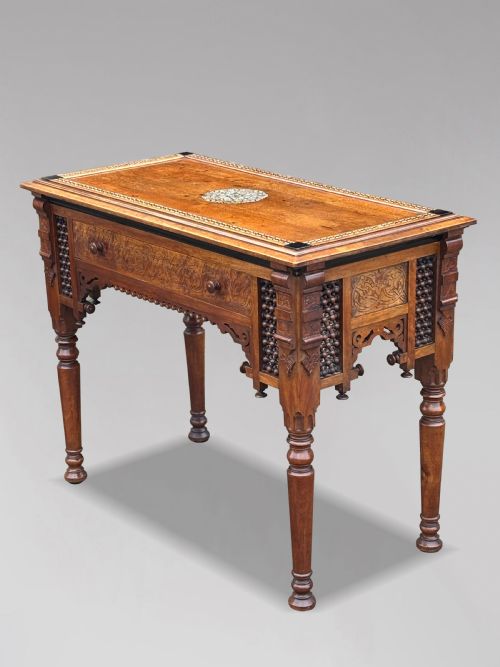
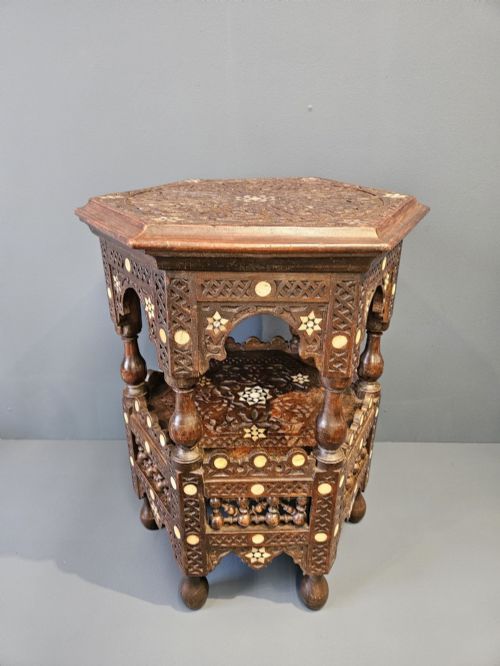
Hardwoods such as walnut, rosewood, mahogany, teak, and ebonised wood form the structural foundations of these items, providing stable frames for intricate surface work. Artisans carve these timbers deeply with geometric strapwork and foliage.
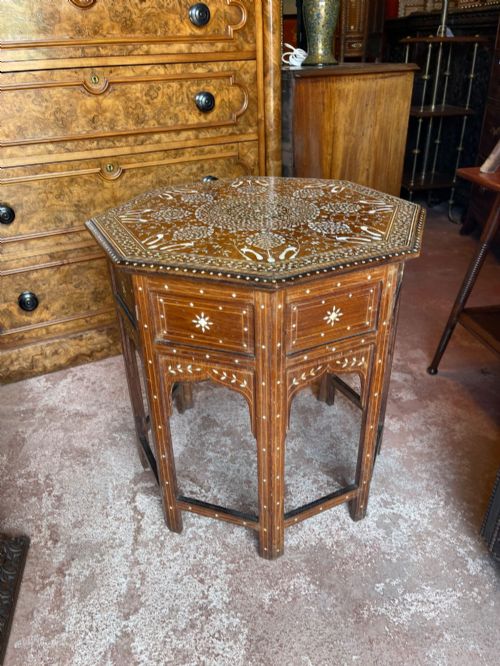
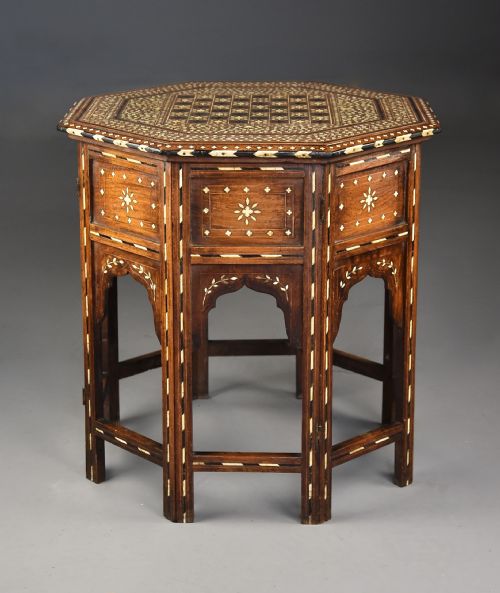
Inlay work defines the aesthetic, utilising bone and mother-of-pearl pieces meticulously fitted into the wooden matrix. Selected examples integrate alternative surfaces like copper tops to catch the light.
Many octagonal folding bases are constructed without metal hinges, relying entirely on intricate wooden interlocking joints that fold away like magic.
Assessing craftsmanship
Quality rests in the precision and density of the hand carving and inlay. Superior examples display tightly fitted bone and mother-of-pearl segments with minimal filler, where every geometric intersection remains crisp.
The weight and selection of the underlying hardwood also dictate standards, alongside the fluidity of the carved lattice panels that form the folding bases.
Liberty and Co
The Victorian Moorish Side Table Glossary
- Moorish Revival
- An architectural and decorative style popular in the nineteenth century that reinterprets elements of Spanish, North African, and Middle Eastern design. It influences the sweeping arches and intricate surface patterns seen on these tables.
- Octagonal
- Having eight sides. This geometric plan is standard for the tops and bases of many tables originating from Hoshiarpur and related workshops.
- Ebonised wood
- Timber treated with a dark stain or finish to imitate ebony. This dark ground provides high contrast for pale inlay materials like bone.
- Anglo-Moresque
- A design vocabulary blending British domestic forms with traditional Moorish surface ornament. It appears frequently in pieces retailed by firms like Liberty and Co.
- Inlay
- A technique where contrasting materials are inserted into recessed cavities in a wooden base to form patterns. Bone and mother-of-pearl are common inserts.
Victorian Moorish Side Table: Frequently Asked Questions
What is a moorish side table?
A moorish side table is a small occasional piece of furniture influenced by Islamic and North African design traditions, popular in Britain during the nineteenth century. They are characterised by dense surface carving and geometric inlay.
These tables were used as lamp tables, tea tables, or decorative accents in Victorian drawing rooms, bringing an exotic aesthetic to domestic interiors.
Where were these tables made?
Many examples originate from workshops in Hoshiarpur in India, Syria, and Morocco, while others were produced in Britain under the influence of retailers like Liberty and Co.
British firms often imported components or entire pieces, adapting traditional eastern techniques for the domestic market under styles such as Anglo-Moorish and Aesthetic Movement.
How do I care for inlaid wood?
Inlaid wood requires gentle maintenance to keep the timber and the delicate bone or mother-of-pearl segments stable. Keep the table away from direct heat sources and dramatic humidity changes to prevent warping.
Dust regularly with a dry, soft cloth and avoid applying modern liquid polishes that can seep into the micro-gaps between the inlay and the timber.
Are these tables sturdy?
Many of these tables utilise folding octagonal bases designed for portability and versatility. While stable on flat floors, they are intended for lighter domestic use rather than heavy weight.
When moving the table, lift it by the main structure rather than relying on protruding decorative brackets or delicate edge carving.
How do I distinguish regional styles?
Regional styles often reveal themselves through the choice of timber and the specific geometry of the inlay. Hoshiarpur pieces typically feature dense overall carving in native hardwoods with fine bone inlay.
Syrian and Moroccan examples may incorporate mother-of-pearl alongside distinct geometric lattice patterns, while Liberty-influenced pieces often blend these motifs with ebonised or mahogany frames.