



Victorian Mirror Hallstand
These Victorian mirror hallstand pieces greet visitors with practical elegance, offering a grand entrance focal point that organises coats, hats, and umbrellas.
Victorian Mirror Hallstand
A Victorian mirror hallstand combines utility and entrance hall presence, featuring integrated coat hooks, hat storage, umbrella trays, and a central looking glass. Most examples on this page date from the nineteenth century, spanning periods from eighteen fifty to nineteen ten.
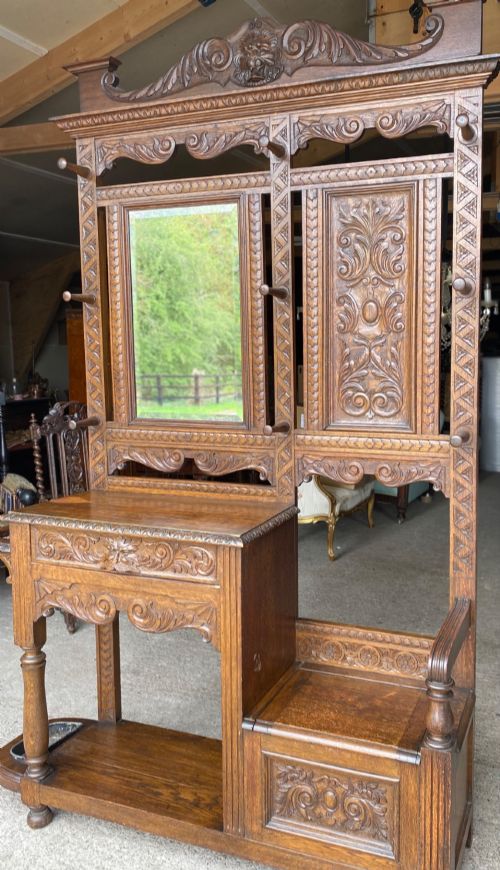
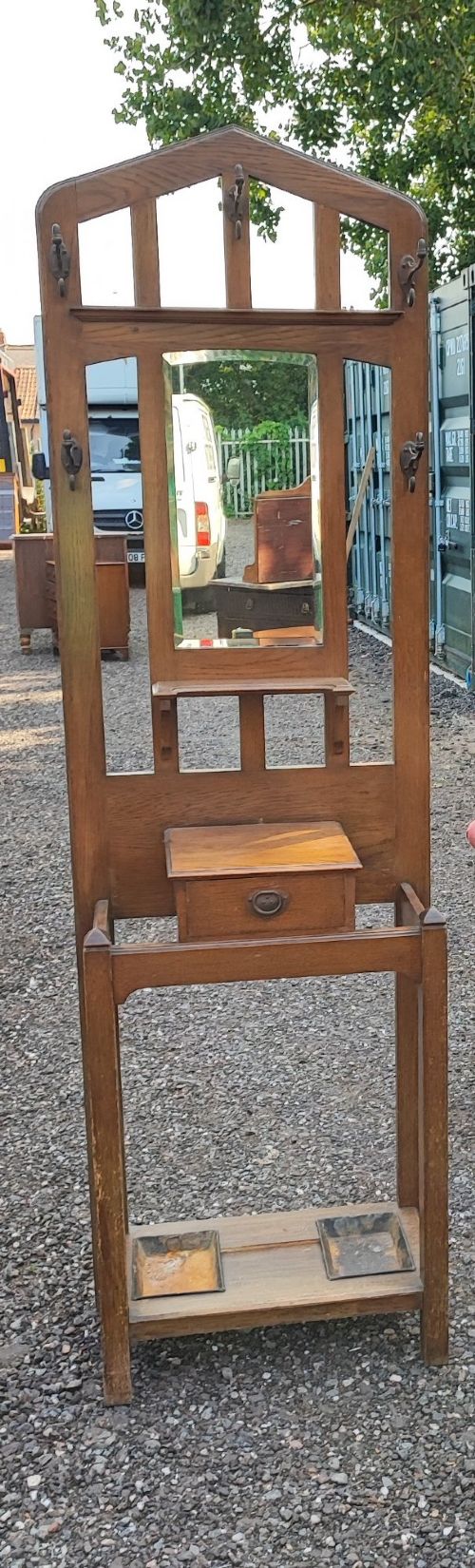
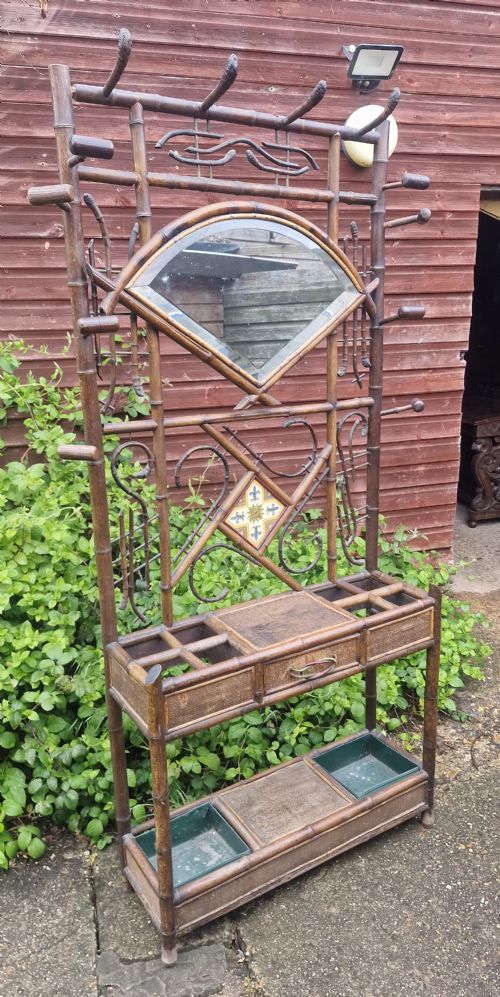
The assortment includes substantial carved oak structures alongside slender bamboo and faux bamboo designs. Pieces range from narrow formats suited to modest corridors to large proportions with Flemish Renaissance Revival details.
Buyers encounter regional interpretations reflecting Victorian taste, including Gothic Revival influences and country house cast iron versions. Each piece serves the traditional function of receiving outerwear while projecting the homeowner's status.
How they were made
Craftsmen utilised solid hardwoods such as oak, walnut, and mahogany, often pairing carved wooden frames with inset bevelled mirror glass and brass or metal coat hooks. Structural stability relied on robust joinery to support heavy winter garments and timber frames.
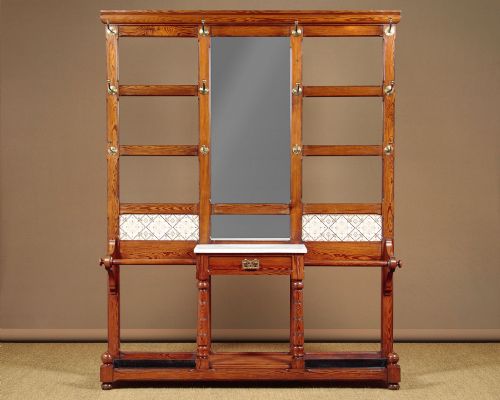
Ironworking techniques produced cast iron and metal components, notably seen in Coalbrookdale country house stands and French faux bamboo metal structures. Marble inserts frequently provided durable drip trays or surfaces for umbrella stands.
Surface ornamentation involved deep relief carving, particularly on Victorian Gothic and Flemish revival models, contrasting with the lighter, linear aesthetic of bamboo and pine constructions.
Victorian Mirror Hallstand Retail Price Guide 2026
Typical asking prices for victorian mirror hallstand among the pieces listed under this phrase on Sellingantiques today, from the lower quarter to the upper quarter. They describe what is for sale here now, not the wider market.
Cast iron umbrella stands often retained their original drip pans, catching the English rain long before waterproof coats existed.
What varies in quality
Quality rests in the ambition of the timber carving and the architectural cohesion of the design. Elaborate figural work, such as carved Greenman motifs, distinguishes finer workshop production from simpler utilitarian hallway furniture.
Materials dictate upper tiers of craftsmanship, where figured mahogany or quarter-sawn oak meets original brass hardware and heavy inset marble slabs. The integration of the mirror glass within the structural frame also signals the maker's care.
Coalbrookdale
The Victorian Mirror Hallstand Glossary
- Hallstand
- A piece of hallway furniture designed for coats, hats, and umbrellas, typically incorporating a central mirror. These items anchored the entrance of nineteenth-century homes.
- Flemish Renaissance Revival
- A nineteenth-century decorative style drawing on sixteenth-century Flemish design, characterised by bold relief carving and architectural cornices. It appears on substantial oak pieces.
- Faux bamboo
- Turned and painted timber or metal simulating the segmented stems of natural bamboo. This technique was popular in late nineteenth-century hall furniture.
- Greenman
- A sculptural motif depicting a human face entwined with foliage and vines, symbolising rebirth. It frequently appears on carved oak furniture from the Victorian era.
- Aesthetic Movement
- A late nineteenth-century design current emphasising visual beauty over narrative function. Pieces in this style often feature lighter materials and simpler geometries.
Victorian Mirror Hallstand: Frequently Asked Questions
Where should a hallstand be placed?
These pieces suit entrance halls and spacious corridors where visitors arrive. They require adequate wall clearance and sturdy backing to support their frame and integrated mirrors.
Positioning them near the main entrance preserves their original function of holding outdoor garments, hats, and walking aids immediately upon entry.
How do I maintain marble inserts?
Marble surfaces need gentle cleaning with a damp cloth and mild soap to avoid etching the stone. Harsh chemicals strip the natural polish and damage the porous material.
Dry the surface thoroughly after cleaning to prevent moisture rings from forming beneath umbrella bases or walking sticks.
What is faux bamboo?
Faux bamboo is wood or metal shaped and painted to resemble natural bamboo stalks. Makers turned the material on a lathe to create the characteristic nodes and joints.
This technique gained popularity in the late nineteenth century for lighter hall furniture and umbrella stands.
How do I identify a Victorian piece?
Victorian furniture displays construction methods and stylistic revivals specific to the nineteenth century. Look for hand-cut joinery, timber selection, and characteristic hardware.
Stylistic cues such as Gothic Revival detailing or Aesthetic Movement influences help narrow down the production period.