



Victorian Marquetry Cabinet Desk
A victorian marquetry cabinet desk combines intimate writing compartments with precise wood inlay, offering a refined workspace suited for private correspondence.
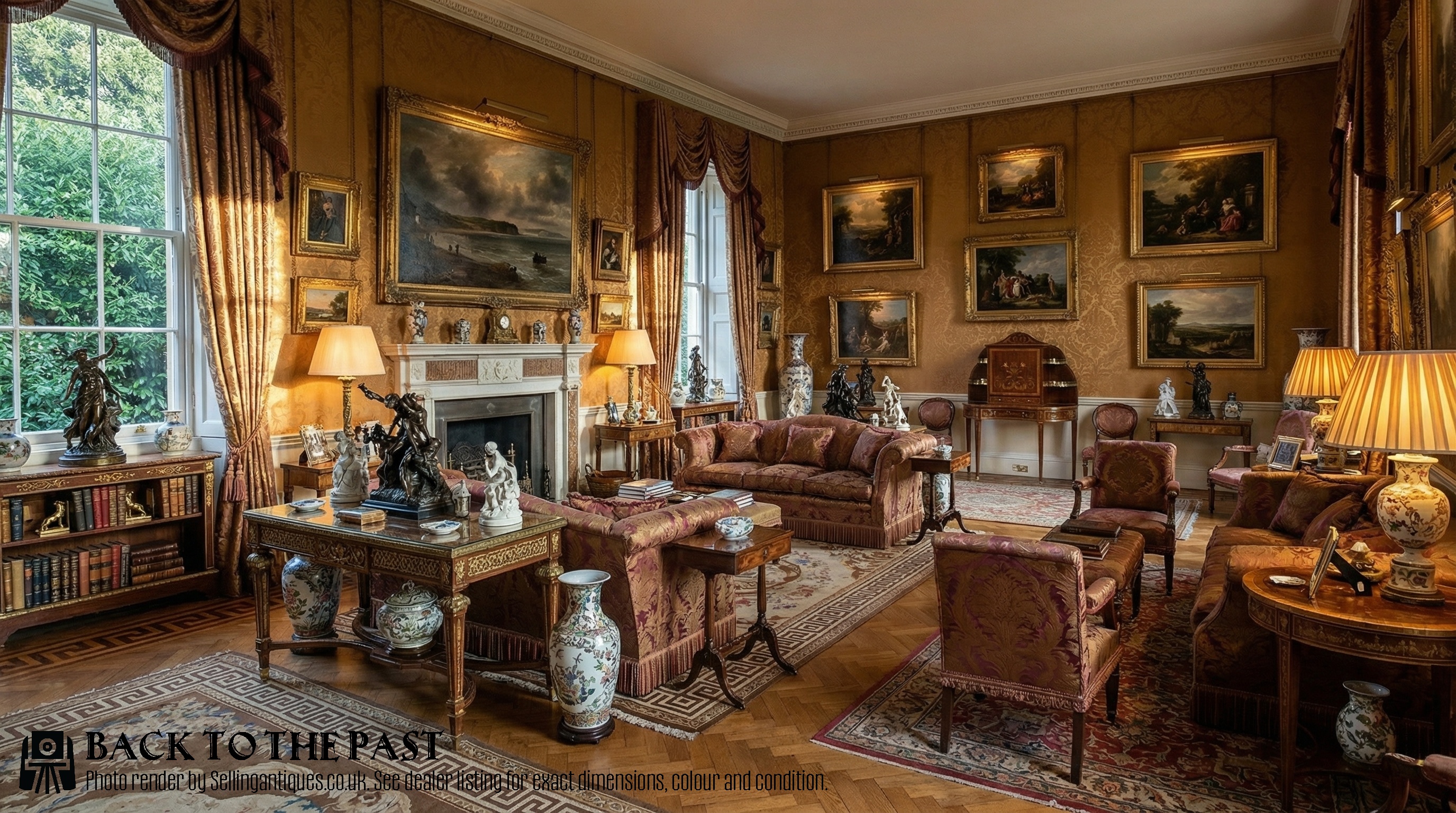
Victorian Marquetry Cabinet Desk
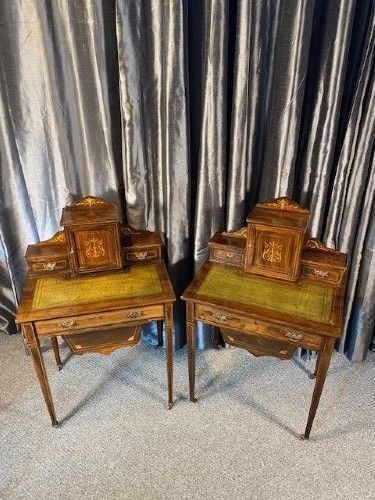
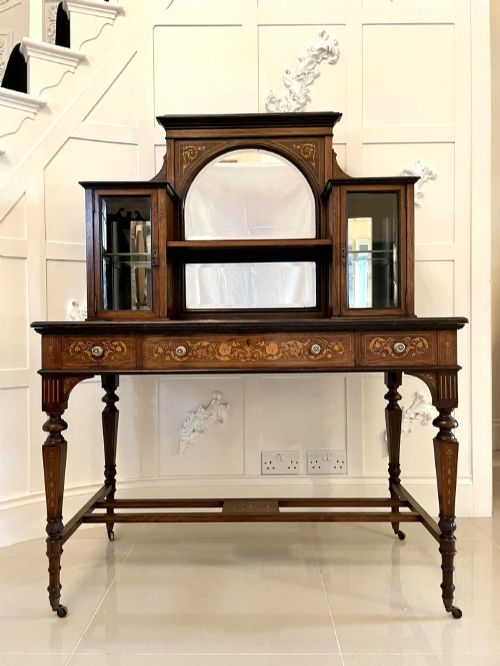
A victorian marquetry cabinet desk brings together compact writing surfaces and enclosed upper compartments, spanning formats such as the Davenport, the bureau de dame, and the bonheur du jour. These pieces emerge predominantly in the nineteenth century, reflecting an era that prized multifunctional furniture tailored for private studies and ladies' boudoirs.
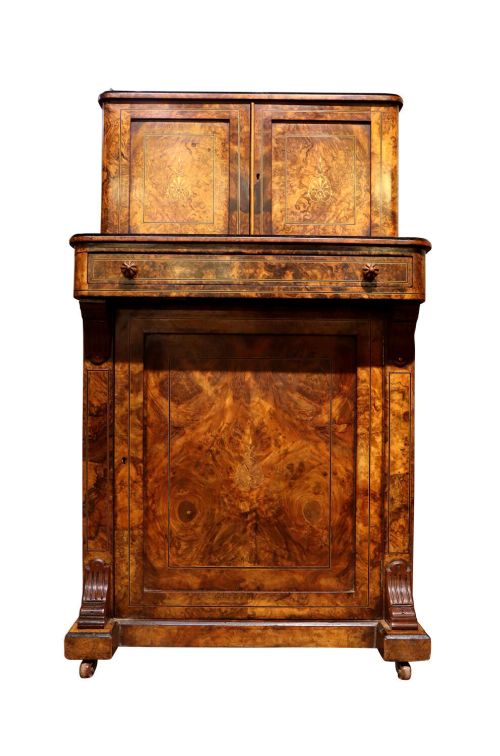
The pieces on this page range from mid-nineteenth century walnut examples featuring intricate fitted stationery interiors to later revival designs incorporating satinwood and brass mounts. Forms vary from pedestal desks with side drawers to elevated cabinet desks surmounted by small cupboards and pigeonholes.
Distinctions in execution
Quality rests upon the precision of the marquetry cutting and the depth of figure in the chosen veneers. Superior examples display seamless integration of contrasting timbers without gaps, alongside finely cast brass or ormolu mounts that fit flush to the wood.
Internal engineering distinguishes better pieces, visible in smooth pop-up mechanisms, secret drawers, and fully fitted stationary compartments. The integrity of the secondary timbers and the crispness of hand-cut inlay separate standard production from master workshop output.
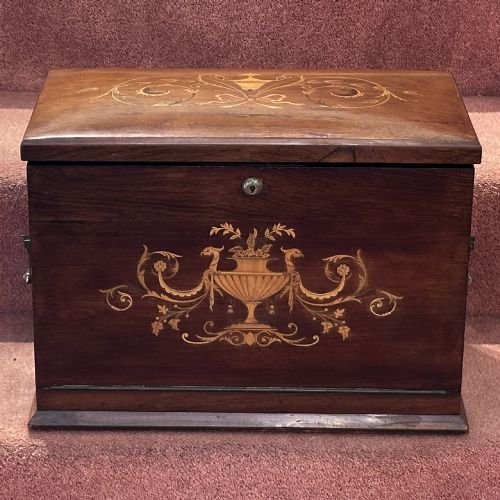
Listings feature nineteenth-century writing furniture constructed from burr walnut, rosewood, and mahogany, incorporating brass and satinwood inlay.
Edwards & Roberts·Waring & Gillow
The Victorian Marquetry Cabinet Desk Glossary
- Marquetry
- Decorative veneer work forming pictures or patterns by assembling small pieces of coloured wood, shell, or ivory. This technique defines the visual surface of many nineteenth-century writing cabinets.
- Bonheur du jour
- A small, light lady's writing desk featuring an enclosed cabinet or set of shelves upon the writing surface. First appearing in France, this form became popular in Victorian revival interiors.
- Davenport desk
- A compact box-form writing desk with a sloping top and drawers opening to the side. Victorian versions frequently incorporate interior stationery boxes and pull-out writing slides.
- Secretaire abattant
- A tall wall cabinet featuring a drop-front writing flap that conceals fitted drawers and pigeonholes. It provides a vertical storage solution with a concealed desk function.
- Ormolu
- Gilded bronze mounts applied to furniture for decorative accent. This metalwork enhances the corners and borders of high-status nineteenth-century cabinet pieces.
Victorian Marquetry Cabinet Desk: Frequently Asked Questions
What is a bonheur du jour?
A bonheur du jour is a small ladies' writing desk featuring a raised cabinet or shelving superstructure above the main writing surface.
These pieces typically date from the nineteenth century and were designed for light correspondence and display within a private room.
How do I identify a Davenport desk?
A Davenport desk is characterised by a compact, box-like body with a sloping, hinged writing surface on top.
Drawers traditionally open to the side rather than the front, and many examples include built-in stationary compartments or pop-up mechanisms.
What woods were used for marquetry?
Cabinet makers utilised a diverse palette of figured and contrasting timbers to create detailed floral and geometric marquetry designs.
Burr walnut, rosewood, satinwood, and kingwood feature prominently across nineteenth-century English and French examples.
Where were cabinet desks placed?
Cabinet desks were primarily designed for intimate domestic spaces such as bedrooms, private boudoirs, or drawing rooms.
Their finished backs often allowed them to stand freestanding within a room rather than against a wall.