





Edwardian Style Lady Desk
An Edwardian style lady desk brings refined form and delicate writing space to a room, offering compact elegance for correspondence.
Edwardian Style Lady Desk
When searching for an Edwardian style lady desk, buyers encounter sophisticated writing furniture designed primarily for domestic correspondence and personal administration. The selection includes delicate satinwood and mahogany pieces spanning the late nineteenth century through to the Edwardian period and the 1920s.
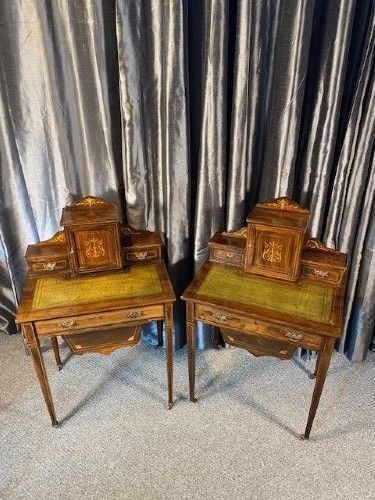
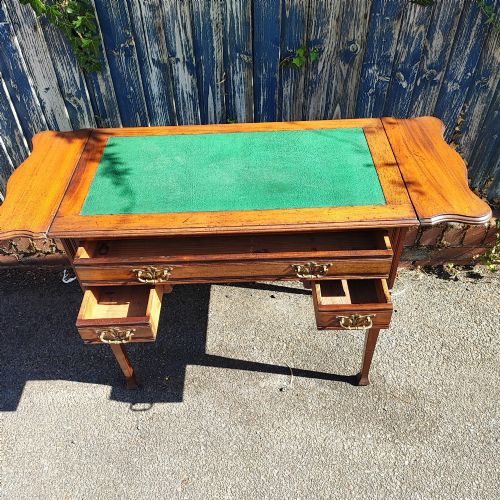
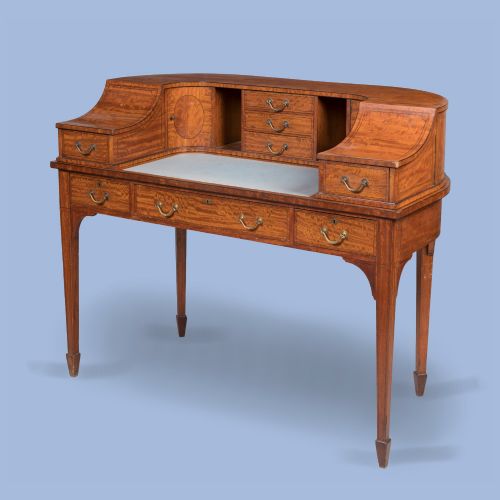
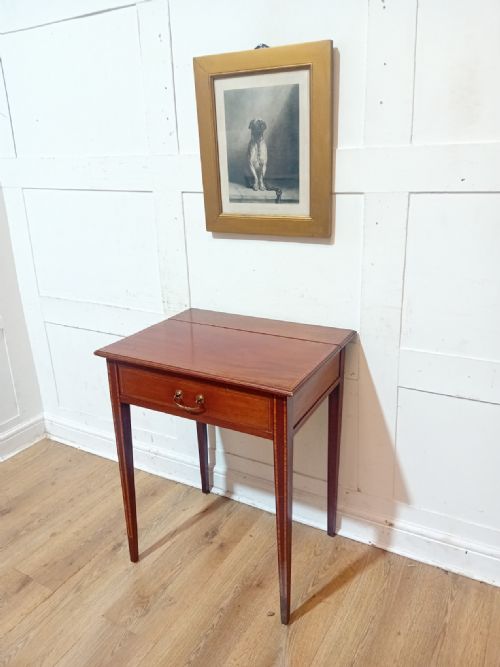
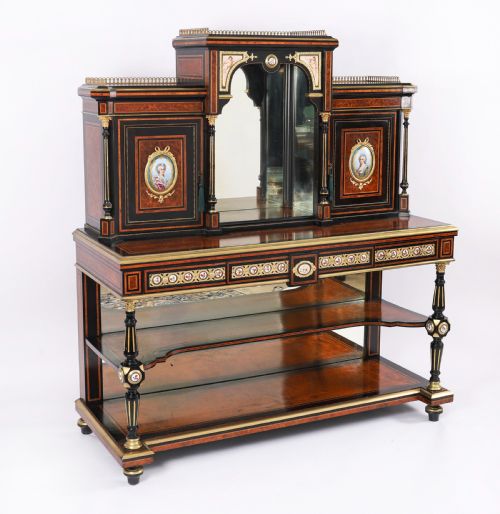
The dominant forms on this page include compact writing tables, elaborate bonheur du jours with tiered superstructures, and curved Carlton House desks. Many examples reflect the Sheraton Revival style, incorporating fine legs and compact proportions suited to smaller reception rooms.
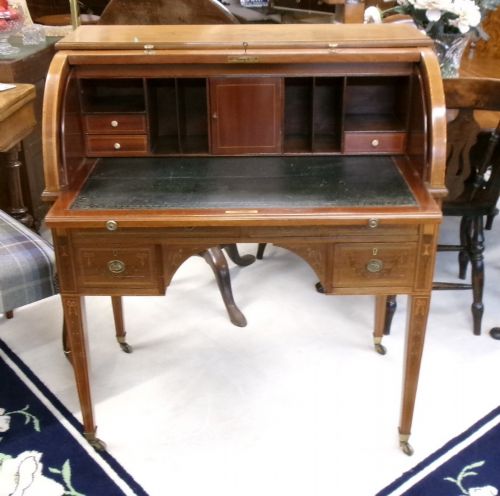
Makers and workshops of the era utilised classical revival motifs alongside marquetry inlay and hand-painted floral decoration. Pieces range from simple walnut writing desks to elaborate rosewood and satinwood cylinder top designs featuring integrated drawers and pigeonholes.
Materials and cabinetmaking techniques
Makers constructed these desks using dense cabinet timbers such as mahogany, rosewood, walnut, and satinwood, frequently enhanced by contrasting boxwood stringing and marquetry inlay. Selected woods were polished to emphasise natural grain patterns while providing a durable writing surface.
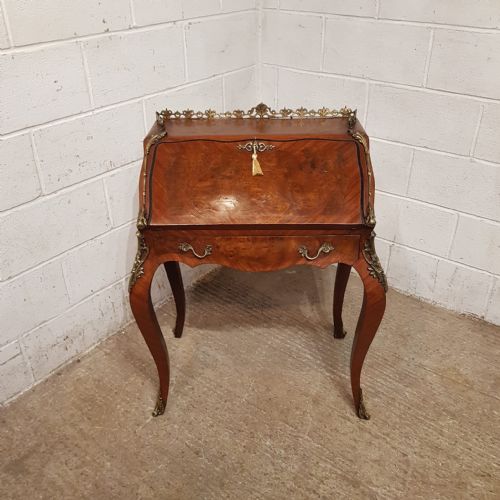
Decorative embellishments often include hand-painted floral motifs, brass handles, ormolu mounts, and inset leather writing panels. Superstructures and cylinder mechanisms required precise joinery to ensure smooth operation of internal compartments and drop-down flaps.
Listings feature writing furniture in mahogany, satinwood, rosewood, and walnut, spanning the Victorian period through to the 1920s.
Assessing cabinetwork and decorative detail
Quality rests upon the crispness of the inlay work, the choice of primary timber veneers, and the structural integrity of delicate legs and superstructures. Superior examples display finely figured satinwood or rosewood paired with meticulous hand-painted details and robust internal drawer construction.
Lesser pieces rely on simpler painted decoration or plain mahogany boards without the intricate cross-banding and boxwood stringing seen in finer workshop productions. The smoothness of sliding cylinder tops and the precise fit of secondary compartments also distinguish standard production from exceptional pieces.
Edwards & Roberts·Shoolbred of London·Linke
The Edwardian Style Lady Desk Glossary
- Bonheur du jour
- A small, light lady's writing desk featuring an upper cabinet or superstructure with shelves and small drawers. The name translates from French as day's happiness.
- Carlton House desk
- A form of writing desk with a curved superstructure enclosing drawers and pigeonholes around the rear and sides of the writing surface. It typically has a leather-inset top.
- Marquetry
- Decorative patterns formed by the insertion of pieces of veneer into a master wood base to create floral or geometric designs. This technique defines much of the ornamentation on Edwardian writing furniture.
- Satinwood
- A lustrous yellowish timber native to India and Sri Lanka, highly prized for its grain and light colour. It serves as a primary veneer on many refined writing tables.
- Sheraton Revival
- A late nineteenth and early twentieth century style drawing inspiration from the late eighteenth century designs of George Sheraton. It emphasises tapered legs, subtle stringing, and classical neoclassical proportions.
Edwardian Style Lady Desk: Frequently Asked Questions
What is an Edwardian style lady desk?
An Edwardian style lady desk is a compact writing table or bureau produced around the turn of the twentieth century, designed for domestic correspondence.
These pieces typically feature lighter timbers like satinwood or mahogany, often enhanced with marquetry inlay or painted decoration to suit residential interiors.
How do you use a bonheur du jour?
A bonheur du jour functions as a personal writing desk and display cabinet combined into a single portable piece of furniture.
The upper shelves and small drawers hold stationery and inkwells, while the pull-down or open writing surface provides a dedicated space for writing letters.
How do I identify Sheraton Revival pieces?
Sheraton Revival furniture exhibits classical proportions inspired by eighteenth-century cabinetmakers, featuring slender tapered legs and delicate stringing.
These pieces frequently utilise satinwood or mahogany veneers combined with subtle floral marquetry rather than heavy carving.