


Mahogany Ladies Secretary Desk
These mahogany ladies secretary desk pieces offer compact writing surfaces and refined storage, bringing period elegance directly into a study.
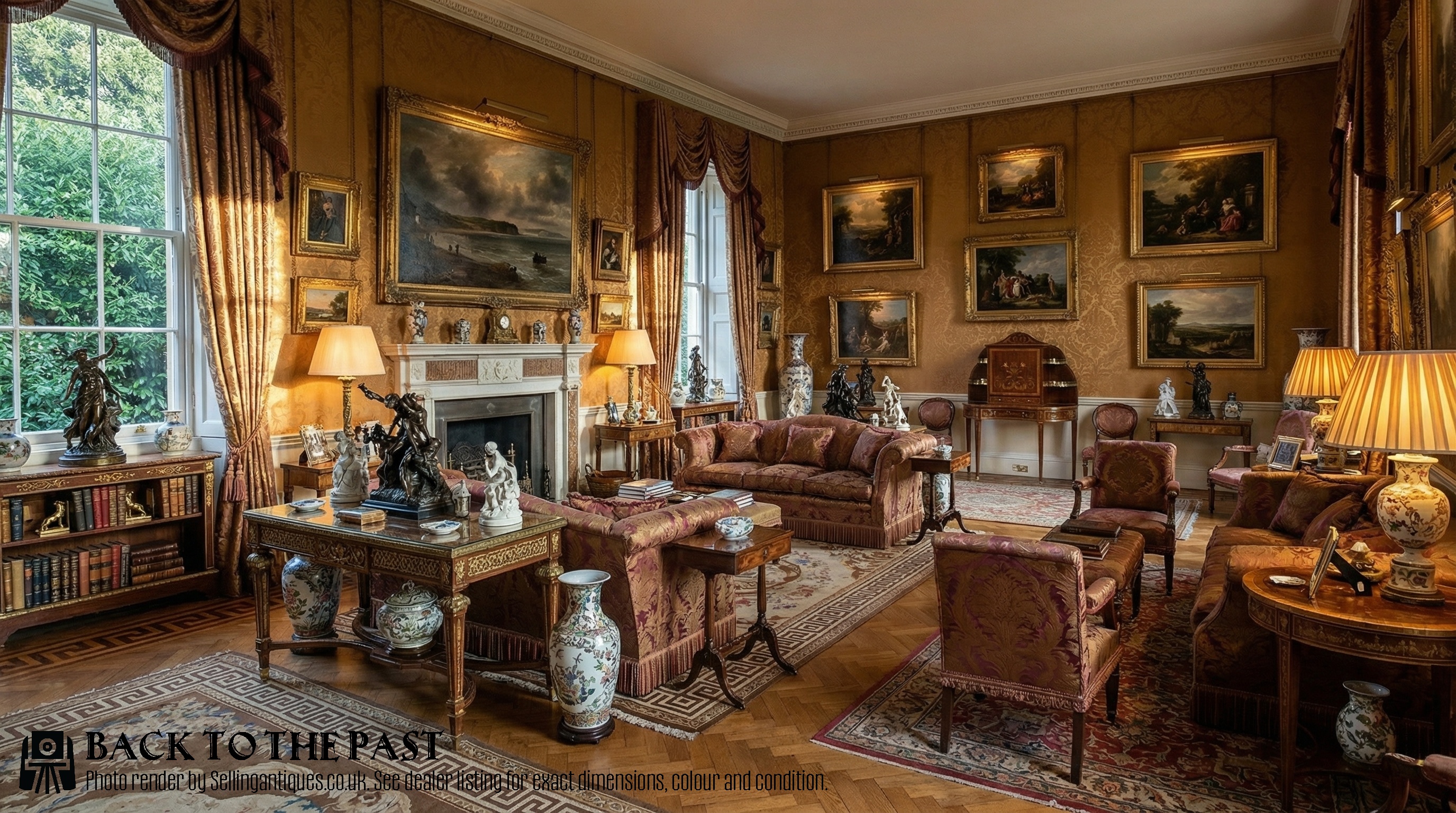
Mahogany Ladies Secretary Desk
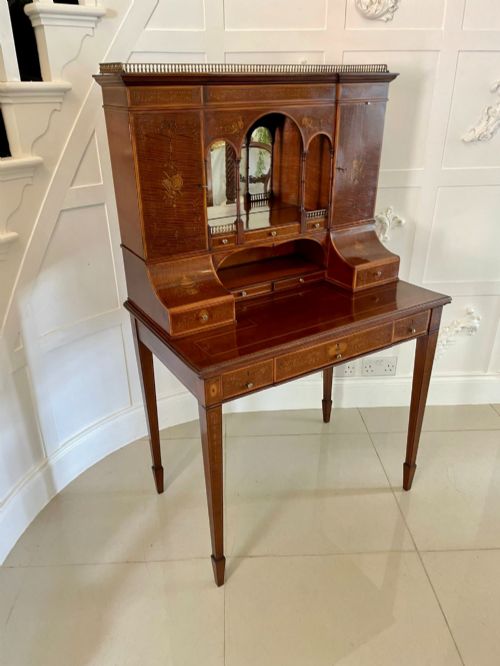
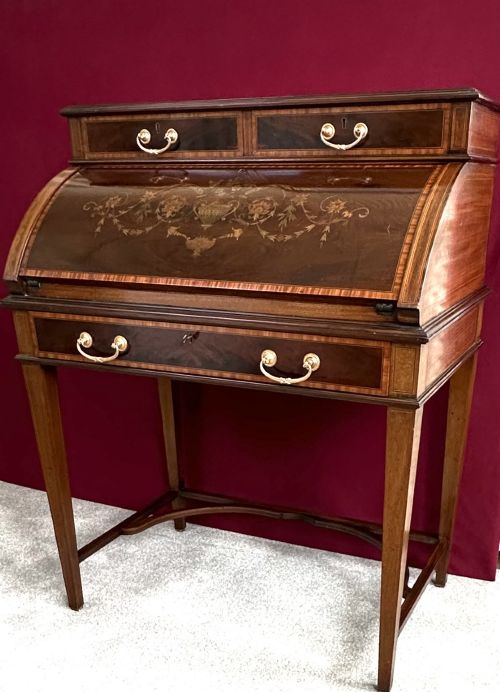
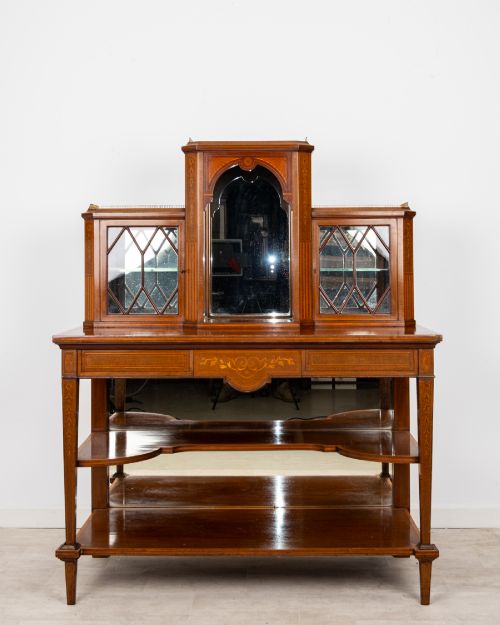
When you search for a mahogany ladies secretary desk, you encounter a selection of compact writing furniture spanning the Georgian, Victorian, and Edwardian eras. These pieces typically take the form of bonheur du jours, fall-front bureaux, cylinder desks, and tambour writing tables.
The version you are most likely to meet on this page is the Edwardian inlaid mahogany bonheur du jour or a Victorian cabinet desk. They combine small footprints with fitted interiors, drawers, and sometimes mirror glass components suited to parlour use.
Materials and construction
Cabinet makers utilised solid mahogany and mahogany veneers as the primary timber foundation for these desks. They frequently embellished the surfaces with contrasting satinwood and intricate marquetry inlay.
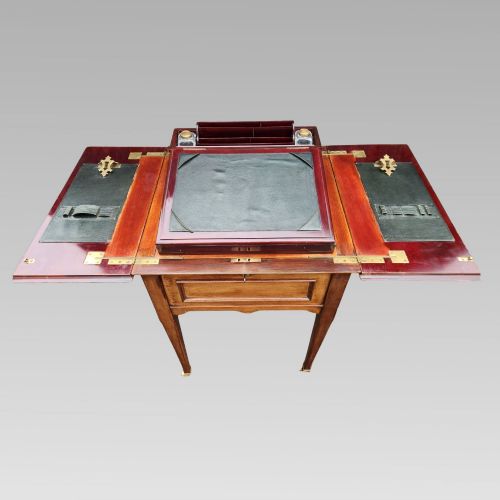
Hardware and functional elements relied on brass for handles and hinges, while writing surfaces often incorporated inset leather panels. Specialised forms like metamorphic tables and tambour desks integrated clever folding or sliding mechanical actions.
Some Edwardian ladies desks hid your secret correspondence behind clever sliding tambour shutters and tiny hidden compartments.
Judging the quality
Quality rests in the precision of the marquetry inlay and the choice of timber grain across the mahogany and satinwood surfaces. Finer examples display meticulous attention to detail in internal compartment layout and brass fittings.
Makers and workshops of higher standing invested greater labour in complex mechanisms, such as metamorphic folding actions or cylinder lids, ensuring smooth operation alongside decorative distinction.
Edwards & Roberts·Gamichon A Paris
The Mahogany Ladies Secretary Desk Glossary
- Bonheur du jour
- A light Dainty ladies writing desk featuring a small cabinet or superstructure on top. The form gained popularity in the eighteenth century and continued through the Victorian and Edwardian periods.
- Marquetry inlay
- Decorative patterns formed by inserting thin pieces of wood, such as satinwood, into the mahogany ground. This technique creates pictorial or geometric designs across the writing surface or fall front.
- Fall-front bureau
- A desk featuring a hinged writing flap that pulls down to reveal internal pigeonholes and small drawers. When closed, it conceals the working area entirely.
- Tambour writing table
- A desk fitted with a slatted sliding shutter that covers the upper writing compartments. The wooden slats run in concealed grooves to open and close smoothly.
- Metamorphic desk
- A piece of furniture designed with folding or lift action mechanisms that alter its shape and function. These clever designs transform tables into specialised writing surfaces.
Mahogany Ladies Secretary Desk: Frequently Asked Questions
What is a bonheur du jour?
A bonheur du jour is a light writing desk featuring a small set of drawers or a cabinet mounted on the top surface. These feminine desks were designed for casual correspondence in a parlour or boudoir.
The form appeared across multiple periods in the evidence, particularly during the Edwardian and Victorian eras, often enhanced with satinwood inlay.
How do tambour desks work?
Tambour desks utilise a flexible shutter made of narrow vertical strips of wood glued to canvas or leather backing. This slatted curtain slides smoothly along a track to conceal or reveal the writing compartments.
This mechanism offered a neat alternative to traditional hinged lids in compact nineteenth-century writing furniture.
What is a metamorphic desk?
A metamorphic desk incorporates hidden hinges, folding leaves, or lift-action mechanisms that alter the configuration of the furniture. These clever designs allow a compact table to expand into a fully equipped writing surface.
Such pieces demonstrate the ingenuity of period cabinet makers in maximising utility within domestic spaces.
How do I date an antique desk?
Dating relies on examining the construction methods, timber selection, and stylistic details characteristic of periods like the Georgian, Victorian, or Edwardian eras. Elements such as satinwood marquetry inlay, brass hardware, and secondary woods provide key indicators.
Comparing the overall form and decorative vocabulary against documented historical examples helps narrow the period of manufacture.