

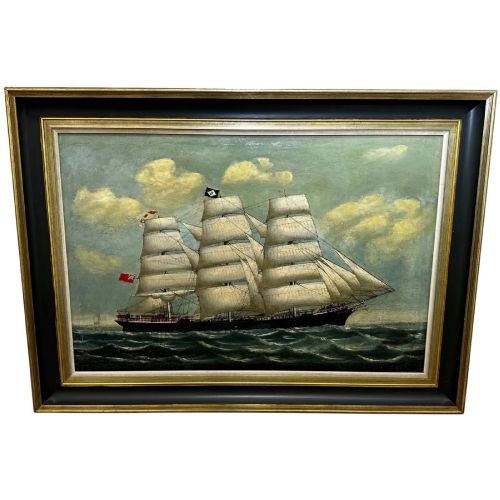
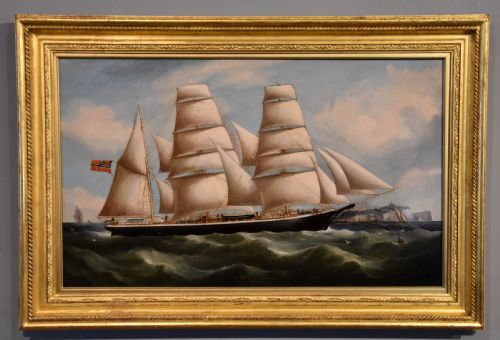


Victorian Marine Ship Portrait
A Victorian marine ship portrait captures the grit and majesty of nineteenth-century vessels under sail, offering collectors a direct window into maritime history.
Victorian Marine Ship Portrait
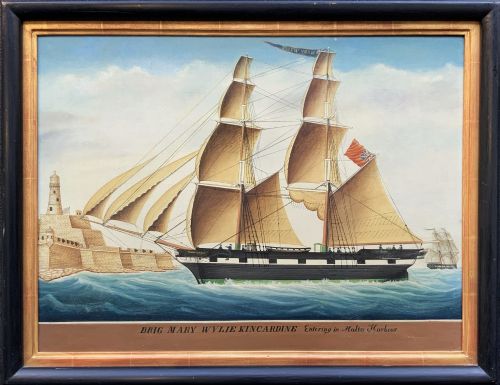
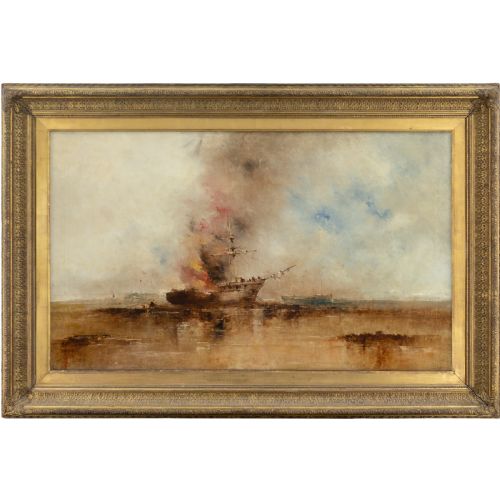
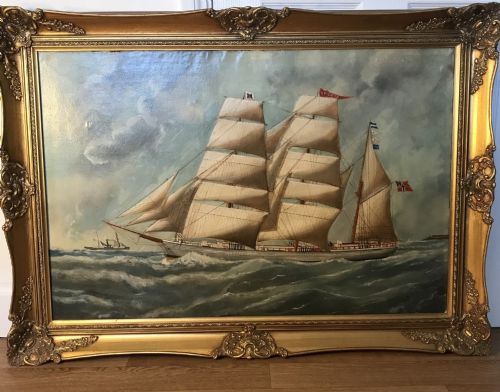
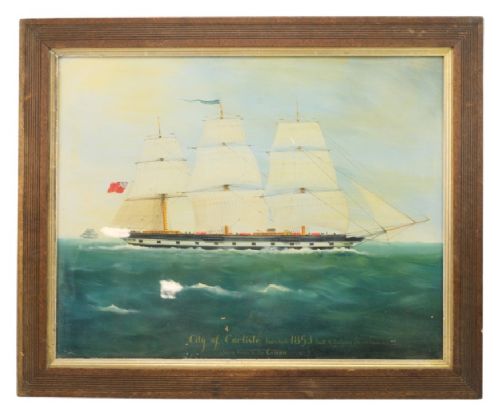
A victorian marine ship portrait records named vessels, dramatic wrecks, and naval milestones across the nineteenth century and into the Edwardian period. Buyers look to these works for accurate depictions of barques, clippers, and cruisers rendered by period artists.
The pieces appearing on this page take the form of framed wall art, predominantly executed as oil paintings on canvas or works on paper. These paintings frequently document specific historic vessels such as the clipper ship Thermopylae or the barque Vick.
Origins span British and European schools, capturing regional maritime heritage from Scottish waters to distant colonial routes. Most examples date from the mid-nineteenth century onward, reflecting a period of intense global trade and naval expansion.
How they were made
Artists built these compositions using oil paint on canvas or watercolour on paper, mounted within wooden or giltwood frames under glass. The application of oil paint allowed for nuanced handling of turbulent seas and atmospheric skies.
Gold leaf often appears on the frames, accentuating the maritime subjects with period ornamentation. Support structures typically consist of stretched canvas on wood or heavy paper sheets.
Victorian Marine Ship Portrait Retail Price Guide 2026
Typical asking prices for victorian marine ship portrait among the pieces listed under this phrase on Sellingantiques today, from the lower quarter to the upper quarter. They describe what is for sale here now, not the wider market.
Several vessels depicted managed to survive perilous encounters with stormy seas before finding a permanent, much drier resting place on canvas.
What varies in quality
Quality rests upon the precision of the vessel's rigging and hull proportions, reflecting the artist's firsthand knowledge of nautical architecture. Works by documented painters command attention through superior handling of light on water and accurate vessel identification.
The integrity of the original canvas, the presence of period framing, and the subtlety of the palette distinguish superior maritime works from standard decorative pieces.
William McAlpine·Lai Fong·Richard B. Spencer·Marie-Edouard Adam·Joseph Heard·WF Mitchell·Samuel John Milton Brown·Richard Ball Spencer
The Victorian Marine Ship Portrait Glossary
- Barque
- A sailing vessel with three or more masts, square-rigged on the fore and main masts and fore-and-aft rigged on the mizzen. This rig was common for merchant vessels during the nineteenth century.
- Clipper
- A very fast nineteenth-century merchant sailing ship with three masts and a square rig. These vessels dominated the tea and wool trades.
- Giltwood
- Wood carved and covered with a thin layer of gold leaf. It is frequently found on the frames surrounding nineteenth-century paintings.
- Seascape
- A work of art depicting the sea. These pieces often focus on weather conditions and coastal topography alongside shipping.
- Watercolour
- A paint consisting of pigment suspended in a water-soluble vehicle. It was frequently used on paper for detailed maritime studies.
Victorian Marine Ship Portrait: Frequently Asked Questions
How do I identify the ship in a painting?
Many nineteenth-century maritime works include inscriptions on the canvas, stretcher bars, or frame identifying the vessel and sometimes the captain or location. Studying the specific rigging, flag signals, and hull configuration provides further clues for identification.
Secondary research into shipping registries and naval records often helps connect a painted vessel to its historical voyages and port of origin.
Where should I hang a marine painting?
These works suit traditional studies, libraries, or living spaces with stable humidity and subdued lighting. Direct sunlight can fade nineteenth-century watercolours and discolour oil varnishes over time.
Pairing the artwork with period furniture or nautical artefacts enhances the historical context of the room.
What is the difference between an oil and a watercolour?
Oil paintings utilise pigment bound in drying oil on canvas, offering rich textures and deep tones capable of surviving heavy maritime atmospheres. Watercolours use water-soluble pigments on paper, yielding lighter, translucent effects.
Watercolour works require protective glass framing to prevent moisture damage and paper degradation.
How do I care for a framed nineteenth-century painting?
Keep the piece away from direct heat sources and rapid temperature fluctuations that can crack oil paint or warp wooden frames. Dust the frame gently with a dry, soft cloth without touching the canvas surface.
Consult a professional art conservator if the canvas shows signs of sagging, flaking paint, or surface grime.