

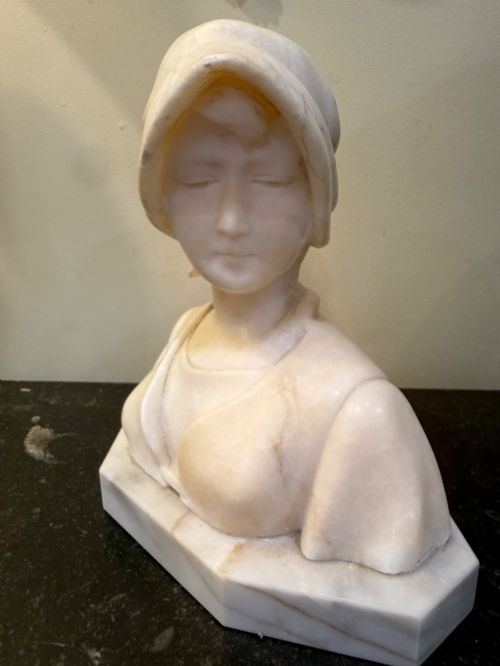


Victorian Marble Portrait
A victorian marble portrait captures likeness in stone, bringing classical presence and academic realism directly into domestic interiors.
Victorian Marble Portrait
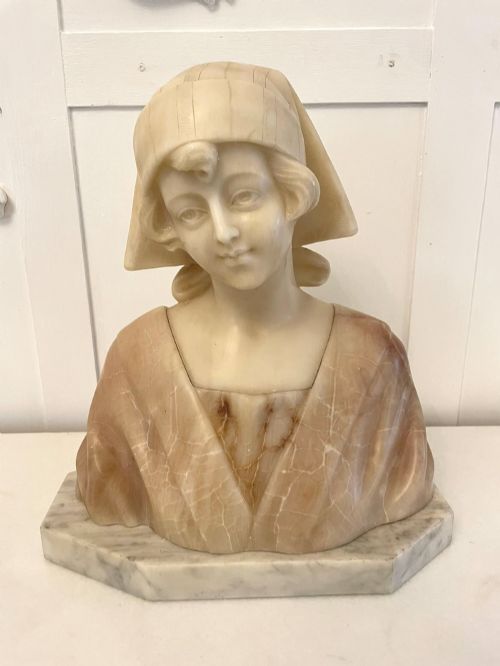
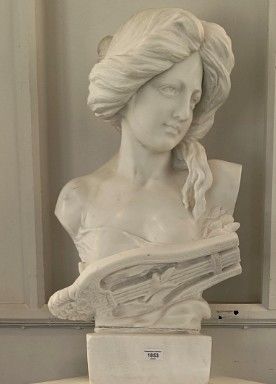
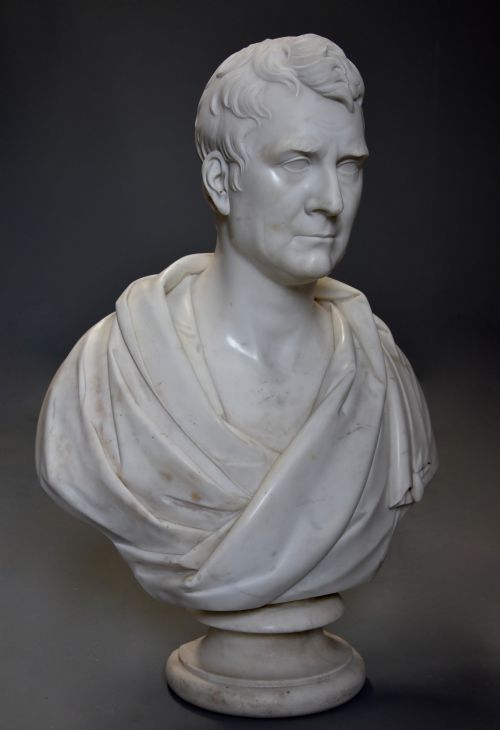
A victorian marble portrait typically takes the form of a carved bust depicting historical figures, mythological subjects, or anonymous gentlemen and ladies. These pieces emerge from nineteenth-century workshops influenced by Grand Tour travels, Neoclassical ideals, and academic realism.
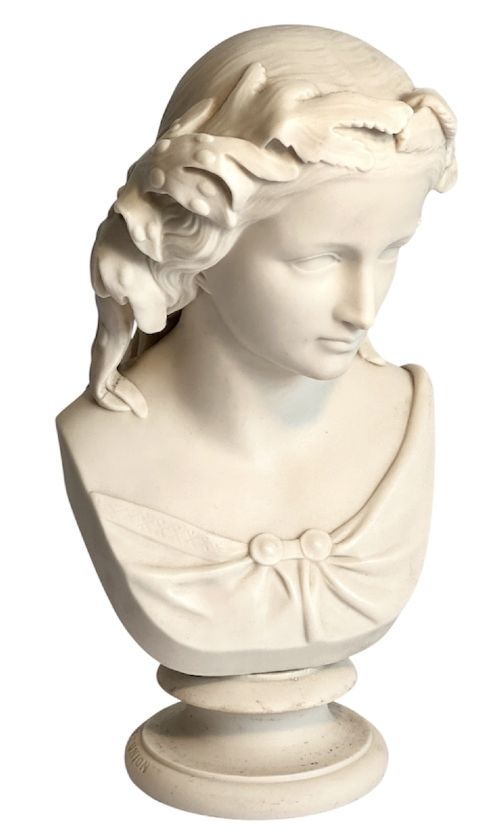
The versions most commonly met on this page range from monumental civic sculptures to domestic mantelpiece busts and carved alabaster studies. Makers across Britain, France, and Italy produced these works in white marble, Carrara marble, and alabaster, frequently mounting them on contrasting plinths.
Subjects span from classical muses and literary heroines to specific MPs, artists, and young girls, capturing individual character through nineteenth-century sculptural conventions. Such portraits serve as focal points in studies, hallways, and libraries.
Materials and Techniques
Carvers shaped these portraits primarily from solid blocks of white marble, Carrara marble, or softer alabaster using chisels, rasps, and drills. Workshops polished the exposed flesh to a smooth finish while leaving hair and drapery with textured contrast.
Some sculptural pieces combine cast bronze elements with carved marble bases or incorporate gilt highlights and inset carved lava cameos. Craftsmen often mounted completed busts onto specialised plinths, torcheres, or multi-coloured marble bases like vert de mer.
Some Grand Tour inkstands smuggled ancient Italian views onto the desk via tiny carved lava cameos.
Markers of Distinction
Quality in a victorian marble portrait rests on the sensitivity of the carving and the purity of the stone. Superior examples display subtle facial expressions, lifelike drapery folds, and finely articulated hair rather than mechanical repetition.
Signed works by documented sculptors command attention for anatomical precision and confident handling of the material. The choice of base material and the integration of the bust with its plinth also separate ambitious studio pieces from standard commercial production.
J Francis·John Wenlock Rollins·Mieczyslaw Leon Zawiejski·Alajos Strobl·Eutrope Bouret·Eugene Laurent
The Victorian Marble Portrait Glossary
- Bust
- A sculpted representation of a person from the chest or shoulders up. This form dominates nineteenth-century portraiture.
- Carrara marble
- A type of white or blue-grey marble from the city of Carrara in Italy. Sculptors prized it for its fine grain and uniform appearance.
- Grand Tour
- A cultural journey of Europe undertaken by wealthy young Englishmen in the nineteenth century. Travellers often returned with carved marble or bronze souvenirs.
- Neoclassical
- A Western cultural movement drawing inspiration from the art and culture of classical antiquity. It heavily influenced nineteenth-century sculpture and portraiture.
- Parian porcelain
- A fine-grained bisquefiscuit porcelain developed in Britain to imitate carved marble. Copeland produced notable portrait busts in this medium.
Victorian Marble Portrait: Frequently Asked Questions
How do I clean marble?
Dust the surface regularly with a soft, dry cloth to prevent accumulation in the carved crevices.
Avoid using water, chemical cleaners, or abrasives, as these substances can damage the polished finish of nineteenth-century stone.
Where should I display a bust?
Place the sculpture on a sturdy surface such as a dedicated pedestal, heavy sideboard, or a low bookcase.
Ensure the location remains stable and away from direct heat sources to protect the stone and any underlying wood furniture.
What is Grand Tour art?
Grand Tour pieces are souvenirs acquired by travellers touring classical sites in Italy and Greece during the nineteenth century.
These portable sculptures and inkstands often replicated famous antique statues or featured local materials like lava cameos.
How are signatures found?
Sculptors typically incised their signatures or initials directly into the truncation of the marble shoulder or onto the rear base.
Inspect these areas under good lighting with a magnifying glass to check for signatures and dates.