


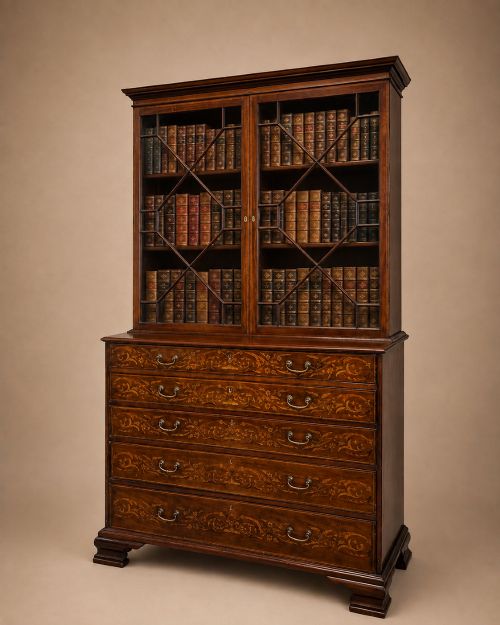
Victorian Mahogany Writing Desk
A victorian mahogany writing desk combines nineteenth-century utility with rich timber surfaces, offering a practical workspace for modern studies and libraries.
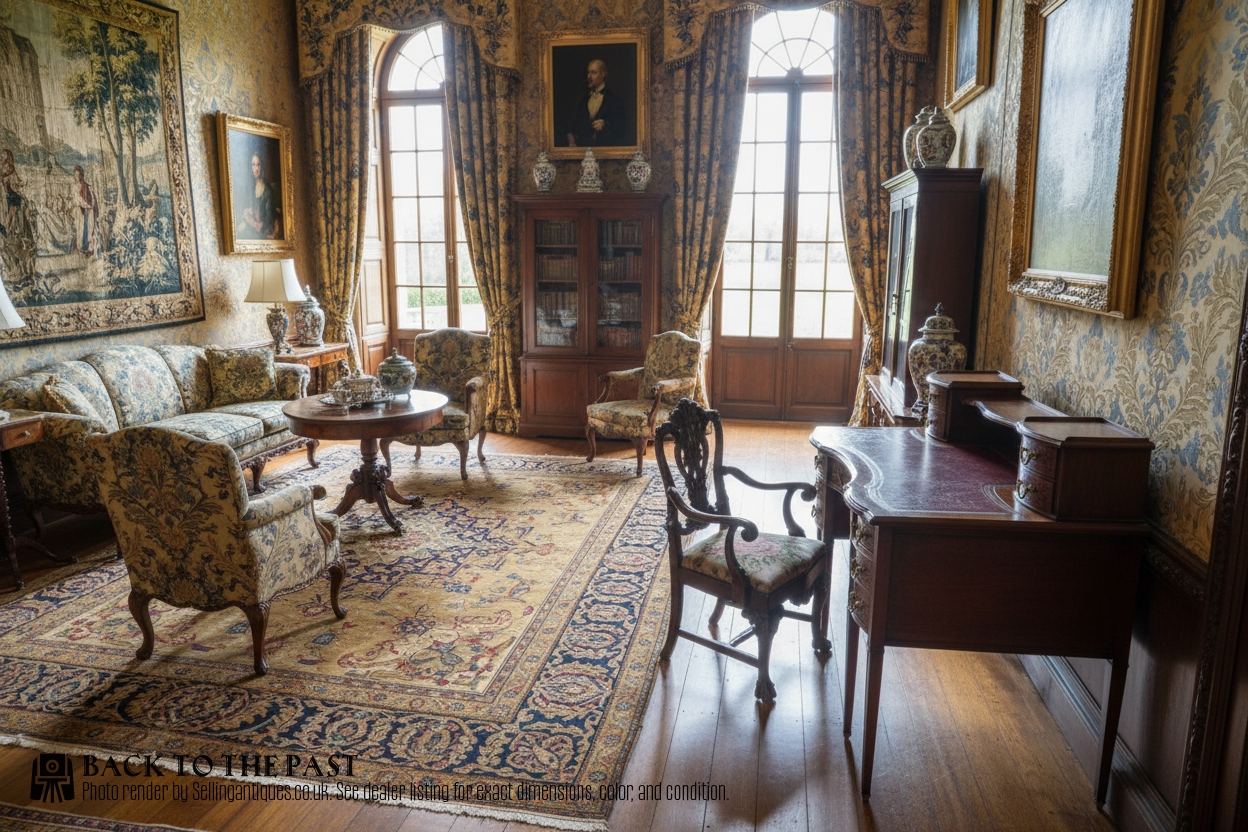
Victorian Mahogany Writing Desk
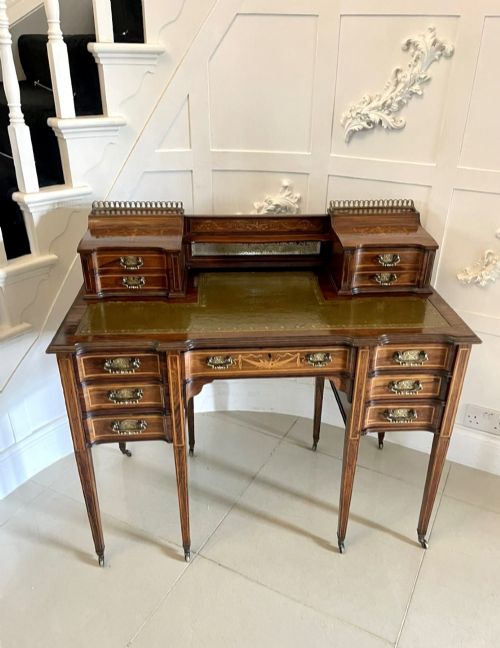
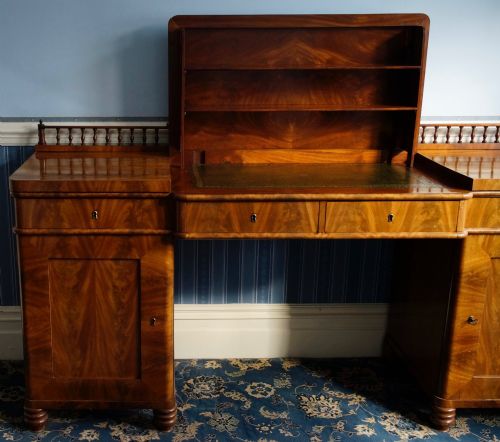
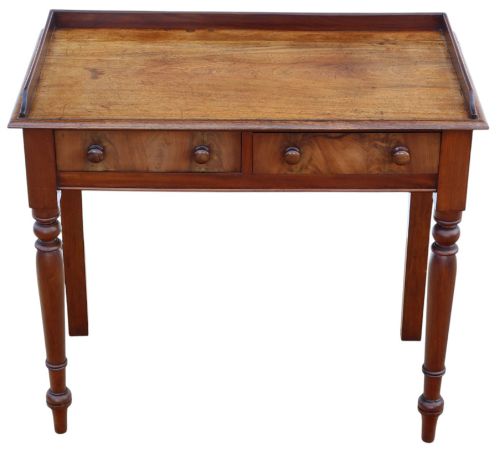
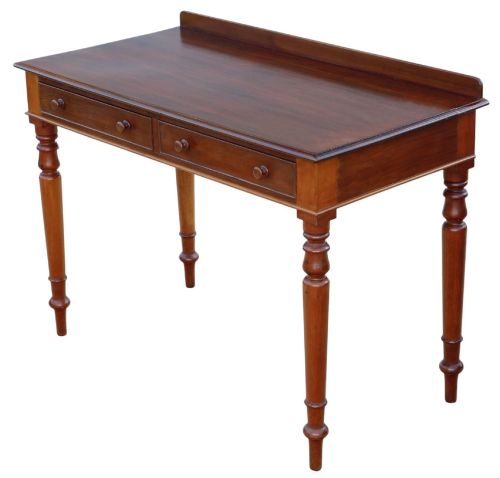
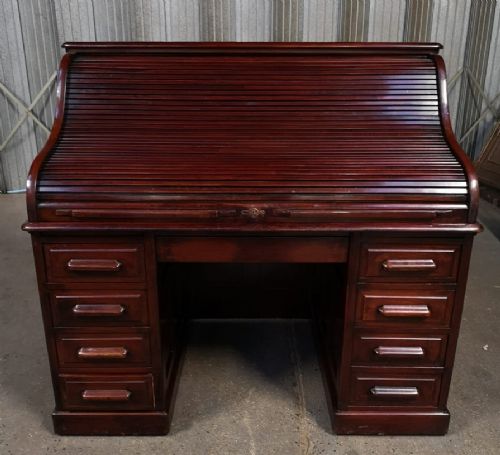
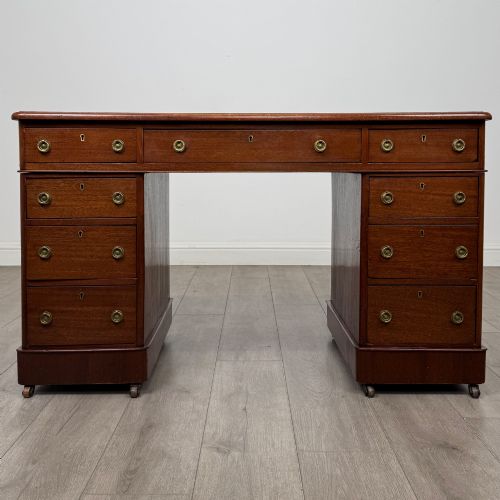
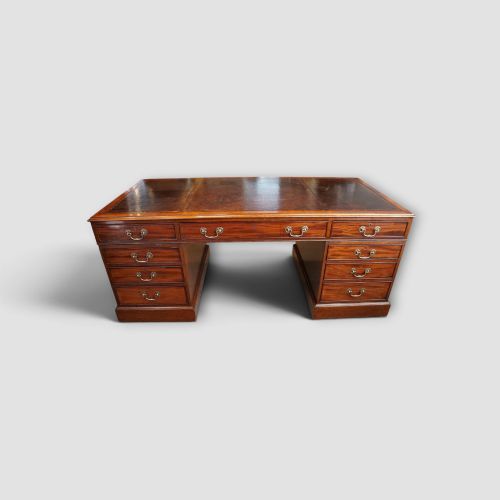
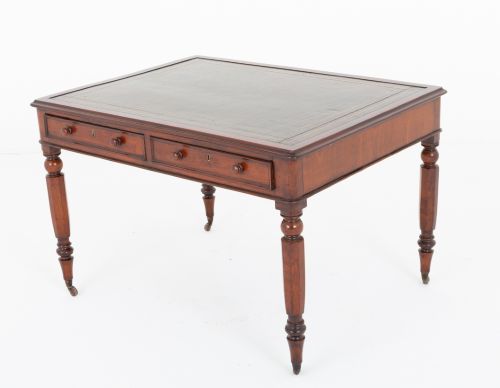
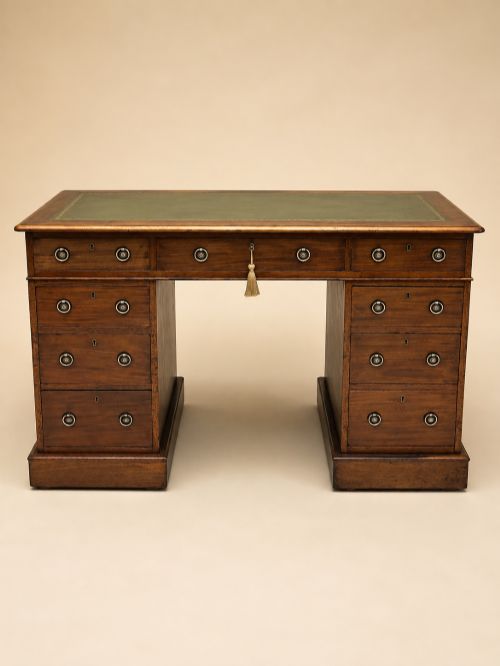
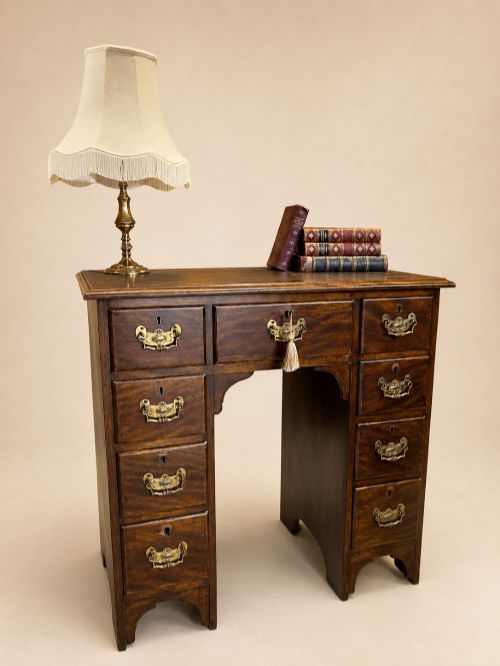
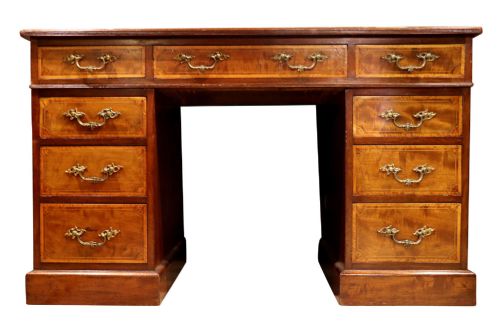
A victorian mahogany writing desk encompasses various functional forms produced during the nineteenth century, ranging from simple writing tables and side tables to large twin pedestal desks and partners desks. The most common versions encountered are pedestal kneehole desks and rectangular writing tables featuring multiple drawers.
How they were made
Cabinetmakers utilised solid timber and veneers, frequently selecting flame mahogany or figured mahogany to create patterned surfaces on drawer fronts and tops. Secondary woods provided structural stability for carcases and internal framing.
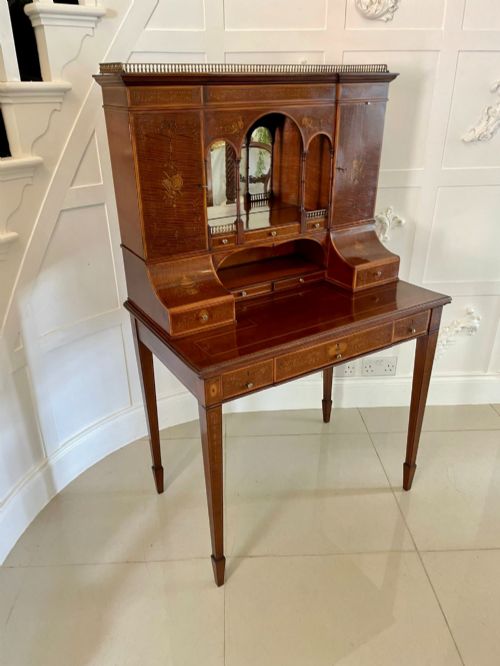
Brass hardware, including campaign mounts, drop handles, and escutcheons, secured drawers and corners. Inset surfaces utilised dyed or tooled leather, whilst secondary glazing and mirror glass appeared on associated secretaire bookcases.
Victorian Mahogany Writing Desk Retail Price Guide 2026
Typical asking prices for victorian mahogany writing desk among the pieces listed under this phrase on Sellingantiques today, from the lower quarter to the upper quarter. They describe what is for sale here now, not the wider market.
Some nineteenth-century models feature secret compartments hidden behind seemingly ordinary stationery drawers.
What varies in quality
Construction standards depend upon the selection of timber figures, with heavily figured flame mahogany veneer indicating greater expense than plain stock. Joinery techniques, such as dovetailed drawer linings and well-fitted internal stationery compartments, separate standard production from superior workshops.
The presence of original handles, authentic leather writing inserts, and maker stamps or signatures elevates the standing of a piece. Proportions and the retention of original brass-bound details or ebonised accents also define the upper tier of surviving examples.
Heal and Son·Trollope and Sons·Edwards and Roberts·Johnstone and Jeanes·Charles Andrea Nosotti·Gillows·Hobbs and Co·Spillman and Co
The Victorian Mahogany Writing Desk Glossary
- Pedestal desk
- A form comprising two banks of drawers supporting a single desktop, creating a kneehole space in the centre.
- Partners desk
- A large double-sided pedestal desk designed to accommodate two people sitting opposite one another.
- Flame mahogany
- A veneer cut from timber where the grain resembles flickering flames, prized for its decorative pattern.
- Secretaire
- A cabinet or desk incorporating a pull-out writing drawer or drop-front writing flap concealing pigeonholes and small drawers.
- Writing slope
- A portable box with a slanted writing surface that folds flat, often reinforced with brass corners.
Victorian Mahogany Writing Desk: Frequently Asked Questions
What is a partners desk?
A partners desk is a large pedestal writing table featuring drawers and cupboards on both sides, designed so two people could work face to face.
Cabinetmakers built these substantial pieces for use in shared libraries, studies, and administrative offices.
How do I identify a pedestal desk?
A pedestal desk consists of a rectangular top resting on two separate vertical pedestals containing stacked drawers, with an open kneehole space in the middle.
Many examples include an inset leather writing surface and matching drawers situated within the frieze above the kneehole.
What timber was used?
Mahogany served as the primary timber for these pieces, often selected as solid boards or applied as decorative flame mahogany veneer across drawer fronts.
Cabinetmakers occasionally combined mahogany with secondary structural woods and brass hardware.
Where were these desks placed?
Freestanding pedestal desks and partners desks were designed to stand centrally within a room rather than pushed against a wall, finished with drawers on all sides.
Writing tables and side tables were typically positioned against walls or beneath windows in domestic studies and libraries.