
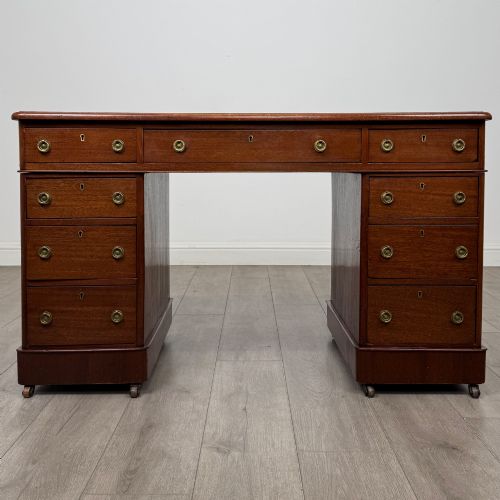
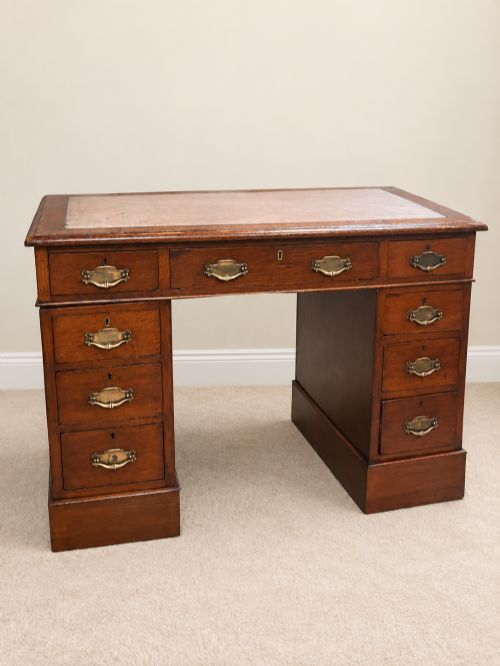
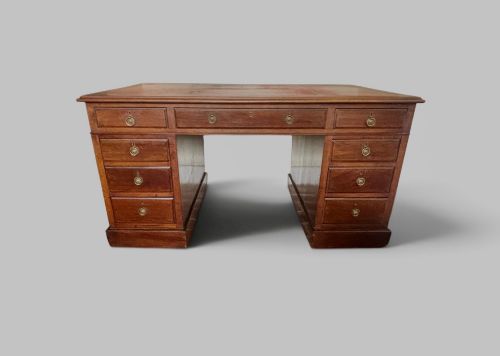
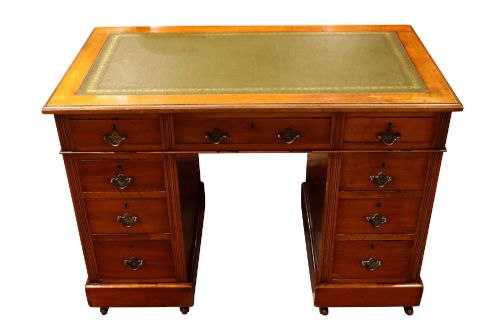
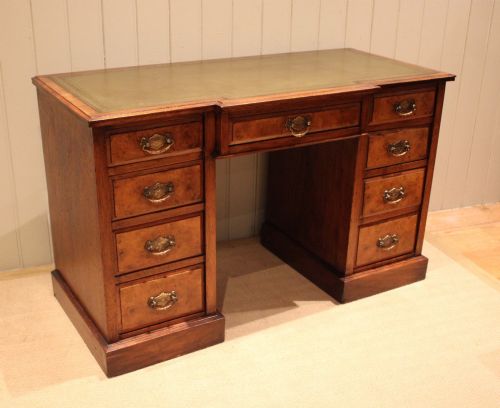
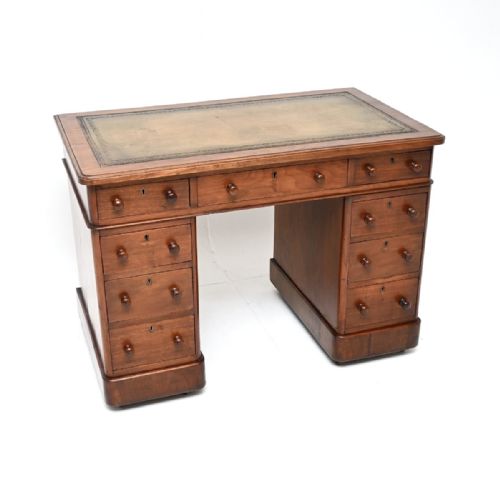
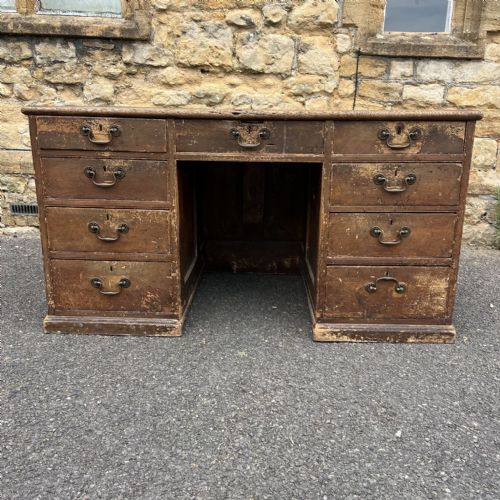
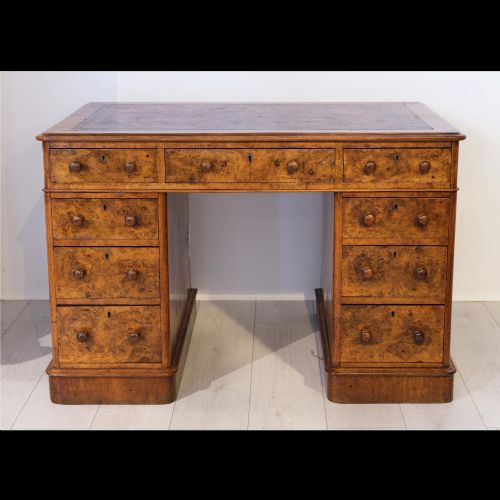

Antique Nine Drawer Desk
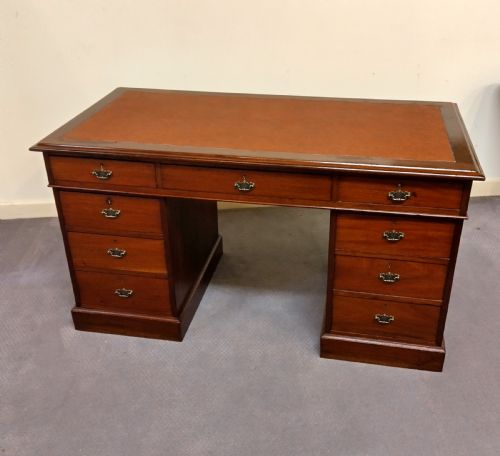
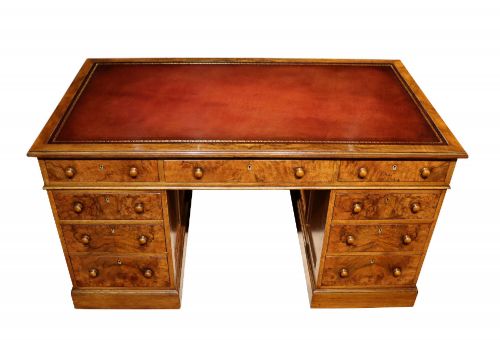
An antique nine drawer desk provides a commanding workspace anchored in the nineteenth century, built from timbers such as mahogany, oak, and burr walnut.
What an antique nine drawer desk is
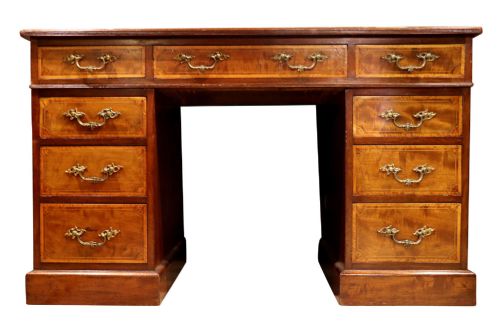
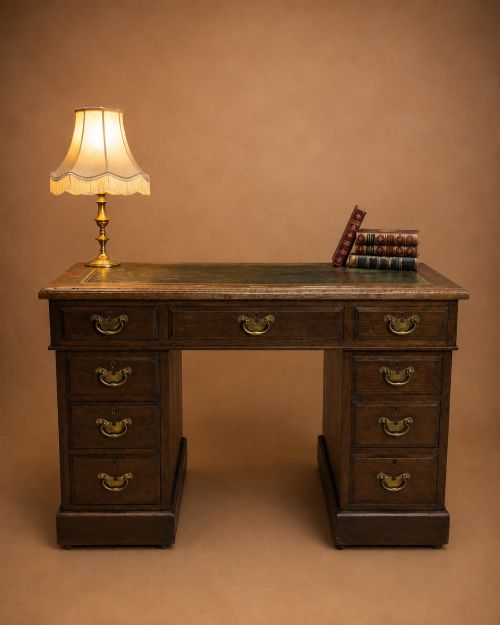
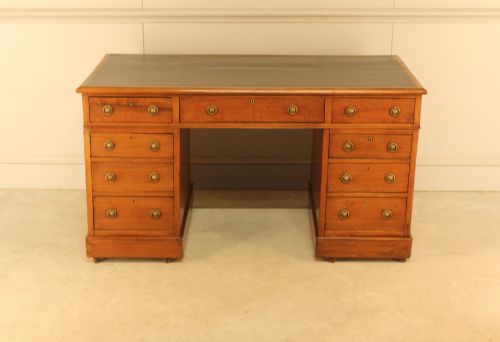
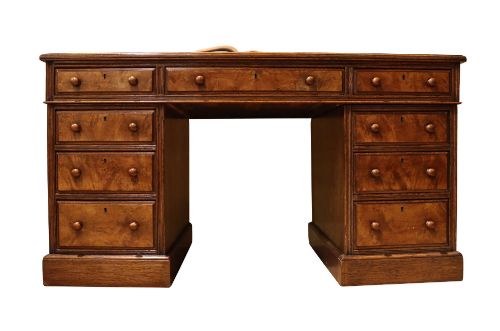
An antique nine drawer desk typically takes the form of a pedestal desk or an estate desk, offering substantial storage across dual pedestals flanking a central kneehole. The pieces seen span the nineteenth century, including Victorian and Victorian Country styles, alongside Edwardian examples.
Buyers most frequently encounter mahogany, oak, and burr walnut variations, sometimes complemented by maple or pine secondary timbers. These substantial items serve as functional writing furniture with deep histories rooted in the 1870s, 1880s, 1890s, and 1900s.
How they were made
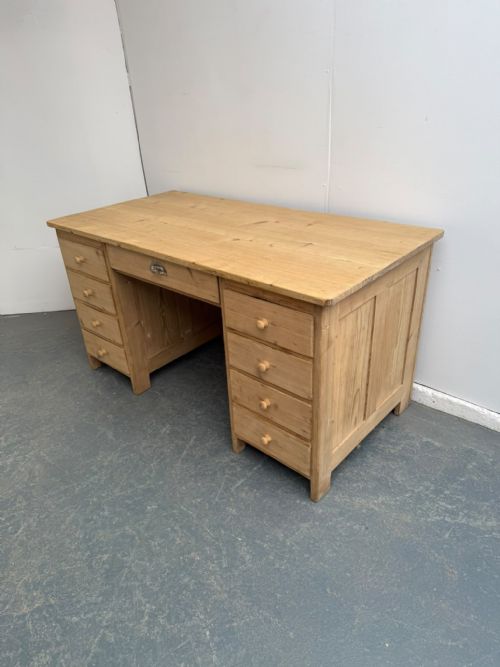
Cabinet makers utilised dense hardwoods like mahogany and oak for structural integrity, often applying figured burr walnut veneers to primary display surfaces for visual depth. Secondary woods such as pine appear in estate variations.
Writing surfaces were traditionally inset with panels of leather, while drawer construction relied on traditional joinery. Brass hardware, including handles and pulls, was integrated to finish the pedestal form.
Retail Price Guide 2026
Typical UK retail prices for nine drawer desk, calculated from the Sellingantiques database of over a million retail prices indexed since 2003. This retail price guide relies exclusively on Sellingantiques data; no external sources or auction records are used, so the figures do not describe the wider market.
Listings span the nineteenth century, featuring oak, mahogany, burr walnut, maple, and pine paired with leather and brass.
What varies in quality
The choice of primary timber dictates the visual hierarchy, distinguishing simpler pine and oak estate pieces from finely figured burr walnut or maple examples. The handling of veneer selection and grain matching across nine drawers reveals the skill of the original workshop.
Proportions and secondary material choices also separate standard production from superior work. The integration of quality brass fittings and inset leather writing surfaces further distinguishes the finer pieces in this category.
Maple and Co
The Antique Nine Drawer Desk Glossary
- Pedestal desk
- A heavy freestanding writing table comprising two separate drawer pedestals supporting a top with a central kneehole recess. This layout creates nine functional compartments for storage.
- Burr walnut
- A prized veneer sliced from the gnarled growths of walnut trees, displaying intricate, swirling grain patterns. It was favoured by nineteenth-century cabinet makers for luxury surfaces.
- Estate desk
- A utilitarian and robust piece of furniture, often constructed from pine and oak for working environments rather than formal reception rooms. These examples prioritise durability over decorative veneers.
- Kneehole
- The central recessed space beneath the desktop designed to accommodate the user's legs while seated. It is typically flanked by banks of drawers in pedestal configurations.
Frequently Asked Questions
What is an antique nine drawer desk?
An antique nine drawer desk is a nineteenth-century pedestal or estate writing table featuring two banks of drawers flanking a central kneehole.
These pieces utilise timbers such as mahogany, oak, and burr walnut, often finished with inset leather surfaces.
How are these desks arranged?
The standard layout places four drawers in each of the two pedestals, with a single wider drawer positioned directly above the central kneehole.
This configuration provides balanced storage across the structure while maintaining a comfortable seating space.
What woods were used?
Cabinet makers built these desks primarily from hardwoods like mahogany and oak, alongside decorative veneers such as burr walnut and maple.
Simpler estate variations incorporate pine and oak construction for increased utility in working environments.
How do I date these desks?
Dating relies on stylistic markers from the Victorian period, spanning the 1870s through to 1900, with Edwardian examples extending into 1910.
Timber choice, construction methods, and hardware styles help narrow the period of manufacture.