




Pine Pedestal Desk
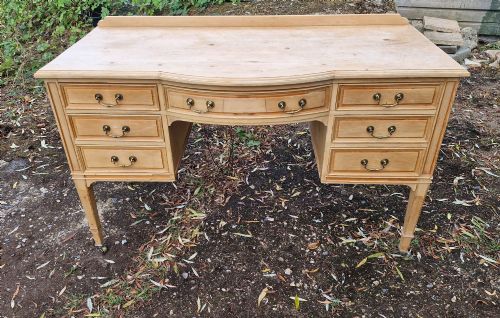
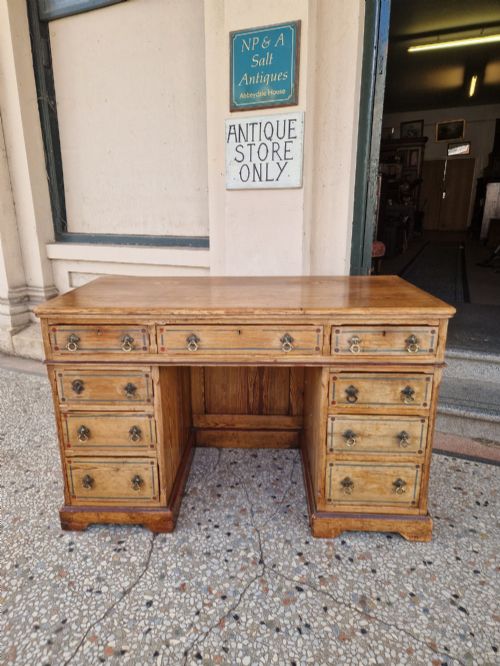
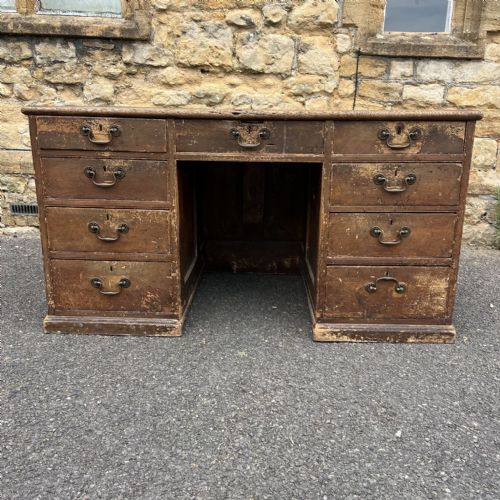
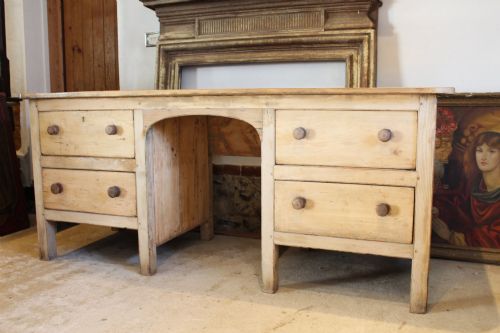
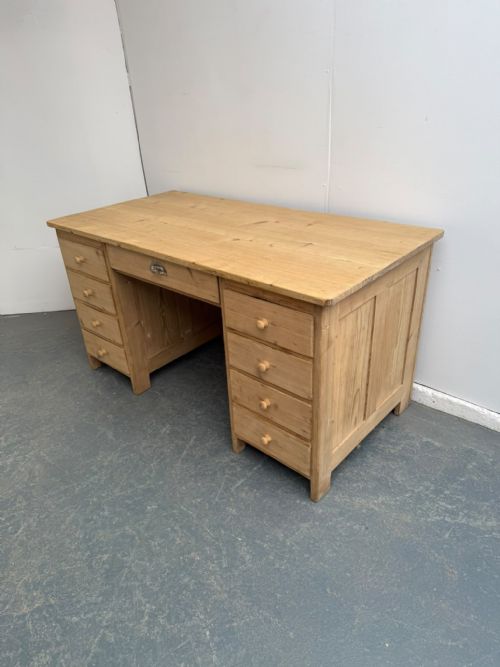
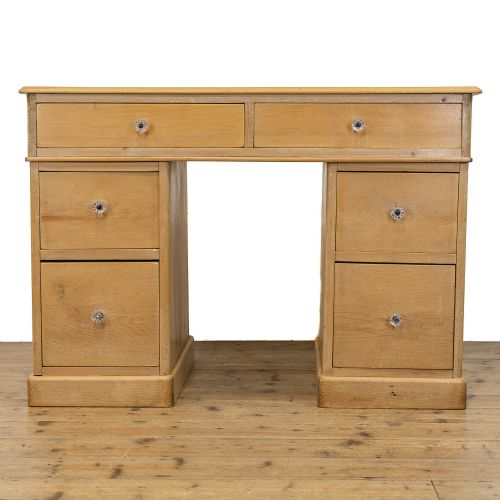
A pine pedestal desk is a sturdy twin-block workspace built for serious correspondence, offering deep drawers and a spacious writing surface.
Understanding the pine pedestal desk
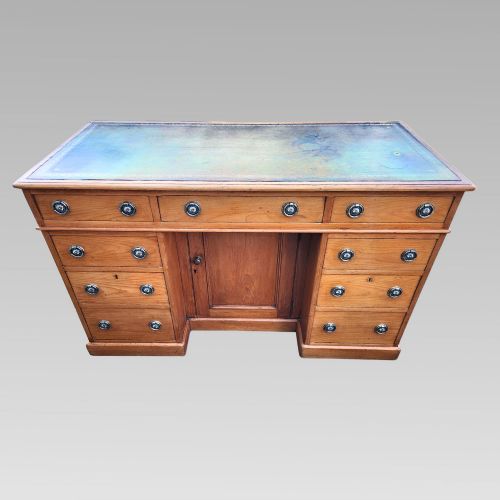
A pine pedestal desk is defined by its twin banks of drawers supporting a central top, forming a robust station for paperwork and administration. The evidence shows these pieces spanning the Georgian, Victorian, and Edwardian eras, reflecting both utilitarian estate use and domestic writing habits.
Most examples appearing in the current range date from the Victorian and Edwardian periods, frequently taking the form of kneehole tables or large partners desks. Makers of the time utilised sturdy softwood carcass construction, sometimes combining pine with oak, sycamore, or walnut elements.
Origins range from country houses and ecclesiastical settings to estate offices, giving these desks a practical, hardworking character. Buyers encounter variations including panelled sides, tiered drawers, and fitted interiors designed for heavy administrative output.
Construction and materials
Carpenters built these desks using solid pine timber for the main bodies, frequently incorporating oak, sycamore, or walnut for secondary elements and internal framing. Drawers feature traditional joinery like dovetails, paired with brass and iron pulls, handles, and locks.
Surfaces often show inset leather writing panels, while structural parts rely on sturdy softwood planks. Many surviving examples carry layers of old paint, wax finishes, or natural pitch pine patination developed through decades of heavy use.
Retail Price Guide 2026
Typical UK retail prices for pine pedestal desk, calculated from the Sellingantiques database of over a million retail prices indexed since 2003. This retail price guide relies exclusively on Sellingantiques data; no external sources or auction records are used, so the figures do not describe the wider market.
Recorded materials across the archive include pine, brass, iron, oak, sycamore, and leather, spanning the Victorian and Edwardian periods.
Quality factors
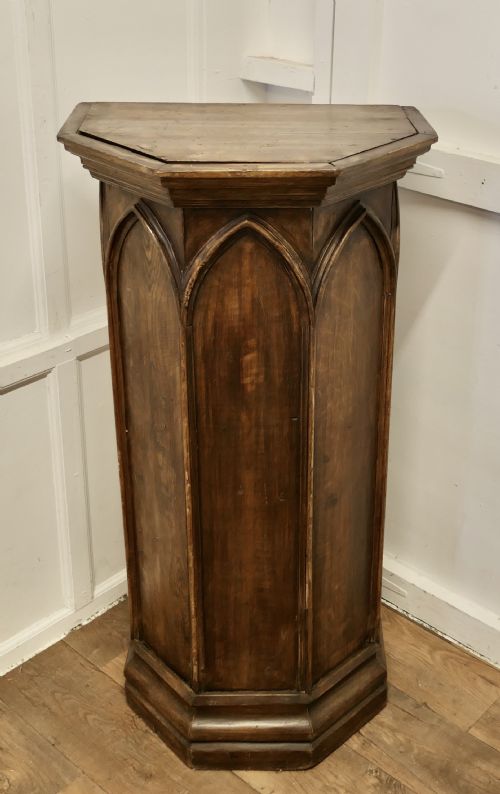
The distinction between standard utility items and finer pieces lies in the choice of timber and the complexity of the pedestal configuration. Desks incorporating pitch pine, secondary hardwoods such as sycamore, or Gothic revival detailing sit higher in the range than basic painted office tables.
Proportion and scale also dictate worth, with large partners desks and three-part modular estate desks representing more ambitious carpentry than simple single-piece kneehole tables. The survival of original fitted drawer arrangements and patinated leather inserts further separates utilitarian workshop survivals from grander country house furniture.
The Pine Pedestal Desk Glossary
- Pedestal desk
- A heavy writing table supported by two vertical banks of drawers rather than four distinct legs.
- Kneehole
- The central recessed space beneath the desk top left open for the user's legs.
- Partners desk
- A large format workspace designed for two people to sit opposite each other with matching drawer banks on both sides.
- Pitch pine
- A resinous, durable North American pine variety prized for its dense grain and strength in heavy furniture.
- Estate desk
- A utilitarian piece built for administrative duties on large agricultural or institutional properties.
Frequently Asked Questions
What is a pine pedestal desk?
A pine pedestal desk is a heavy writing table constructed with two supporting banks of drawers flanking a central kneehole space. These pieces served administrative roles in Victorian and Edwardian estate offices, country houses, and institutions.
Built primarily from softwood timber, they offer substantial storage capacity beneath a wide writing surface. The configuration allows users to sit comfortably while keeping extensive paperwork organised within arm's reach.
How do I tell Victorian from Edwardian desks?
Victorian examples generally display heavier proportions, darker wax patination, and robust panelled construction suited to rigorous office environments. Pitch pine variants from this era often feature deep tapering drawers and robust brass hardware.
Edwardian pieces tend to show lighter construction, sometimes incorporating painted finishes or simpler lines while maintaining the traditional twin pedestal format. Examining the secondary timbers and internal drawer joinery helps clarify the period of manufacture.
Were these desks used in homes?
While many originated in estate offices, country houses, and administrative hubs, smaller versions and kneehole writing tables suited domestic studies. They provided ample storage for household accounts and personal correspondence.
Their sturdy pine construction made them practical for daily household management rather than delicate parlour display. Over time, domestic use added characteristic wear and patination to the timber surfaces.
How should I care for an old pine desk?
Maintain the timber by applying traditional beeswax periodically to nourish the dry softwood and preserve the historic finish. Avoid placing the desk near direct heat sources to prevent the pine planks from splitting.
Clean surfaces with a soft, dry cloth rather than harsh chemical polishes that strip the accumulated patina. Leather writing inserts benefit from gentle conditioning designed specifically for antique hides.