
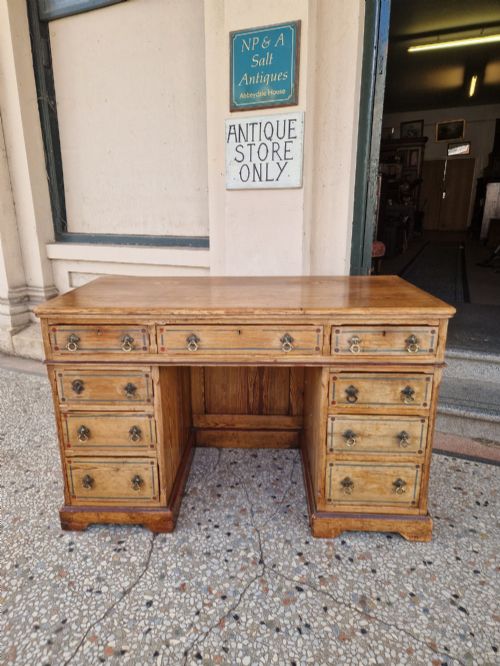
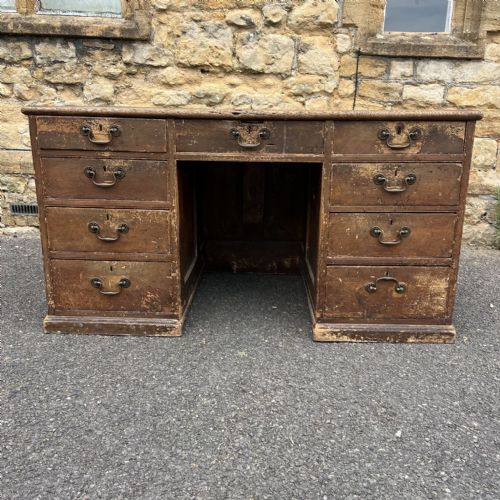
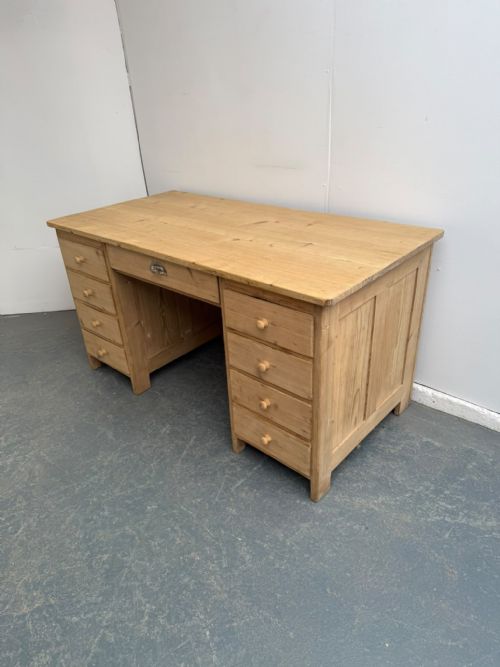


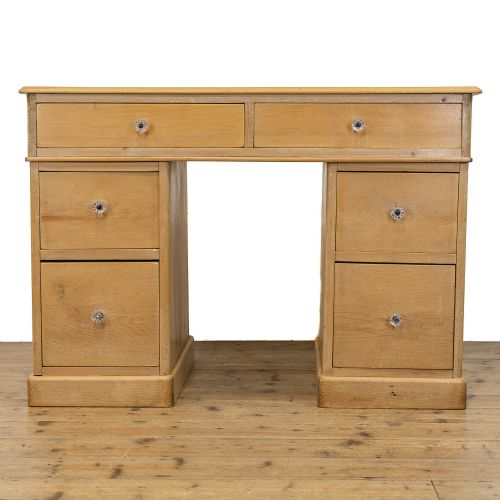


Victorian Pine Kneehole Desk
These Victorian pine kneehole desks are practical nineteenth century workspaces built in timber, offering generous drawer arrangements and sturdy proportions for daily study.
Victorian Pine Kneehole Desk
A Victorian pine kneehole desk provides a compact writing station featuring a central recess flanked by banks of drawers. The examples seen here belong to the nineteenth century, including pieces dated to eighteen eighty and nineteen hundred.
Most items appear in standard pine or denser pitch pine, sometimes with oak elements or historic painted finishes. Formats range from large office desks to smaller pedestal dressing tables and pedestal writing desks.
Makers of the period constructed these utilitarian items for estate offices, country houses, and domestic studies. Buyers most frequently encounter straightforward pedestal configurations with fitted drawers and arched kneeholes.
Materials and Construction
Makers utilised solid pine and pitch pine for the primary carcases, occasionally incorporating oak for internal framing and structural stability. Timber boards were joined using traditional carpentry methods suited to heavy daily use in offices and estate rooms.
Surface finishes vary between natural waxed wood, historical paint layers, and original stencilled decoration. Metal fittings such as brass handles and hardware appear alongside glass or wooden components depending on the specific desk type.
One surviving piece includes a dog kennel compartment beneath the writing surface, built for an office spaniel.
Judging Quality and Character
The distinction between standard utility items and finer examples rests upon the selection of timber and the complexity of the drawer configuration. Desks built in pitch pine with panelled construction and fitted internal compartments represent more substantial cabinetmaking.
Surface treatment significantly influences character, as original stencilled decoration or untouched historic paint preserves the authentic age of the piece better than stripped and modernly waxed surfaces.
The Victorian Pine Kneehole Desk Glossary
- Kneehole
- A recessed central space beneath a desk top designed to accommodate the user's legs while seated. This architectural feature allows banks of drawers to sit on either side.
- Pedestal
- A structural support unit containing a vertical stack of drawers. Desks may feature one or two of these supports flanking the central opening.
- Pitch Pine
- A dense, resinous variety of pine known for its durability and strong grain pattern. It appears frequently in later nineteenth century office furniture.
- Dog Kennel
- A central arched compartment located beneath the desk top or dresser surface, situated between two drawer pedestals. The term derives from its resemblance to a kennel opening.
- Estate Desk
- A utilitarian writing table produced for administrative use within large agricultural or landed estates. These pieces prioritise robust construction over delicate ornamentation.
Victorian Pine Kneehole Desk: Frequently Asked Questions
What is a kneehole desk?
A kneehole desk is a flat-topped writing table featuring a central recessed space for the legs, with drawers positioned on either side.
This layout provides storage without sacrificing comfortable seating space for daily administrative work.
How do I care for antique pine?
Antique pine requires gentle cleaning with a soft cloth and occasional application of traditional beeswax to nourish the timber.
Keep these wooden items away from direct heat sources and strong sunlight to prevent the dry pine from splitting.
Are pitch pine desks different?
Pitch pine is a harder and more resinous timber than standard soft pine, offering greater weight and distinct grain patterns.
Desks built from this material often date to the later Victorian period and show robust resistance to heavy use.
How can I date a Victorian desk?
Dating relies on examining construction methods, timber selection, handle styles, and any accompanying documentation or stylistic clues.
Items from the nineteenth century typically display hand-cut joinery details and heavier timber scantlings than twentieth century reproductions.