



Antique Pine Office Table
An antique pine office table provides a practical workspace built from resilient timber during the Victorian, Edwardian, and earlier eras.
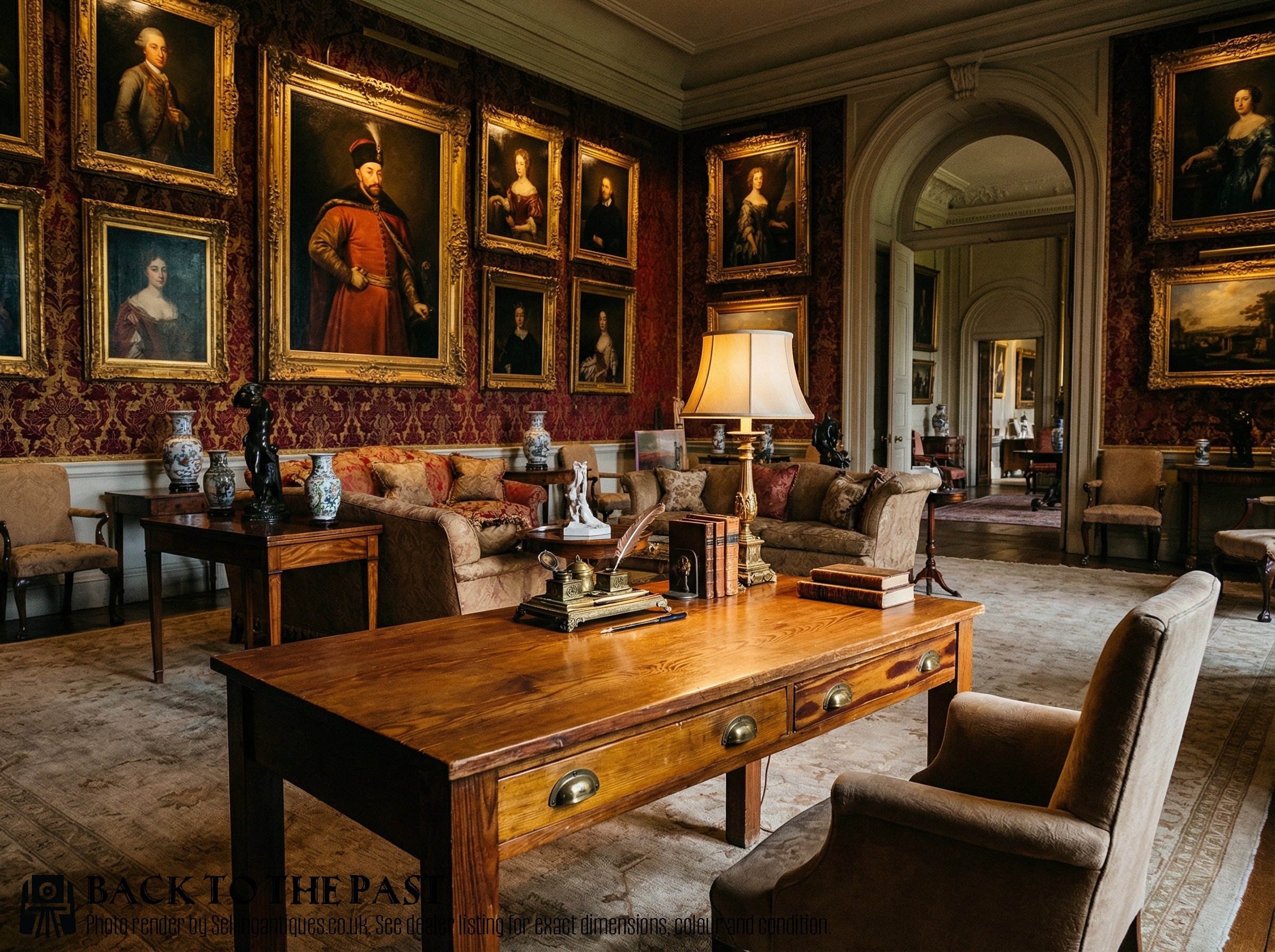
Antique Pine Office Table
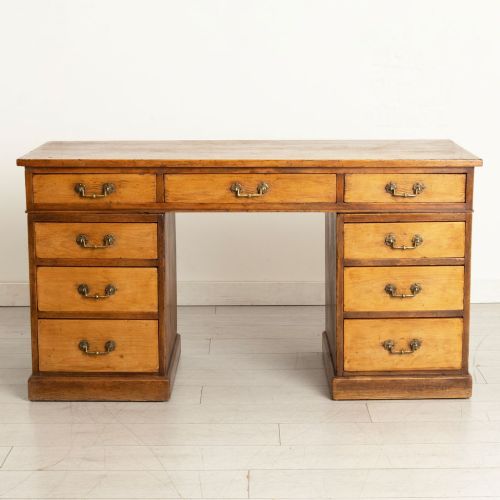
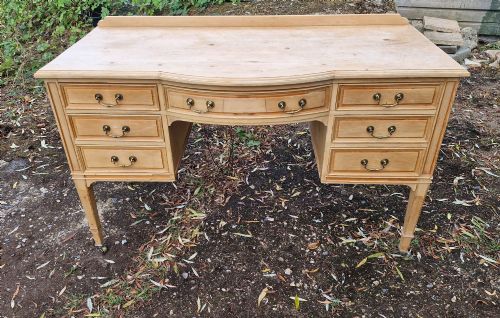
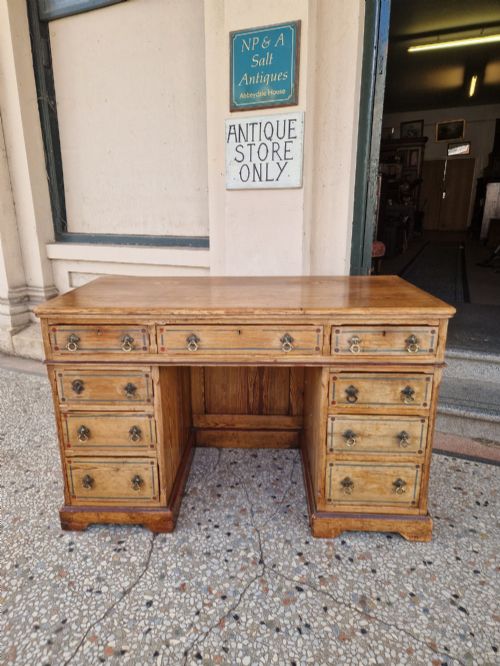
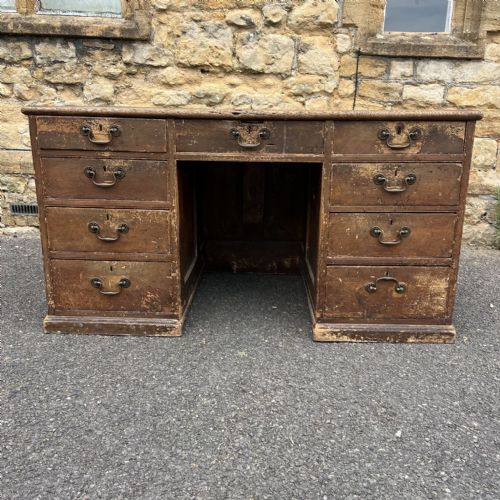
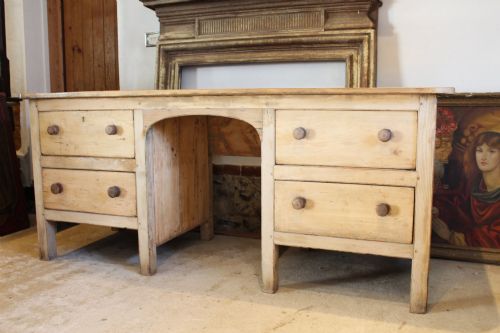
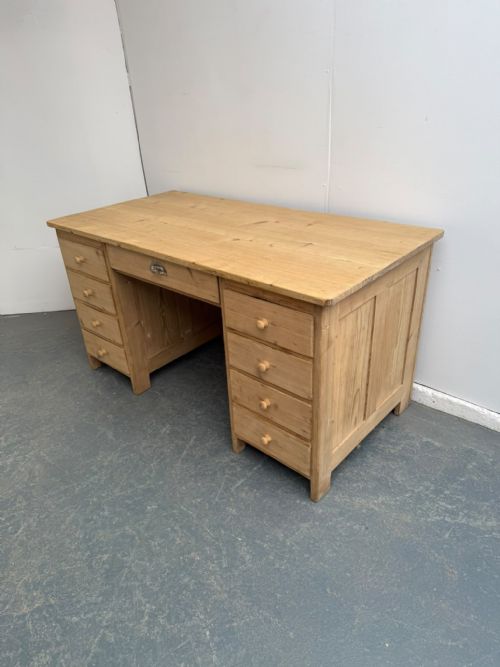
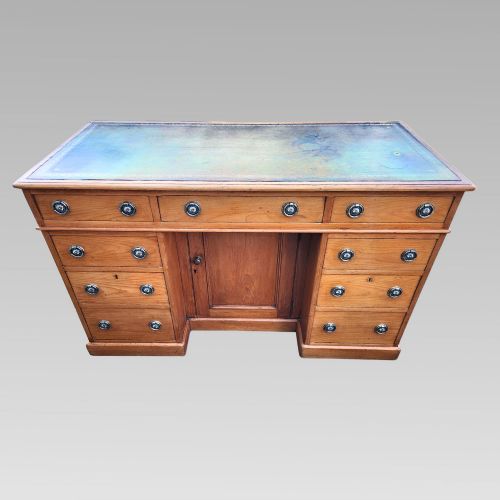
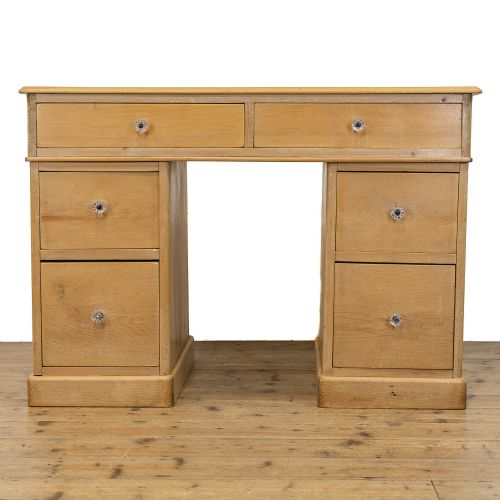
An antique pine office table serves as a functional workspace, with examples on this page spanning periods from the late Georgian era through to the Edwardian period. Buyers encounter forms ranging from simple school teacher tables to substantial pedestal partner desks and kneehole writing tables.
Makers utilised various regional styles, including Victorian country, Arts and Crafts, rustic country, and Swedish Gustavian designs. The pieces frequently combine pine with secondary woods like oak, sycamore, and pitch pine to create durable furniture for administrative tasks.
Constructed primarily for utility in domestic, school, and estate settings, these tables provide deep drawers and writing surfaces. The selection includes multi-drawer pedestal configurations and panelled bodies suited to wax finishes or paint.
How they were made
Cabinet makers constructed these tables predominantly from solid pine and pitch pine, occasionally incorporating oak and sycamore for internal framing or secondary surfaces. Iron and brass hardware such as drawer pulls and handles provided essential functional support.
Surfaces were frequently left to be waxed or painted by the owner, reflecting the utilitarian origins of estate desks and school furniture. Heavier pieces utilised dense pitch pine timbers to withstand daily clerical labour.
A school teacher's desk waits here with decades of invisible chalk dust still lingering in its grain.
What varies in quality
The distinction between standard utility tables and superior examples lies in the complexity of construction, such as multi-drawer pedestal layouts versus simple single-drawer writing tables. Dense pitch pine and combinations with sycamore or oak indicate higher grade material selection.
Design sophistication separates plain school furniture from architectural pieces featuring panelled sides and substantial kneehole configurations. The presence of original brass hardware and well-executed joinery elevates the status of a piece within its period.
The Antique Pine Office Table Glossary
- Kneehole desk
- A writing table featuring a central recess for the user's legs, flanked by pedestals of drawers on both sides.
- Pitch pine
- A durable resinous softwood utilised for heavy-duty furniture, prized for its strength and distinct grain pattern.
- Pedestal desk
- A large freestanding desk supported by two vertical columns of drawers.
- Partners desk
- A double-sided writing table designed for two people to work opposite each other simultaneously.
- Gustavian style
- The Swedish interpretation of neoclassical design, characterised by restrained ornamentation and pale painted finishes.
Antique Pine Office Table: Frequently Asked Questions
What periods do these desks date from?
The pieces span the nineteenth and early twentieth centuries, including Georgian, Victorian, and Edwardian eras.
Dates range from around eighteen hundred through to nineteen hundred and ten, reflecting diverse historical cabinet-making traditions.
Were these tables used in offices?
They served in various administrative environments, from grand estate offices to local school rooms.
Many functioned as teacher desks, estate writing tables, or domestic bureau setups for daily correspondence.
How should I maintain a pine desk?
Maintenance depends on whether the surface is finished with traditional wax or left in a painted state.
Regular polishing with appropriate beeswax helps preserve the natural timber while preventing the wood from drying out.
What woods are used besides pine?
Makers frequently incorporated pitch pine for added durability alongside secondary timbers like oak and sycamore.
Hardware components incorporated brass fittings and iron brackets to reinforce the heavy structural framework.