



Large Pine Desk
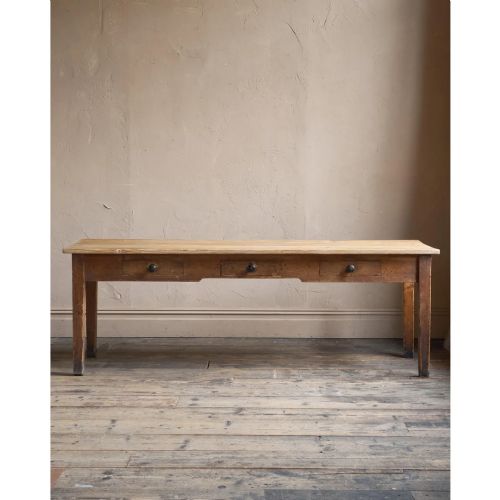
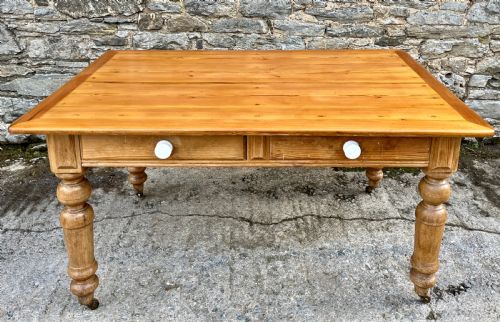
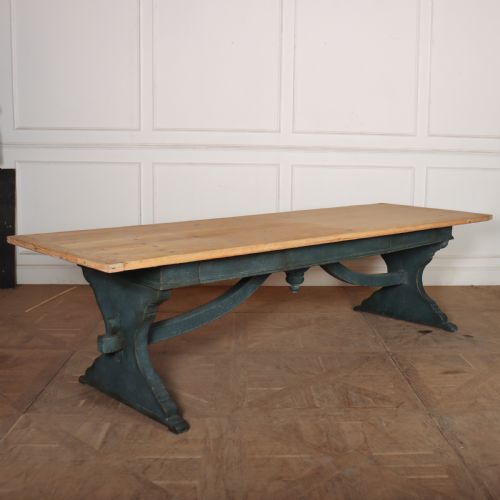
A large pine desk gives a room immediate presence, combining heavy utility with warm timber grain.
Large Pine Desk
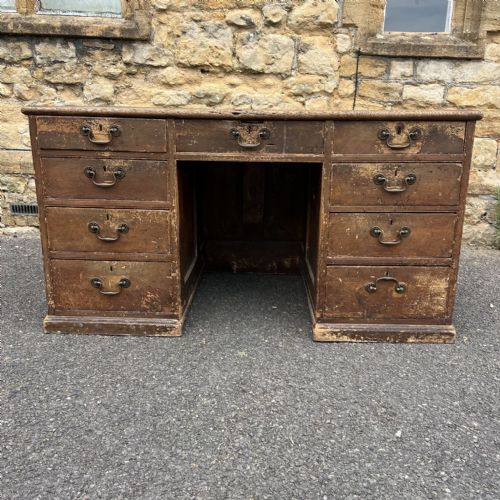
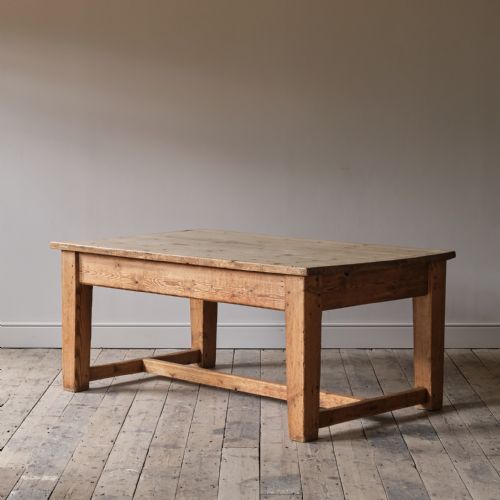
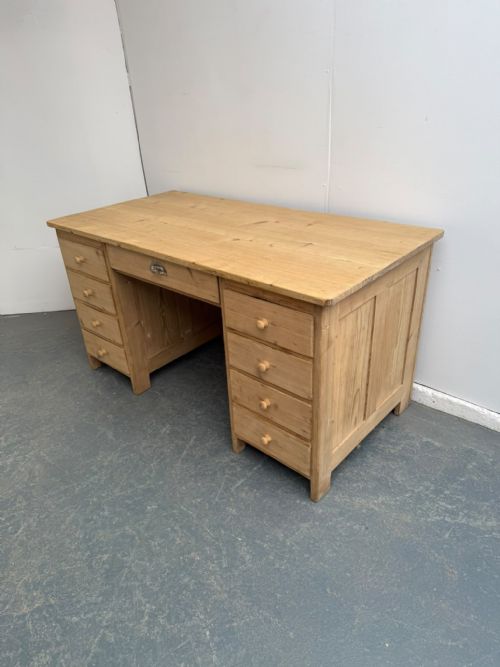
When you search for a large pine desk, you are looking at substantial working furniture built to handle heavy use in offices, studies and farmhouse interiors. The examples met on this page span the nineteenth century and the Edwardian period, often taking the form of pedestal desks, partners desks and scullery tables adapted for work. They arrive from English, French, Scandinavian, Italian and Eastern European workshops, showing both plain utilitarian builds and painted finishes.
Pedestal desks dominate the record, frequently fitted with multiple drawers, cupboards or leather inserts. These sturdy workspaces use softwoods alongside oak, ash or brass hardware for reinforcement. Whether finished in a wax coat or left ready for paint, each piece offers a generous surface area combined with practical storage capacity.
Judging quality
Quality in these large workspaces rests on the integrity of the timber selection and the retention of original fittings. Pieces built from dense pitch pine with tight grain patterns sit at the upper end of the range, showing superior durability compared to softer deal alternatives. The presence of original brass hardware, working locks and matching interior drawer construction elevates a piece considerably.
Proportion and scale also separate standard utility items from finer workshop output. Desks with breakfront configurations, deep pedestals and well-executed panelled sides demonstrate thoughtful design beyond basic utilitarian carpentry. The clarity of any painted finish, whether historic or scrubbed down to the bare grain, dictates the visual weight the desk holds in a room.
Some nineteenth century desks arrived with hidden compartments behind the pedestals, designed to keep private ledger books safe from wandering eyes.
Heals
The Large Pine Desk Glossary
- Pedestal desk
- A heavy freestanding workspace supported by two supporting columns or pedestals containing drawers or cupboards. These often feature central drawers and leather writing inserts.
- Partners desk
- A double-sided variant designed for two people to work opposite one another, featuring drawers and cupboards accessible from both sides. They represent some of the largest configurations found in nineteenth century offices.
- Pitch pine
- A resinous North American softwood valued for its strength, durability and distinct reddish-golden hue with prominent grain patterns. Makers utilised it for heavy commercial and domestic furniture.
- Escutcheon
- A protective plate surrounding a keyhole, usually cast in brass or iron. They prevent the timber around the lock from splitting during regular use.
- Scrubbed table
- A piece of furniture whose wooden top has been repeatedly scrupled clean with water and brush, removing varnish to leave a pale, smooth, matte surface.
Large Pine Desk: Frequently Asked Questions
How do I clean a large pine desk?
Maintain waxed pine surfaces using a quality beeswax applied sparingly with a soft cloth, buffing gently once dry. Avoid harsh chemical cleaners that strip the historic patina from the soft timber.
For scrubbed or unpolished tops, warm soapy water on a damp cloth removes surface dirt without damaging the grain. Dry the wood immediately afterwards to prevent warping or water staining.
Were these desks used in homes or offices?
These large pieces served both domestic and commercial environments, acting as estate office desks, schoolmaster workspaces and merchant counters. Their substantial footprint suited rooms where heavy paperwork or administrative tasks took place daily.
Many examples originated in large country houses, rural farmhouses or municipal buildings, reflecting the widespread reliance on pine for utilitarian furniture before the mass adoption of steel.
How do I date a nineteenth century pine desk?
Examine the construction methods inside the drawers, looking for hand-cut dovetails which generally indicate work executed before the late Victorian period. Tool marks on the underside and back boards also reveal whether makers used pit saws or steam-powered machinery.
Hardware styles, secondary timbers like oak linings, and the type of locks fitted provide further clues. Compare these details against the documented periods associated with similar pedestal and partners layouts.
Will a large pine desk fit in a modern room?
Measure your floor space carefully, accounting for the chair clearance needed behind the pedestals or drawers. These desks possess significant visual and physical weight, so they anchor a room well but require adequate surrounding clearance to avoid feeling cramped.
Lighter Scandinavian or scrubbed finishes help large pieces sit comfortably in contemporary interiors without overwhelming the natural light. Darker waxed versions provide a strong focal point in traditional studies or libraries.