



Vintage Pine Study Desk
A vintage pine study desk brings working utility and warm domestic timber into a room, offering sturdy drawers and writing surfaces built to last.
Vintage Pine Study Desk
A vintage pine study desk is a practical workspace built from softwood, appearing across this page in various nineteenth and early twentieth century forms. Buyers search for these pieces to anchor a study or bedroom with functional timber furniture that carries honest age and everyday utility.
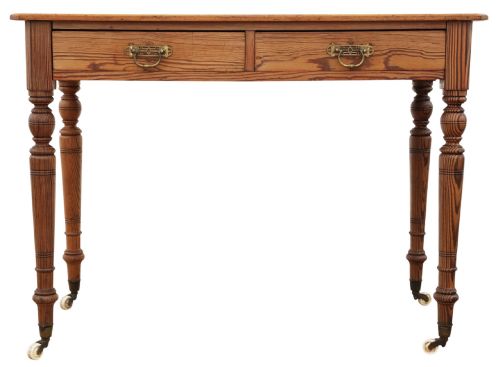
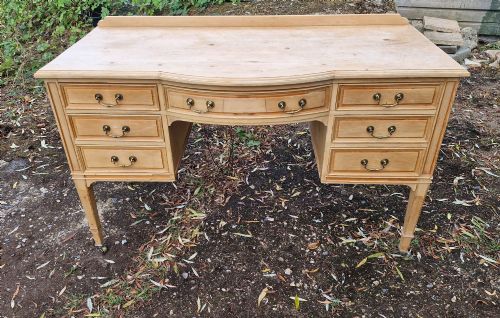
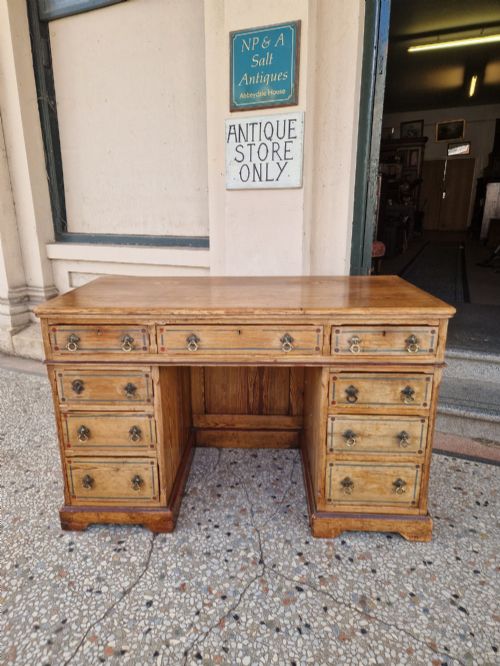
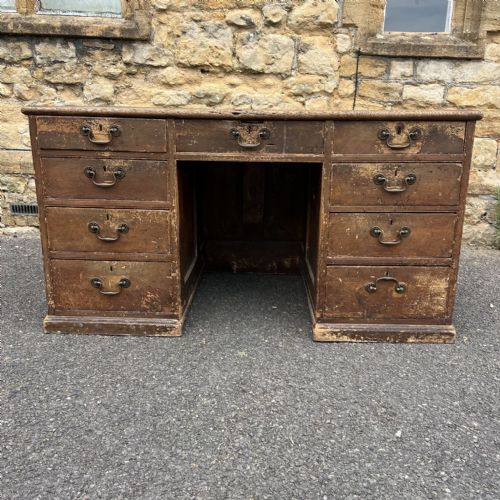
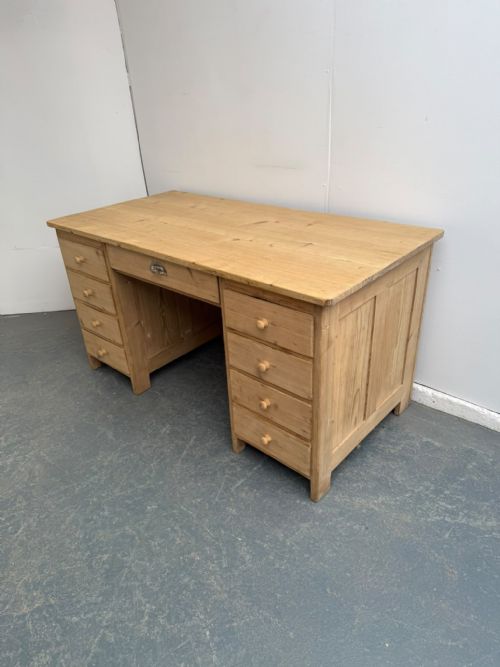
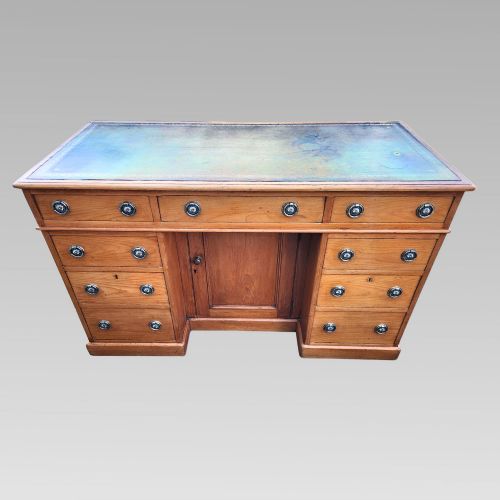
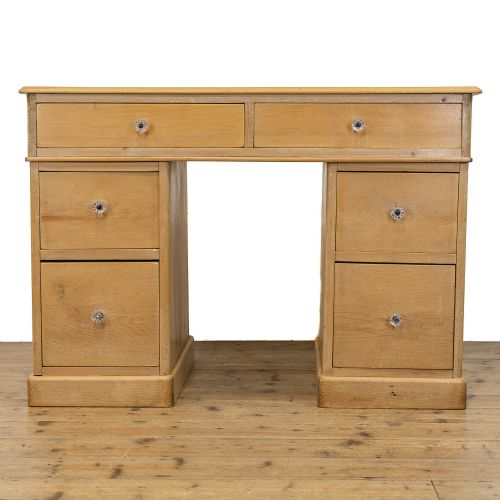
The most common examples on this page are pedestal and kneehole writing tables, often fitted with multiple drawers for storage. Alongside these standard office forms, one encounters estate desks, secretaire bureaux, and school teacher tables originating from Victorian and Edwardian periods.
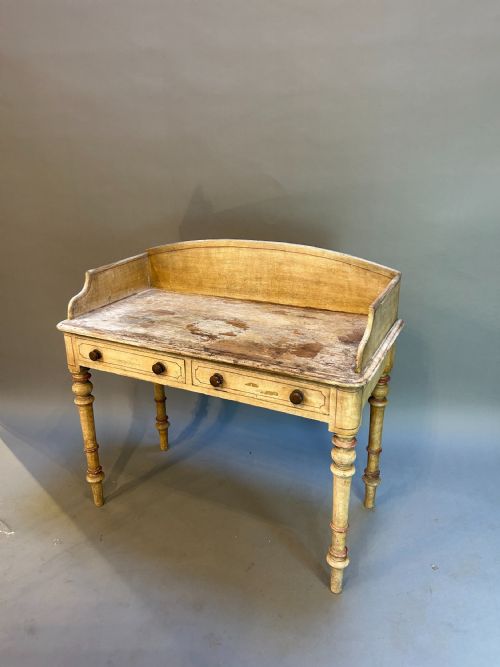
Regional and stylistic variations include rustic farmhouse models, Arts and Crafts designs, and Swedish painted pieces in pale finishes. Each variant maintains a straightforward layout intended for daily writing and administrative tasks.
How they were made
Construction relies heavily on solid pine and denser pitch pine, sometimes paired with oak for internal structure or drawer linings. Workshops utilised traditional joinery methods to build carcases and drawers capable of withstanding heavy daily use.
Surface treatments recorded in the evidence range from natural waxed finishes to painted wood and leather inserts on writing surfaces. Hardware typically includes brass handles and iron fittings that secure drawers and drop-front writing slopes.
Listings on this page span the Victorian, Edwardian, and Arts and Crafts periods, featuring materials such as pitch pine, brass, leather, and painted wood.
What varies in quality
Quality in these desks rests upon timber selection, evident in the choice between standard softwood and durable pitch pine. Better examples display careful proportion across multiple drawers and robust construction that holds firm through decades of opening and closing.
The refinement of the joinery and the presence of original brass or iron hardware distinguish utilitarian school and estate pieces from finely finished parlour or pedestal writing tables. Surface treatment also matters, separating simple painted finishes from carefully waxed timber that shows the grain.
The Vintage Pine Study Desk Glossary
- Pitch pine
- A dense, resinous softwood prized for its durability and prominent grain pattern. It appears on this page in nineteenth century desks and writing tables.
- Kneehole desk
- A writing desk featuring a central recessed space for the user's legs, flanked by pedestals of drawers. This form provides substantial storage beneath the main work surface.
- Secretaire bureau
- A desk incorporating a hinged writing slope or drop-front panel that conceals small drawers and pigeonholes. It combines enclosed storage with a pull-down writing surface.
- Pedestal desk
- A heavy desk supported by two banks of drawers resting on the floor. These items often served as partners desks or office furniture in Victorian settings.
- Gustavian
- A Swedish neoclassical style characterised by pale painted finishes and restrained classical ornamentation. Pieces in this tradition offer a lighter aesthetic compared to heavy British country furniture.
Vintage Pine Study Desk: Frequently Asked Questions
What is a kneehole desk?
A kneehole desk is a freestanding writing table with a central space for your legs and stacks of drawers on either side. This layout provides ample storage while keeping the user comfortable.
Such configurations appear frequently in Victorian and Edwardian office furniture designed for paperwork and correspondence.
How do I care for a waxed pine desk?
Caring for a waxed pine surface involves regular dusting with a dry cloth and occasional application of traditional beeswax to nourish the timber. Avoid placing hot mugs or damp items directly onto the softwood.
Keeping the desk away from direct heat sources prevents the timber from drying out or splitting over time.
What is the difference between pine and pitch pine?
Pitch pine is a specific variety of softwood containing a high resin content, making it noticeably heavier, harder, and darker than standard pine. It resists wear exceptionally well.
Desks built from pitch pine often exhibit a striking, dense grain pattern that stands out from typical painted or pale deal furniture.
Are these desks suitable for daily computer work?
These historical desks accommodate modern laptops and writing tasks, provided the surface area and knee clearance match your equipment. Many pedestal and kneehole models offer deep drawers for office supplies.
Measuring the height of the kneehole ensures comfortable seating for extended periods of daily work.