





Victorian Mahogany Toilet Glass
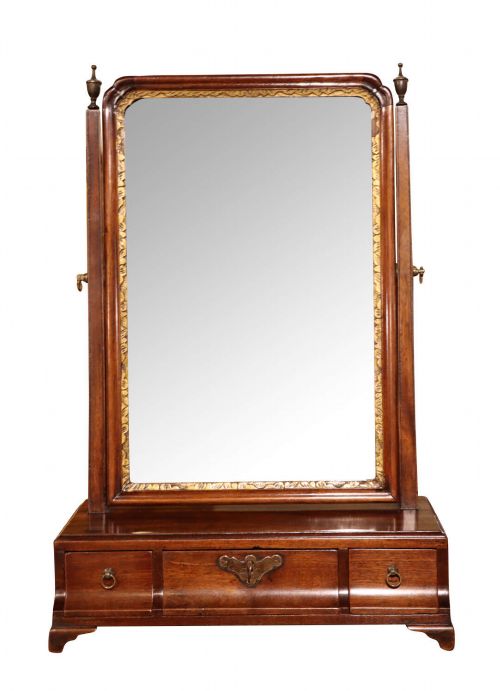
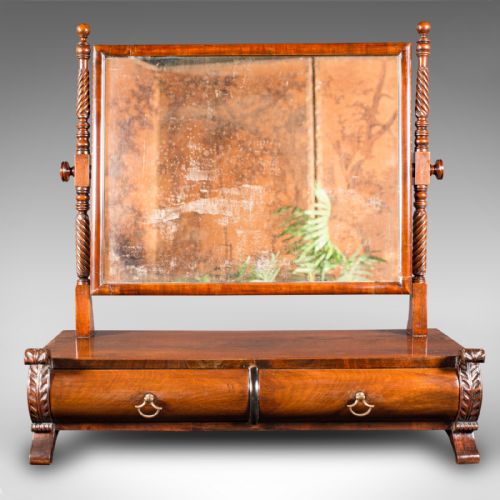
A victorian mahogany toilet glass is a tabletop swing mirror designed for the bedroom, offering rich timber tones and adjustable angles for daily grooming.
Victorian Mahogany Toilet Glass
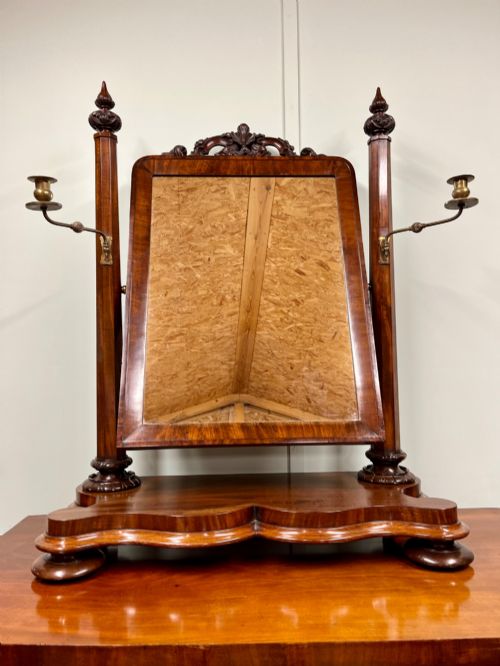
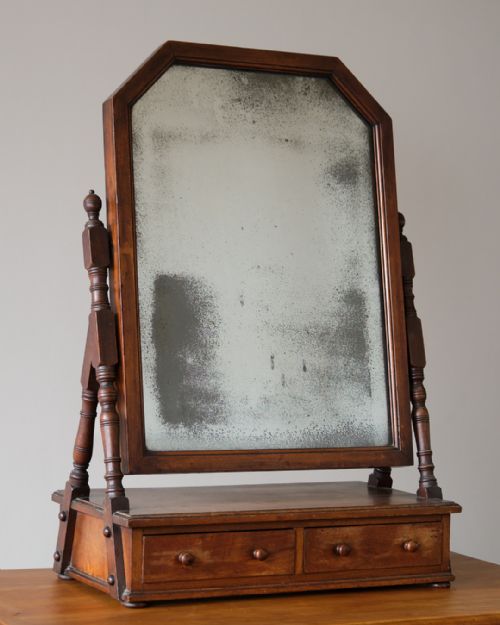
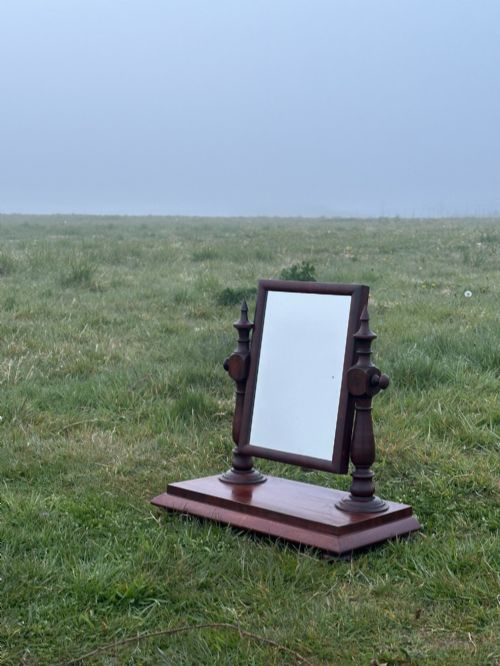
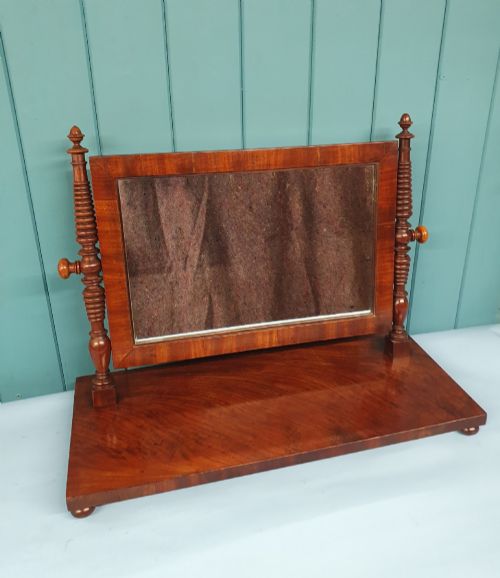
A victorian mahogany toilet glass sits upon a chest of drawers or dressing table, featuring a pivoting mirror plate suspended between two upright arms. These pieces emerged from the Georgian era and continued through the Regency and Victorian periods into the dawn of the twentieth century.
The most common version found on this page is the swing mirror mounted on a small box base fitted with one or more small drawers. Variants range from serpentine fronts and barrel-fronted designs to larger cheval mirrors and complete dressing tables.
Makers such as Heal & Sons and Gillows contributed to this form alongside unnamed regional workshops, spanning styles from strict Georgian restraint to exuberant Victorian carving.
How They Were Made
Cabinet makers utilised solid mahogany and flame mahogany veneer applied to secondary woods, often accented with brass hinges, candle holders, and bone escutcheons around the drawer keyholes. The mirror plates themselves are held within rebated frames that pivot on threaded brass screw pins.
Surfaces received hand-polished wax finishes to highlight the deep grain patterns of the timber. Some examples incorporated white marble tops on the base or delicate inlaid stringing into the mahogany frames.
Victorian Mahogany Toilet Glass Retail Price Guide 2026
Typical asking prices for victorian mahogany toilet glass among the pieces listed under this phrase on Sellingantiques today, from the lower quarter to the upper quarter. They describe what is for sale here now, not the wider market.
Travelling swing mirrors let Regency travellers check their cravats on the move.
What Varies in Quality
The architectural ambition of the base sets the standard, moving from plain rectangular boxes to complex serpentine or barrel-fronted contours with multiple fitted drawers. Superior examples display carefully chosen flame mahogany veneer matched across the drawer fronts.
Hardware contributes heavily to the overall merit, distinguishing utilitarian workshop pieces from high-end commissions through heavy cast brass candle arms, finely turned upright supports, and original mirror glass with appropriate bevels.
Heal & Sons·Gillows
The Victorian Mahogany Toilet Glass Glossary
- Toilet glass
- A traditional term for a dressing table mirror designed to sit on a chest or table. These mirrors allowed users to adjust the tilt for personal grooming.
- Swing mirror
- A mirror plate hung on pivots between two vertical standards. This allows the glass to swing back and forth.
- Cheval mirror
- A large freestanding full-length dressing glass supported on four legs. The frame pivots entirely within its upright supports.
- Flame mahogany
- A decorative wood veneer showing a distinct feather-like flame pattern. Cabinet makers reserved this timber for prominent surfaces like drawer fronts.
- Serpentine
- A curved shape featuring a convex centre flanked by two concave sweeps. This profile adds considerable difficulty and expense to cabinet making.
Victorian Mahogany Toilet Glass: Frequently Asked Questions
How do I use a toilet glass today?
Place the mirror on top of a chest of drawers, sideboard, or dressing table in a bedroom or hallway. It functions effectively for final checks before leaving the house while adding period character to the room.
The adjustable pivot allows you to angle the glass precisely for your height without needing wall fixings.
Can I remove the mirror from its base?
Most pieces unscrew at the side pivot pins where the frame meets the upright arms. This separates the mirror plate from the box base for safe transport.
Take care when loosening the brass screws to support the heavy frame and prevent the glass from slipping.
How do I date a mahogany mirror?
Look to the overall silhouette and the construction of the base drawers. Georgian and Regency pieces tend towards simpler architectural lines, while Victorian examples often introduce serpentine fronts, flame veneers, and heavier proportions.
Drawer dovetails and timber choice also offer strong clues to the period of manufacture.
What is the difference between a toilet glass and a cheval mirror?
A toilet glass is a tabletop object designed to sit on top of another piece of furniture. It provides a half-length view primarily focused on the head and shoulders.
A cheval mirror is a large, floor-standing piece that provides a full-length reflection of the entire figure.