
Victorian Mahogany Shelving
Victorian mahogany shelving unites practical storage with the rich grain of nineteenth-century timber, offering open bookcases, tiered whatnots and wall-hanging units for the home.
Victorian Mahogany Shelving
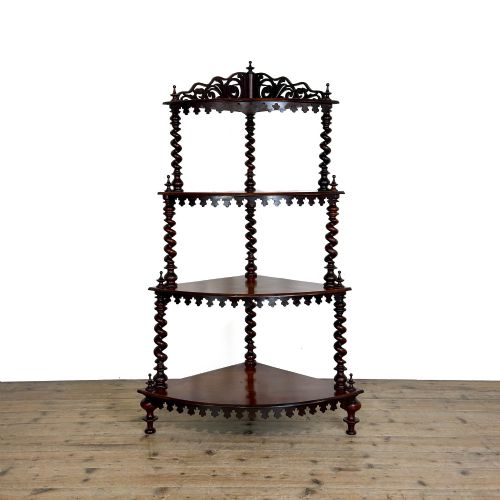
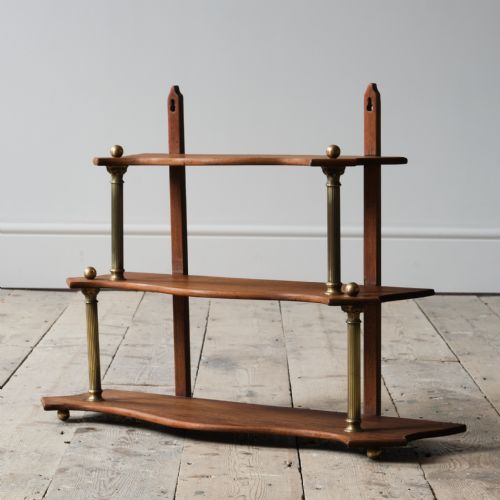
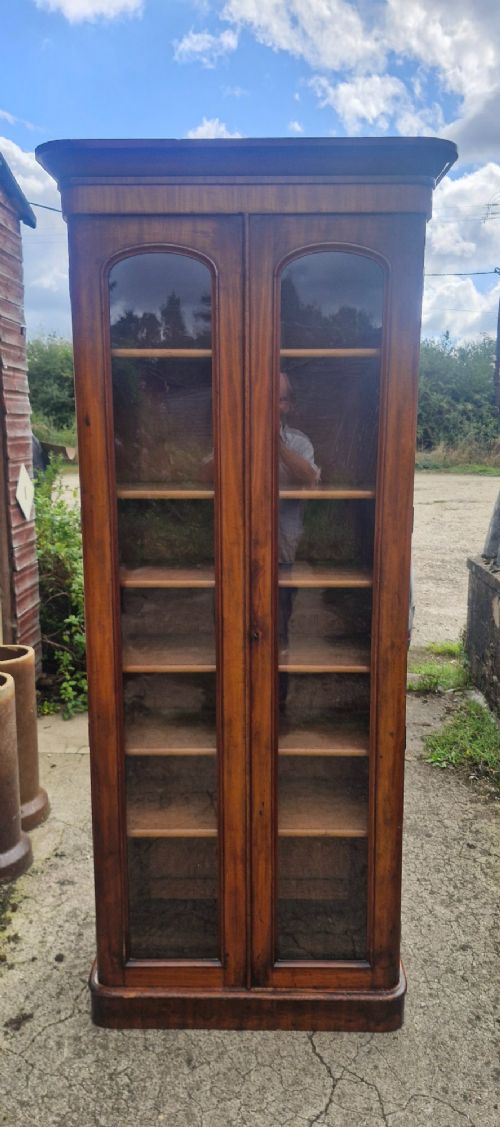
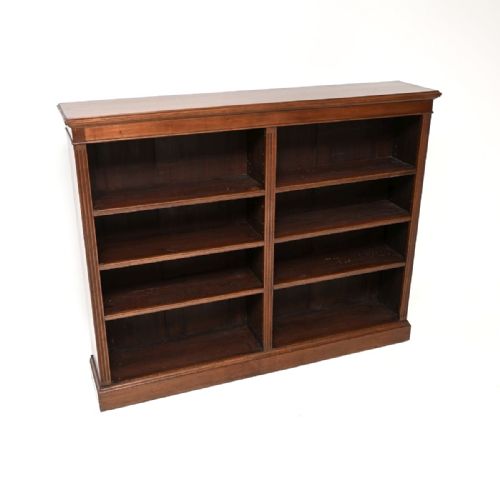
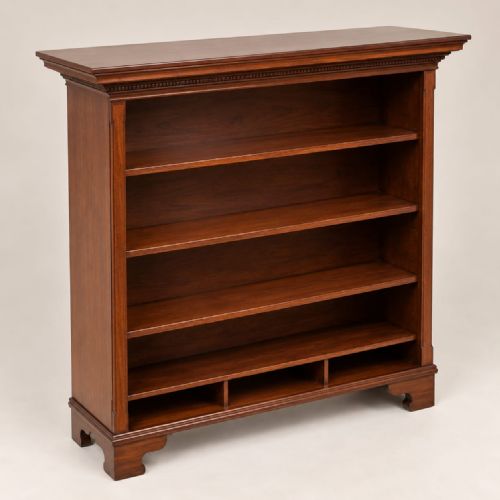
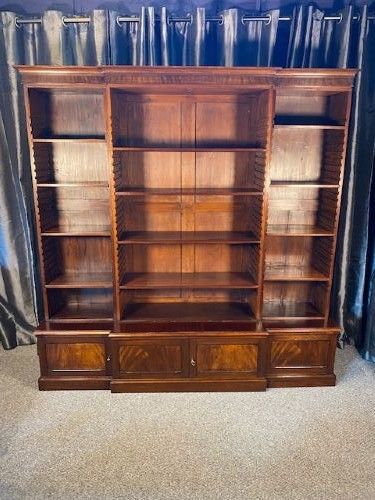
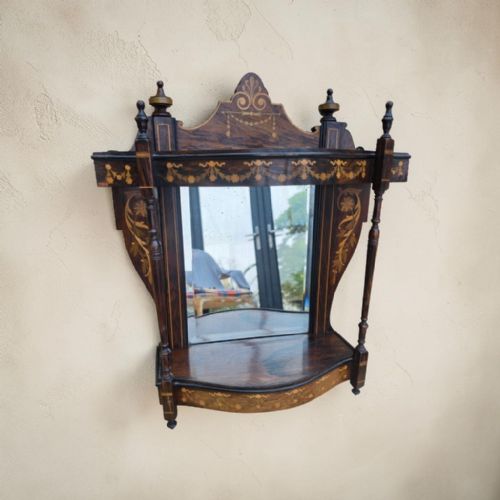
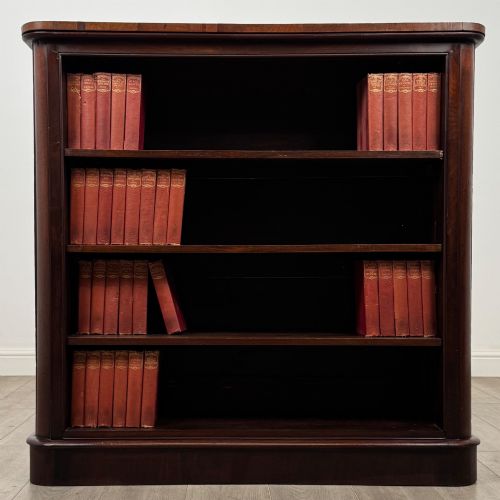
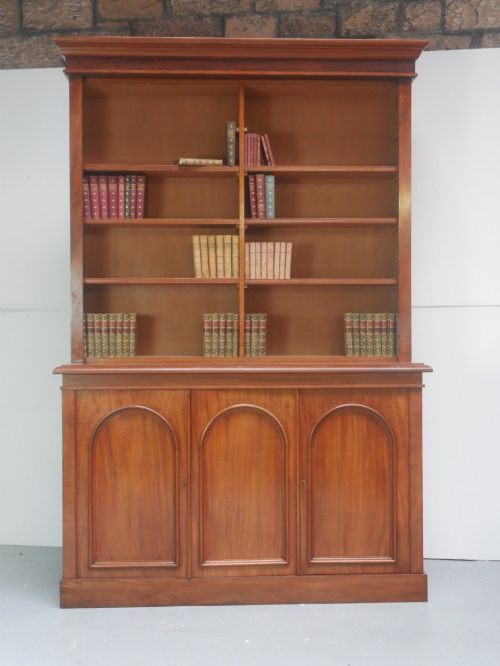
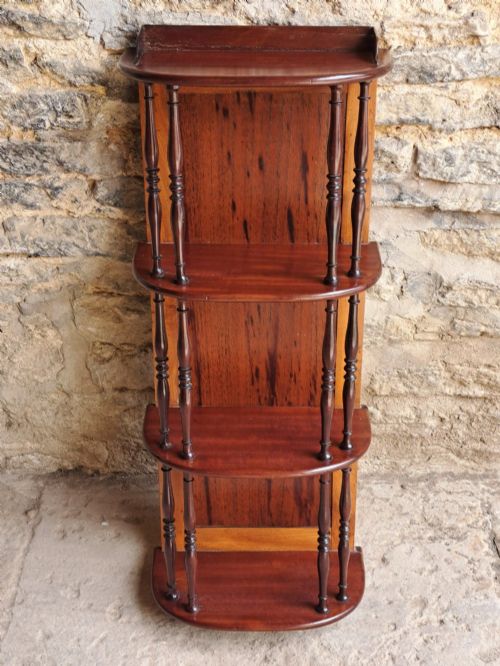
Victorian mahogany shelving primarily takes the form of open bookcases, wall-hanging shelves, corner whatnots and tiered etageres built during the nineteenth century. These pieces serve to display books and decorative objects while introducing deep timber tones into a room.
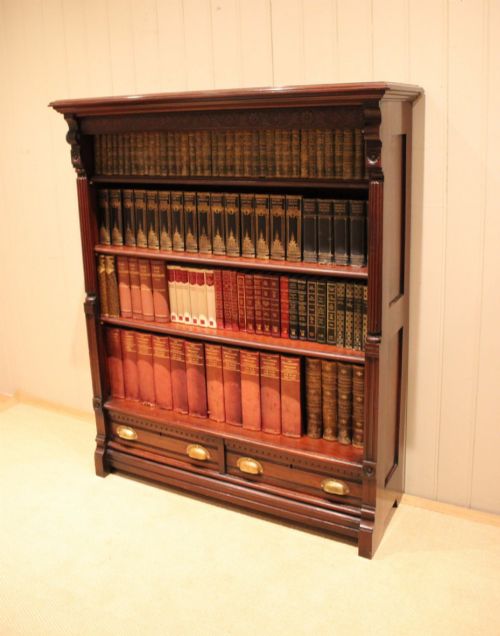
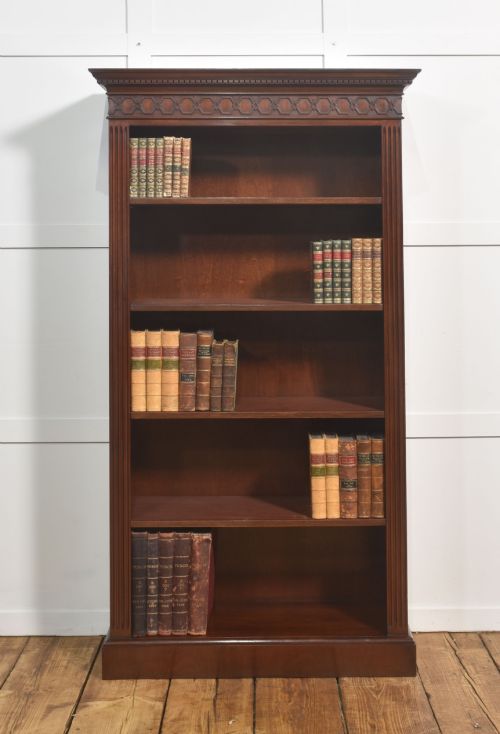
The most common examples encountered on this page are open bookcases with adjustable shelves and multi-tiered whatnots dating from the Victorian and late Victorian periods. Freestanding and wall-mounted formats alike demonstrate the era's reliance on solid timber and rich veneers for everyday domestic utility.
Materials and construction
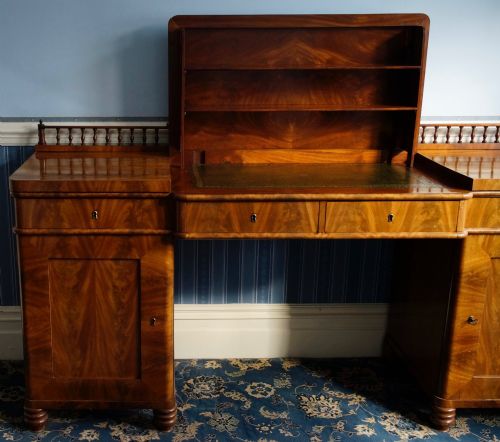
Pieces are constructed predominantly from mahogany, occasionally utilising flame mahogany veneer to create striking grain patterns across larger surfaces. Supplementary materials such as brass for castors and hinges, alongside subtle boxwood inlay, appear on finer examples from the late nineteenth century.
Makers integrated adjustable shelving systems and sturdy corner supports to ensure structural reliability in both freestanding bookcases and hanging wall shelves. The combination of dense timber and careful joinery allowed these utilitarian items to withstand heavy volumes and daily handling.
Victorian Mahogany Shelving Retail Price Guide 2026
Typical asking prices for victorian mahogany shelving among the pieces listed under this phrase on Sellingantiques today, from the lower quarter to the upper quarter. They describe what is for sale here now, not the wider market.
Listings feature mahogany, brass, glass, flame mahogany veneer, walnut, pine, leather and boxwood inlay across the nineteenth-century pieces.
Distinctions in quality
Quality rests upon the selection of the timber grain, from standard solid mahogany to highly figured flame veneer that demands skilled cabinetmaking. The integration of refined decorative elements, such as boxwood inlay or turned barley twist supports, separates standard utility items from more ambitious pieces.
Proportion and structural honesty also define the upper tier of these items, where adjustable shelving operates smoothly and brass castors remain original to the piece. Refined finishing and crisp edge detailing indicate the hand of a more accomplished workshop.
Edwards & Roberts
The Victorian Mahogany Shelving Glossary
- Whatnot
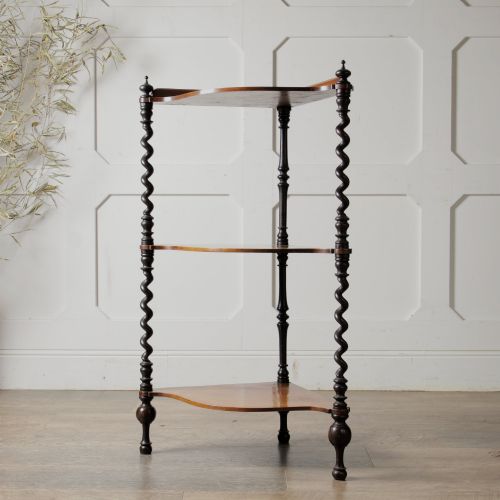
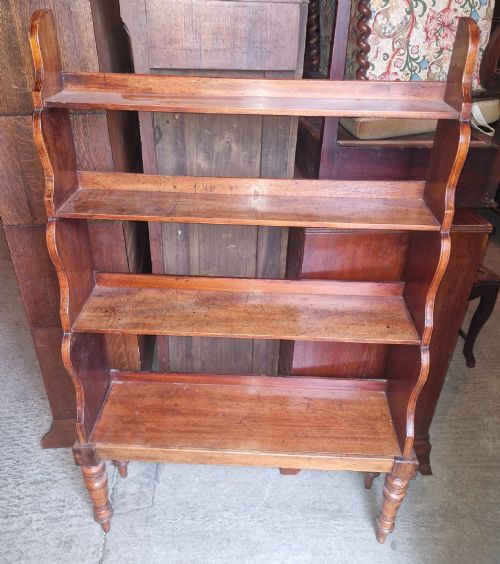
- A set of open shelves on small legs, designed for displaying ornaments or holding books in nineteenth-century interiors. These tiered units often fit neatly into corners or stand freely against a wall.
- Flame mahogany veneer
- A thin slice of timber cut from the point where a branch joins the main tree, creating a distinctive flickering flame pattern. Cabinetmakers applied this veneer to prominent surfaces like bookcase fronts for visual impact.
- Barley twist
- A type of turning shaped like a spiral rope, frequently used for the vertical supports on whatnots and bookcases. This decorative technique adds texture and movement to the timber framework.
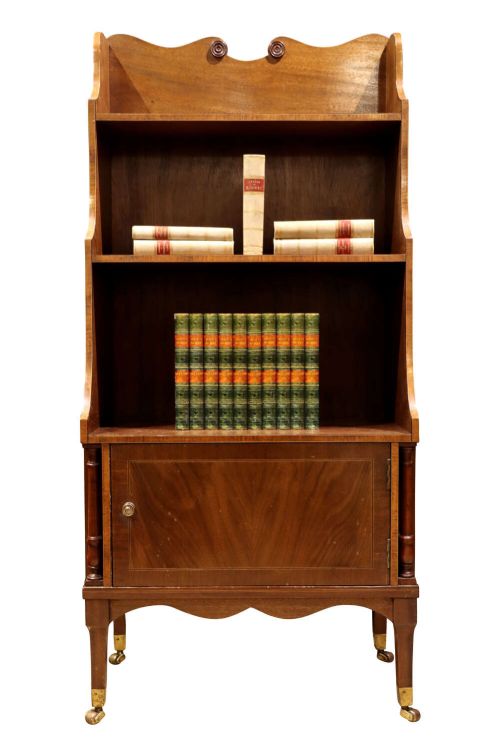
- Waterfall bookcase
- A shelving unit where each tier steps back from the one below it, creating a cascading profile. These pieces often incorporate small drawers or cabinets at the base.
Victorian Mahogany Shelving: Frequently Asked Questions
How do I adjust the shelves?
Most nineteenth-century bookcases utilise a system of wooden ratchets, brass studs or vertical slots down the interior sides to support movable shelves. You simply lift the shelf slightly, reposition the supports at the desired height, and lower the timber back into place.
Take care when shifting older shelves so that the timber runners do not bind against the interior lining. If a shelf sticks, check that the brass or wooden supports are seated evenly in their corresponding slots before applying pressure.
Can these shelves hold heavy books?
Open bookcases and library cabinets from this era were built to carry substantial loads of leather-bound volumes. The solid mahogany construction and adjustable wooden supports provide robust foundations for everyday library use.
Distribute heavier folios evenly across the shelf span to prevent long-term sagging in wider units. Ensure that the support pins or ratchets are fully engaged on all four corners before loading the tier.
Where should I place wall shelves?
Wall-hanging shelves suit hallways, studies and bedrooms where floor space is limited, providing a secure platform for display. Ensure that the fixing brackets or hanging loops are anchored directly into wall studs or masonry rather than plaster alone.
Keep these lighter pieces away from areas of excessive moisture or direct heat sources that might dry out the mahogany. Proper placement protects both the wall fixings and the polished timber surface from unnecessary strain.
How do I identify a whatnot?
A whatnot is defined by its stacked open tiers supported by slender uprights, often featuring a small cupboard or drawer at the base. These versatile items were designed to hold decorative ornaments, writing materials or smaller books.
Corner whatnots fit snugly into room angles, while freestanding versions offer access from all sides. Their distinct multi-level silhouette distinguishes them from standard bookcases or side cabinets.