





Victorian Mahogany Grandfather Clock
A victorian mahogany grandfather clock brings steady presence and reliable mechanical time to a room through dense timber and brass movement.
Victorian Mahogany Grandfather Clock
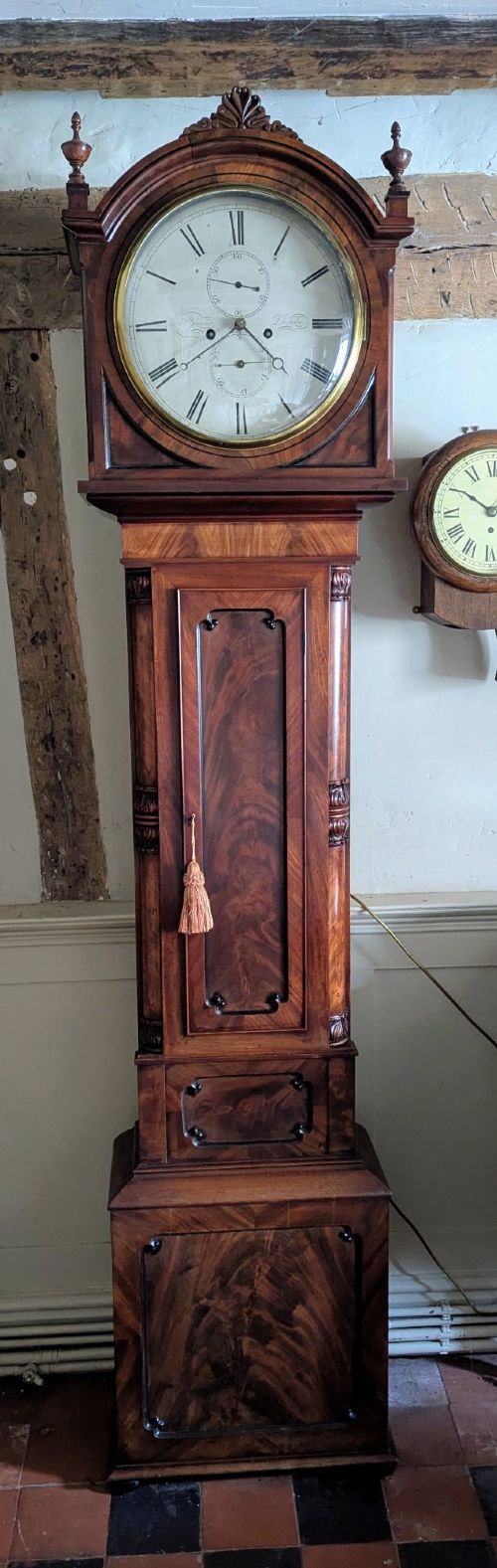
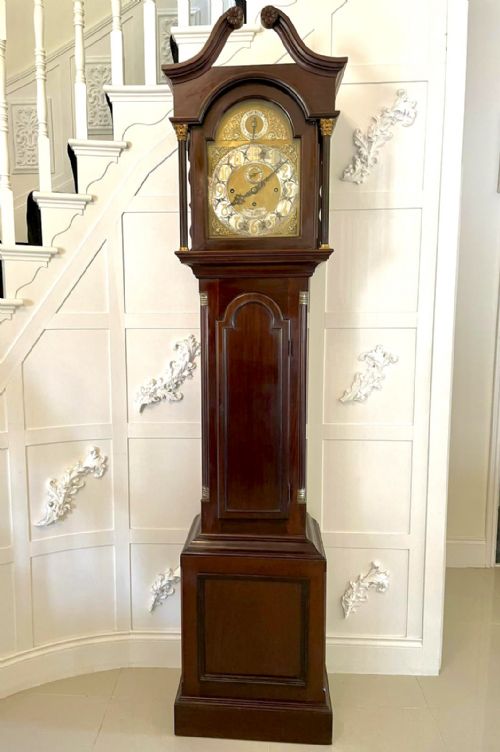
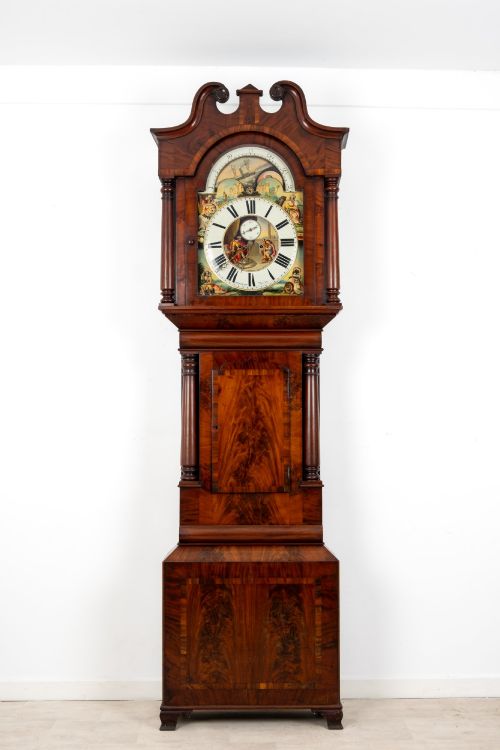
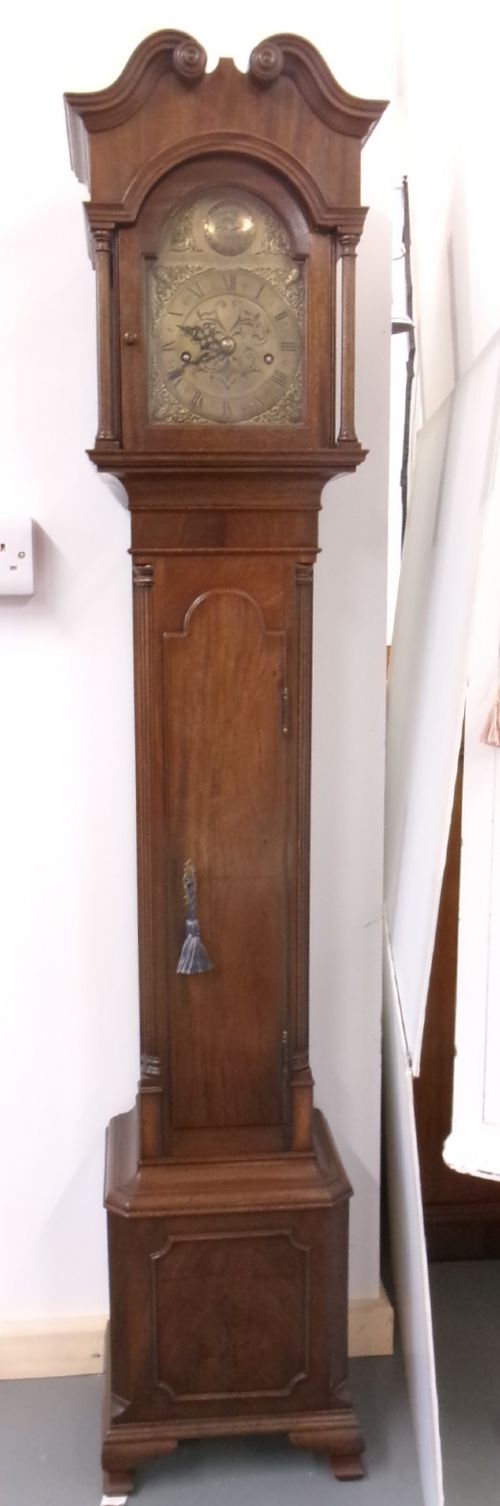
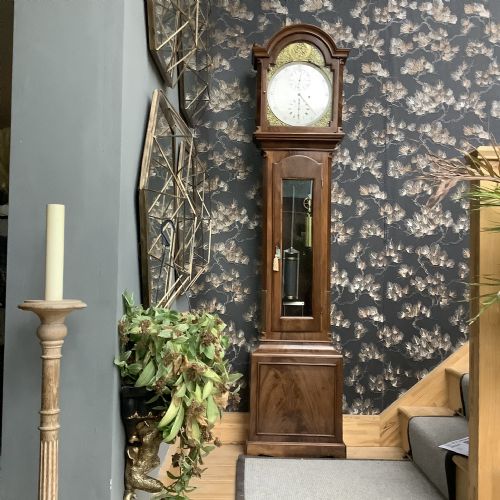
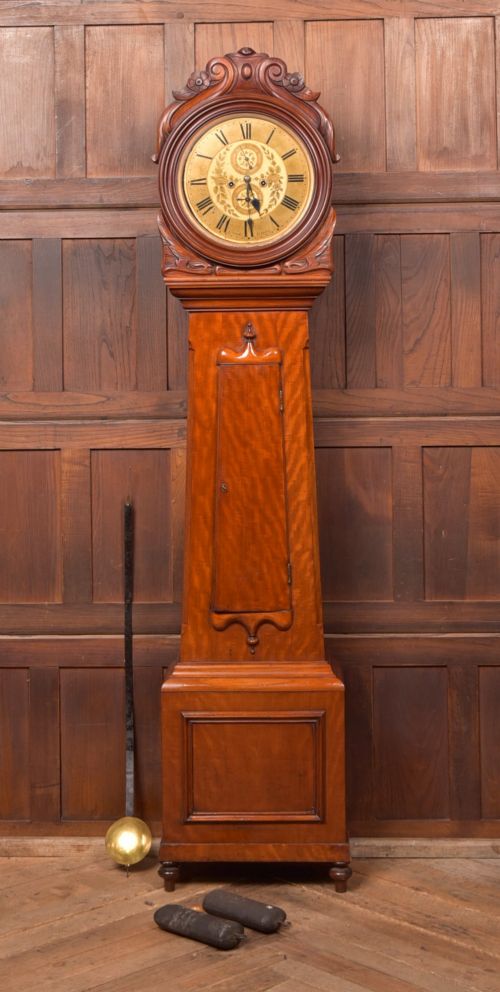
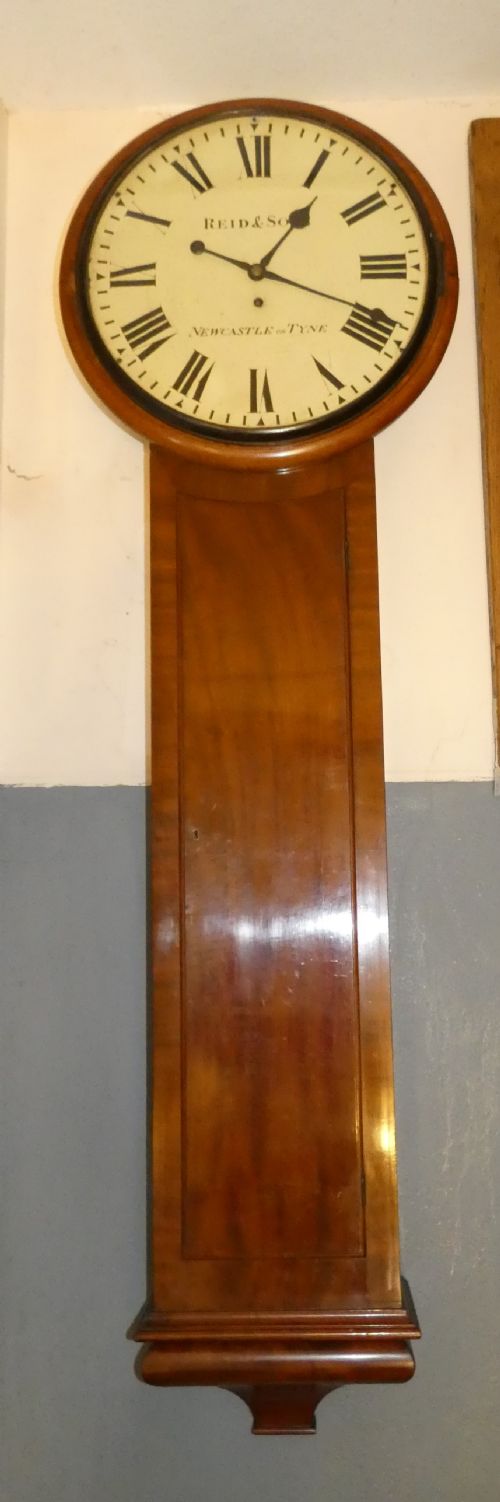
A victorian mahogany grandfather clock is a tall floor-standing timepiece housed in a wooden case made primarily of mahogany. These tall clocks appear in various formats on this page, including standard longcase models, drumhead variants, and specialised regulators.
Makers from provincial towns and larger cities alike signed these dials, reflecting both English and Scottish traditions from the nineteenth century. Examples range from simple painted faces to complex musical movements with moon rollers.
The selection includes standard eight-day movements alongside smaller granddaughter clocks and grander exhibition pieces with multiple tubes or bells.
How they were made
Cases combine solid mahogany and figured veneers over secondary timbers, shaped with architectural hoods, brass dial surrounds, and glass viewing doors. Dials feature painted iron or silvered metal surfaces with subsidiary seconds and calendar rings.
Movements rely on brass gears, steel pinions, and iron weights suspended by cords or chains, driving escapements that regulate the swing of the pendulum. Musical variants incorporate complex pinned cylinders, bells, or chime tubes to mark the hours.
Several makers operated out of northern workshops, ensuring your hallway receives timekeeping backed by windy Scottish validation.
What varies in quality
Quality rests in the crispness of the cabinet work, the grain figure of the mahogany, and the sophistication of the internal movement. Plain provincial dials contrast with intricate moon phases, subsidiary automation, and elaborate carved or inlaid ornamentation.
Higher tier pieces feature robust multi-train movements, finely engraved silvered dials, and substantial proportions that remain stable on the floor over centuries.
Winsor Bishop Norwich·Parkinson Bros Batley·Priory of Dundee Scotland·Andrew Thom·James Wood·William Chisholm Of Aberdeen·Richardson Of Manchester·David Griffith Carnarvon·Pearce And Sons Leicester·Aitchison Of Glasgow·Frederick Rowe Of Great Marlow·Richard Rowell Oxford·Geo Tarratt Of Leicester·Anthony Binks·J Adamson Of Friockheim·J Purdy Of Carluke·Jame Hay Leuchars·James Waring Stockport
The Victorian Mahogany Grandfather Clock Glossary
- Longcase clock
- A tall pendulum clock enclosed in a wooden case standing directly on the floor. These items are frequently referred to as grandfather clocks.
- Drumhead
- A circular dial housing set atop a tall mahogany trunk. This regional style appears often in Scottish examples.
- Regulator
- A precision timekeeper designed for high accuracy. These movements typically feature a clear sweep second hand and heavy compensating pendulums.
- Moon phase
- A mechanical dial display showing the lunar cycle through a rotating painted disk. It tracks the phases of the moon alongside standard time.
- Fusee
- A conical pulley used in clock movements to equalize the pull of the mainspring as it unwinds. This mechanism improves timekeeping consistency across the entire eight-day run.
Victorian Mahogany Grandfather Clock: Frequently Asked Questions
How do I wind an eight day clock?
Wind the weights or springs evenly using the provided crank key every week. Take care not to overwind the mechanism at the end of the cycle.
Ensure the hands are turned only clockwise when setting the time to protect the internal rack and snail gearing.
Why does the clock need to stand level?
A level stance ensures the pendulum swings with equal arcs to the left and right. Without this balance, the escapement ticks unevenly and the clock eventually stops.
Use adjustable feet or shims under the base until the beat sounds completely regular.
What is a moon dial used for?
The painted disk tracks the lunar cycle over a twenty-nine and a half day period. It served practical purposes for navigation, tides, and evening travel before widespread street lighting.
Collectors prize this complication for the artistic skill visible in the hand-painted celestial scenes.
How do I tell a Scottish drumhead apart?
Scottish drumhead clocks feature a circular dial enclosure resting directly on a plain or figured mahogany trunk. This distinct silhouette departs from the traditional architectural bonnet found in English longcase clocks.
They originate largely from nineteenth-century workshops in northern regions.