
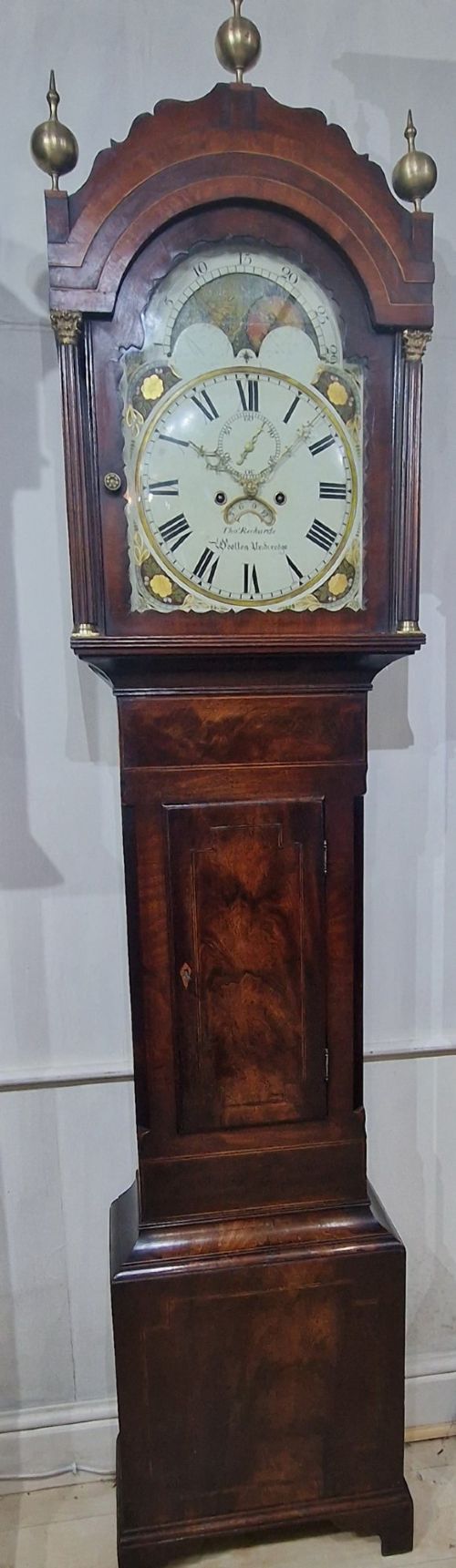


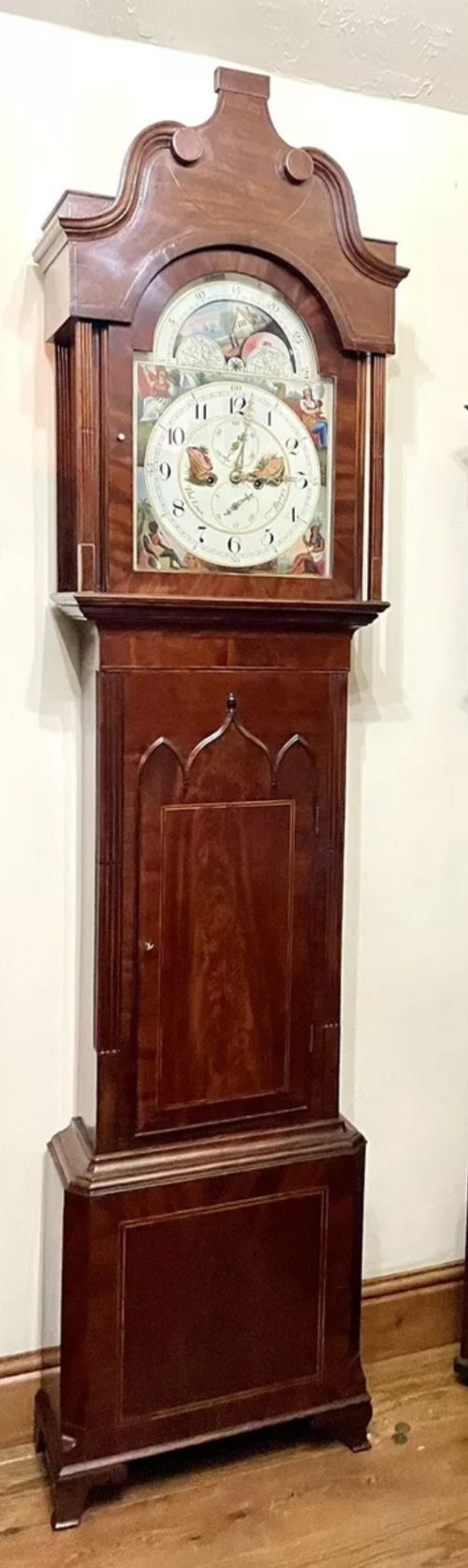


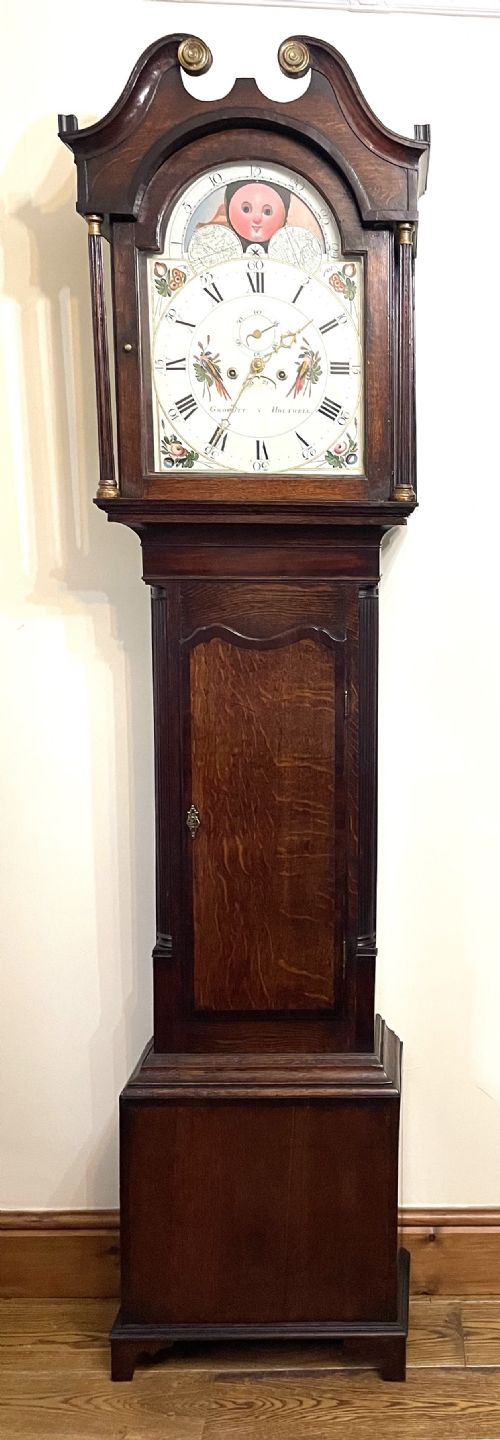


Tallcase Clock Moon Dial
These tallcase clock moon dial pieces bring historic timekeeping and mechanical lunar tracking into a room.
Tallcase Clock Moon Dial
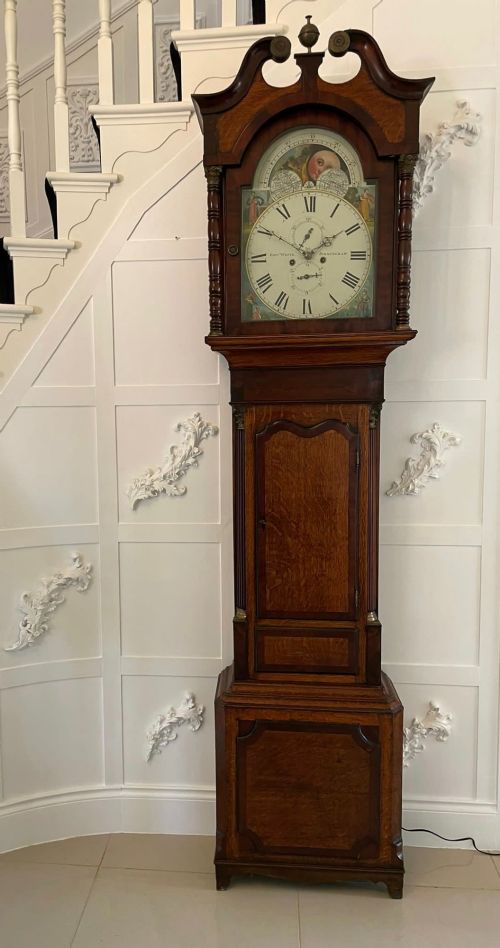
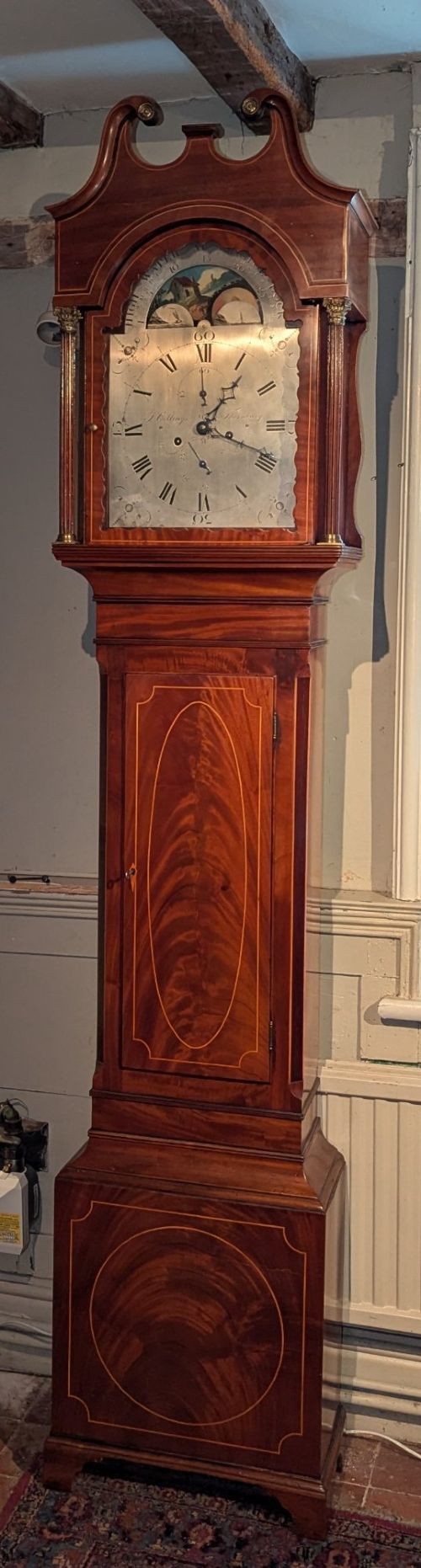
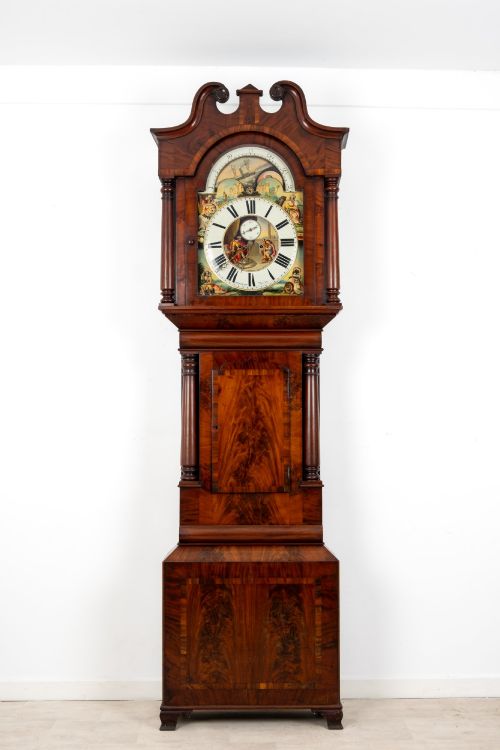
A tallcase clock moon dial displays the phases of the moon on a painted arch above the main clock face, tracking the lunar cycle alongside the hour and minute. When you search for this phrase, you find floor-standing timepieces spanning the eighteenth and nineteenth centuries.
Mahogany, oak, and flame mahogany veneer cases house these movements, with painted iron dials showing the rotating moon roller. Examples range from George III and Georgian origins through the Victorian era.
The version you are most likely to meet on this page is a mahogany longcase clock with an eight-day movement and a painted arched dial. These regional pieces often bear the signature of provincial clockmakers on the dial.
How they were made
Cabinetmakers constructed the tall cases using solid timber and decorative veneers such as flame mahogany or oak, frequently adding inlaid details. Brass and steel formed the intricate gear trains of the eight-day movements that drove both the time and the lunar display.
Painters decorated the arched iron dials by hand, rendering detailed lunar scenes and terrestrial hemispheres on the rotating discs known as moon rollers. Skilled regional horologists then fitted these painted dials to weight-driven mechanical movements housed within the protective wooden cases.
Listings feature movements housed in oak, mahogany, and flame mahogany veneer cases from Georgian, Victorian, and Regency periods.
What varies in quality
The refinement of the painted dial and the complexity of the movement separate standard pieces from the finest examples. Clocks with secondary indications, such as four hands or musical capabilities, demonstrate higher ambition from the maker.
Cabinet quality shows in the choice of timber figure, such as well-matched flame mahogany veneers and crisp carving on the oak or mahogany hoods and bases. The clarity and preservation of the hand-painted moon roller artwork also determine the visual distinction of the piece.
Parkinson Bros Batley·Edward Shepley Manchester·Edward White Birmingham·Thomas Lees Bury·Thos Russell Lancaster·Furnival Oldham·Thomas Dean Leigh·Grocott Holywell·Richardson of Manchester·Edward Glase Bridgnorth·Henry Smith·Robert Darling Melrose·William Mercer of Liverpool
The Tallcase Clock Moon Dial Glossary
- Moon roller
- A rotating disc behind an arched dial that tracks the lunar month across two complete cycles. This mechanism turns incrementally via the clock movement to show the phases of the moon.
- Longcase clock
- A tall weight-driven timekeeper enclosed in a wooden case with a pendulum, commonly called a grandfather clock. These pieces stand directly on the floor and house movements designed for thirty-hour or eight-day runs.
- George III
- A British historical period spanning the later eighteenth and early nineteenth centuries, associated with specific cabinetmaking proportions and dial designs. Pieces from this era often feature refined mahogany or oak cases.
- Arched dial
- A clock face with a curved upper section designed specifically to accommodate auxiliary displays like moon phase mechanisms. This extension sits above the standard circular chapter ring for hours and minutes.
- Flame mahogany
- A highly figured veneer cut from the branch junctions of mahogany trees, displaying distinctive flamed or feather patterns. Cabinetmakers utilised this timber on prominent surfaces of nineteenth-century cases.
Tallcase Clock Moon Dial: Frequently Asked Questions
How does a moon dial work?
A mechanical gear train inside the movement rotates a painted disc behind two curved apertures on the dial arch. This disc completes one full rotation roughly every twenty-nine and a half days to mirror the lunar cycle.
Provincial clockmakers built these mechanisms into eight-day longcase clocks so owners could track both time and tide or moon phases without manual adjustment.
Are these clocks eight-day or thirty-hour?
The pieces seen here predominantly feature eight-day movements requiring a weekly weight wind using a crank key. This longer duration suited larger households and finer provincial homes.
Thirty-hour movements also exist in early regional clocks, driven by single weights that required winding daily or slightly more often.
Where were these clocks made?
British provincial clockmakers produced these longcase clocks across various towns and cities, from Lancashire and Cheshire to Scotland and the Midlands. Makers signed their names directly onto the painted iron dials.
Local cabinetmakers constructed the mahogany and oak cases to house the specific movements supplied by regional horologists.
How do I care for a longcase clock?
Position the clock on a stable floor away from direct sunlight and temperature fluctuations that affect wood and internal mechanism expansion. Ensure the case stands level to keep the pendulum swinging evenly.
Wind the weights carefully once a week if it is an eight-day movement, and have a professional horologist service the gear train periodically.