

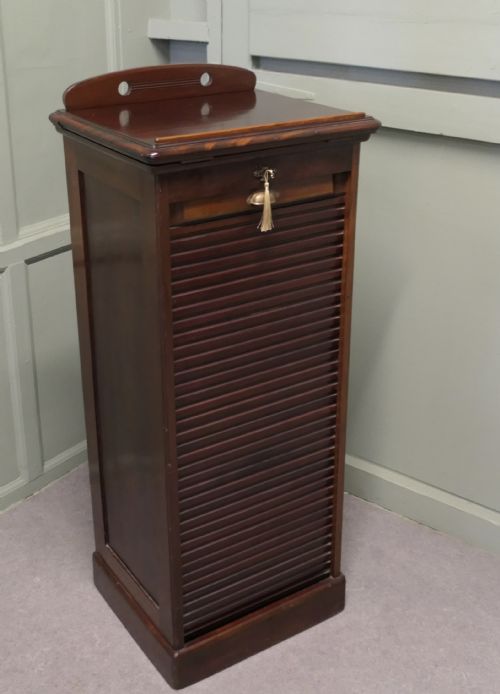
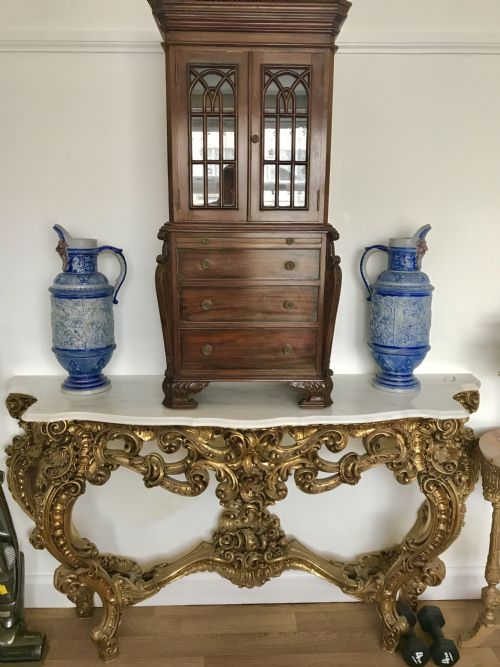
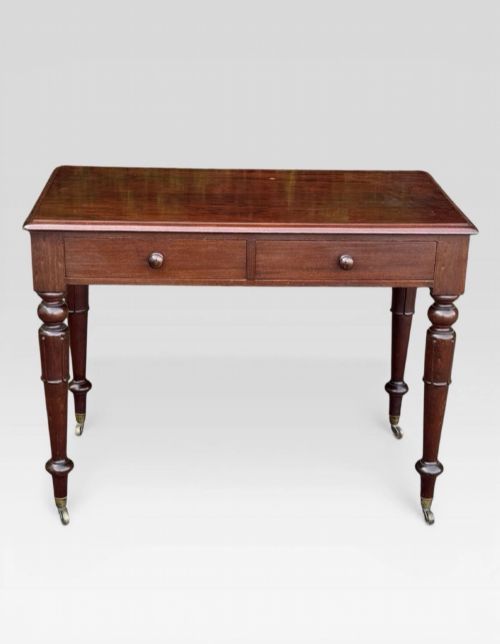


Victorian Mahogany Desk Cabinet
These pieces called a victorian mahogany desk cabinet bring compact storage and a writing surface together, shaped by nineteenth-century workspace needs.

Victorian Mahogany Desk Cabinet
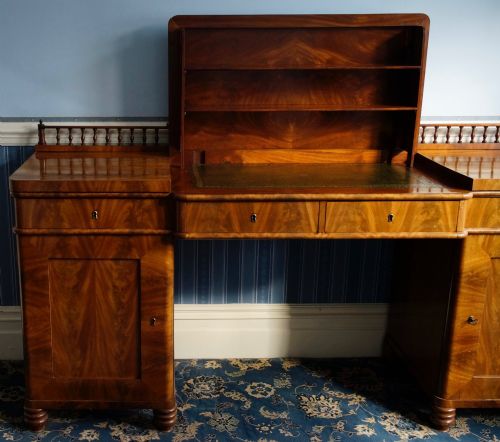
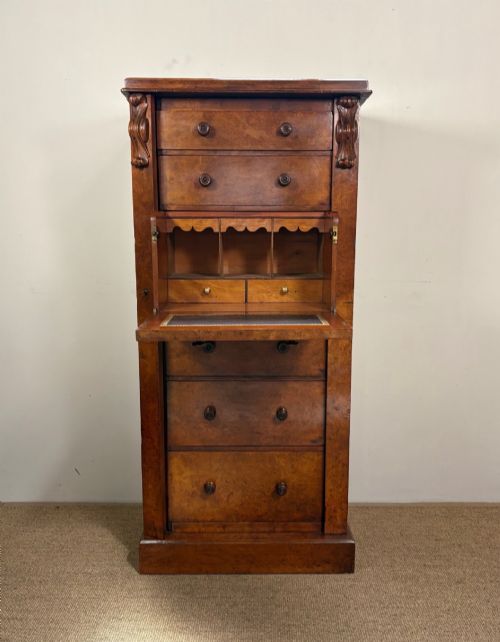
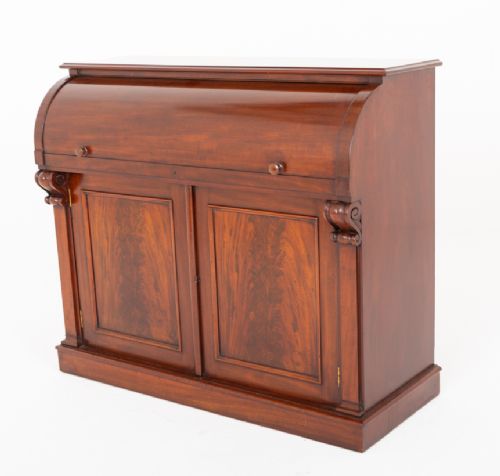
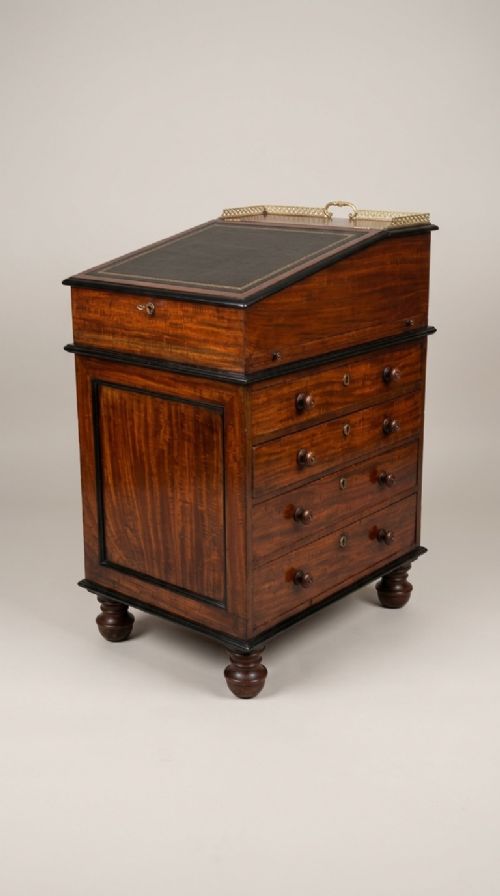
A victorian mahogany desk cabinet unites miniature architecture and writing furniture, taking forms such as davenports, cylinder desks, and secretaire bookcases.
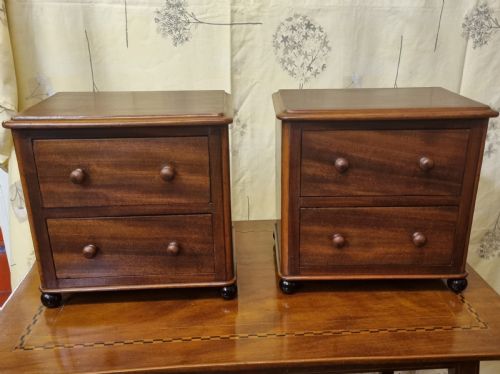
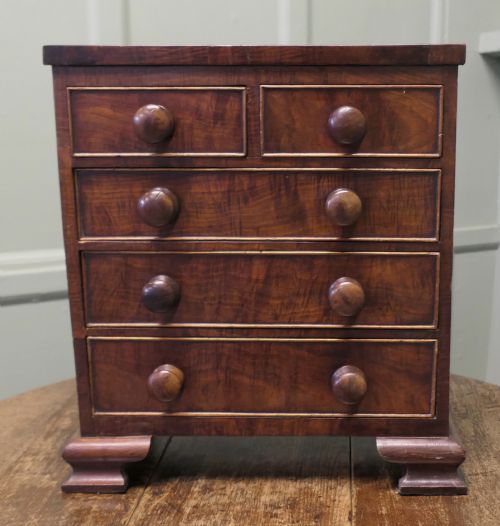
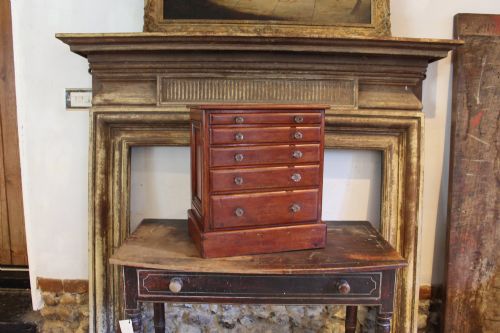
The versions met most often on this page date from the nineteenth century, including specific periods like early Victorian, and appear alongside related pieces such as miniature chests and stationery boxes.
Makers and workshops of the era designed these pieces for studies, libraries, and reception areas, incorporating pigeon holes, drawers, and drop fronts.
How They Were Made
Cabinet makers utilised solid mahogany and flame mahogany veneer over secondary timbers, applying French polish to build a deep, reflective surface.
Brass handles, escutcheons, and hinges provide functional hardware, while leather inserts often line the writing surfaces of desks and fall fronts.
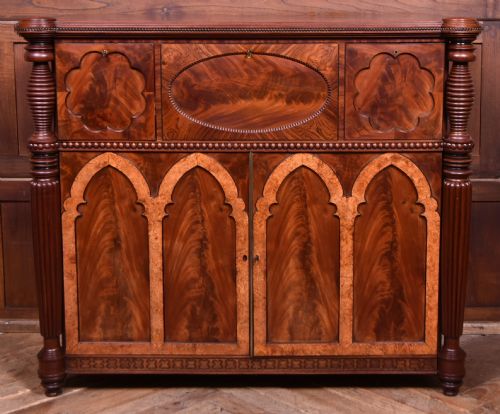
Inlaid details in satinwood and marquetry appear across select pieces, demonstrating fine joinery and veneering techniques of the period.
Listings feature Victorian, Regency, and William IV periods, constructed primarily from mahogany, satinwood, and brass.
What Varies in Quality
The standard of timber selection divides the range, with figured flame mahogany veneer and matched grains marking out finer examples.
The complexity of the internal arrangement, from simple pigeon holes to fitted stationery boxes and secret drawers, distinguishes standard production from superior output.
The crispness of inlay work and the retention of original brass fittings and leather writing surfaces dictate the standing of individual pieces.
Gillows·Edwards and Roberts·J A Mein
The Victorian Mahogany Desk Cabinet Glossary
- Secretaire
- A piece of furniture containing a built-in writing drawer or fold-down writing flap concealing pigeon holes and small drawers. This form allows a tall cabinet or chest to function as a desk.
- Davenport
- A small compact writing desk featuring a sloping top and drawers opening to one side. It originated in the nineteenth century for use in parlours and boudoirs.
- Cylinder desk
- A desk with a curved, quarter-circle wooden shutter that rolls back to reveal a sliding writing surface and interior compartments. It conceals paperwork when closed.
- Apprentice piece
- A miniature item of furniture made by a trainee craftsman to demonstrate skill to a guild or master. These pieces duplicate full-scale furniture in every structural detail.
- French polish
- A shellac finish applied in numerous thin coats with a pad lubricated by oil. This technique produces a high-gloss surface that highlights the grain of mahogany.
- Marquetry
- The art of applying decorative veneer pieces to a structure to form geometric or floral pictures. It utilises contrasting timbers like satinwood.
Victorian Mahogany Desk Cabinet: Frequently Asked Questions
What is a victorian mahogany desk cabinet?
A victorian mahogany desk cabinet is a nineteenth-century compact piece combining storage drawers or shelving with a dedicated writing surface. These items range from miniature cylinder desks and davenports to tabletop secretaire chests.
Craftsmen built them using mahogany and flame mahogany veneer, often fitted with brass hardware and leather writing inserts, to serve domestic studies and offices.
How were these cabinets used?
Original users kept correspondence, account books, and writing materials inside the internal pigeon holes, drawers, and drop-front compartments. The pull-out or fold-down surfaces provided a stable space for letter writing and document review.
Many sat upon larger tables or floors in libraries, reception rooms, and bedrooms as personal workspace hubs.
How do I care for mahogany furniture?
Keep mahogany pieces away from direct sunlight and heat sources to prevent the wood and French polish from fading or drying out. Dust regularly with a soft, dry cloth and avoid silicone-based sprays.
Maintain a stable room humidity to protect the timber and any veneered surfaces from splitting or warping over time.
How can I tell the period?
Dating relies on construction methods, timber choices, and hardware styles typical of the nineteenth century. Early Victorian and Regency pieces often feature solid golden mahogany and hand-cut dovetails, while later examples incorporate specific Victorian Gothic or marquetry revivals.
Maker stamps, when present, offer a direct link to known workshops and active decades.