




Victorian Mahogany Chest Mirror
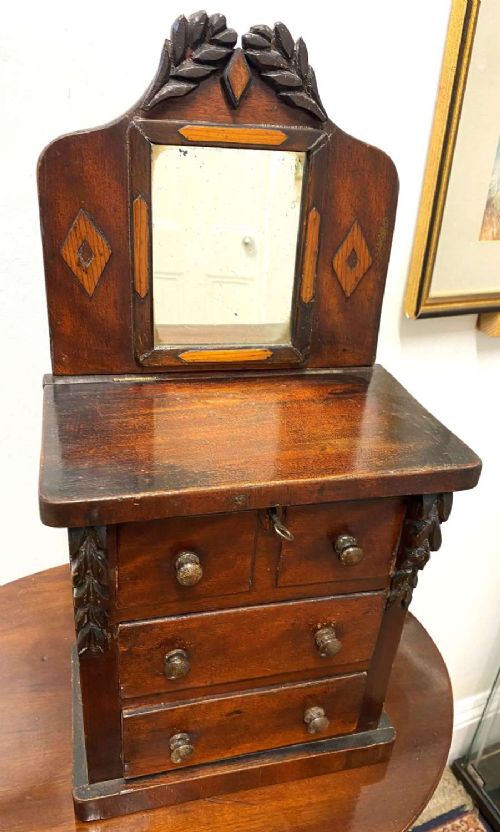
These Victorian mahogany chest mirror pieces combine practical storage with pivoting glass, offering the ideal dressing accessory for a period bedroom.
Victorian Mahogany Chest Mirror
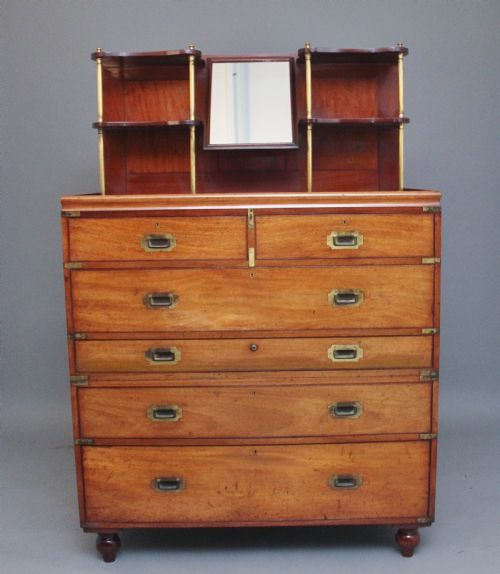
A victorian mahogany chest mirror unites a functional base of drawers with a tilting glass plate, forming an essential bedroom fixture from the nineteenth century. These items appear in various iterations, ranging from compact tabletop looking glasses to substantial dressing chests equipped with pivoting mirrors.
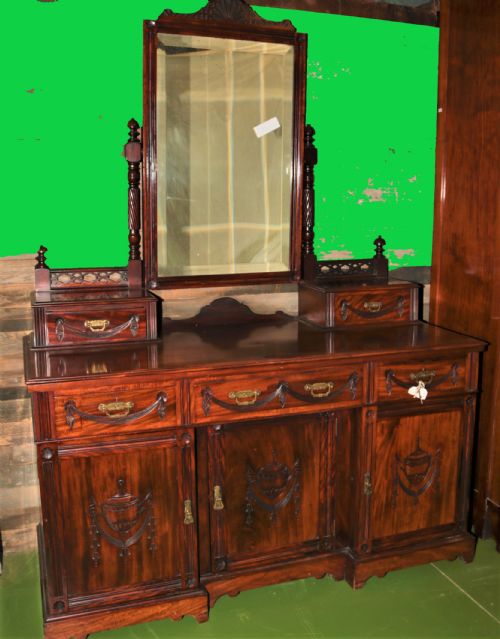
The prevailing examples on this page date from the Victorian era, particularly the later decades around eighteen ninety. Alongside traditional dressing chests, related forms like pedestal dressing tables and cheval mirror combinations frequently emerge from the records.
Design influences stretch across multiple aesthetic movements, incorporating standard Victorian styling alongside French Provincial, Empire Revival, and occasional Art Nouveau details. Makers often integrated satinwood inlay, marquetry, or brass fittings to elevate the appearance of the dark timber.
Materials and construction methods
Craftsmen relied heavily on solid and veneered mahogany to build the structural carcass and drawer fronts of each victorian mahogany chest mirror. This dense timber provided stability and a rich reddish-brown tone that defined nineteenth-century cabinet making.
Makers incorporated clear mirror glass, sometimes styled as cut crystal components, fitted securely into pivoting wooden frames supported by upright arms. Brass hardware, including hinges, handles, and swing pins, added functional contrast and durability to the moving parts.
Listings feature mahogany combined with glass, brass, marble, and satinwood inlay across multiple nineteenth-century decades.
Discerning quality in period examples
Superior execution relies upon the precision of the timber selection and the sharpness of any inlaid details, such as satinwood borders or marquetry motifs. Better workshops employed thicker mahogany veneers and tighter joinery in the drawer construction.
The clarity and original state of the mirror glass alongside the robustness of the pivoting mechanism separate standard items from finer pieces. Well-balanced support arms and substantial brass fittings indicate a higher grade of nineteenth-century manufacture.
Edwards & Roberts
The Victorian Mahogany Chest Mirror Glossary
- Mahogany
- A durable tropical hardwood imported for high-end furniture, prized for its deep grain and resistance to warping. It serves as the primary timber across these nineteenth-century pieces.
- Cheval mirror
- A full-length looking glass suspended on a vertical frame that allows it to tilt. This form often integrates directly into the top of a dressing chest.
- Marquetry
- The art of applying decorative veneer pieces in wood to form geometric or floral patterns. It appears on select dressing tables and cabinets to enhance the visual depth.
- Tantalus
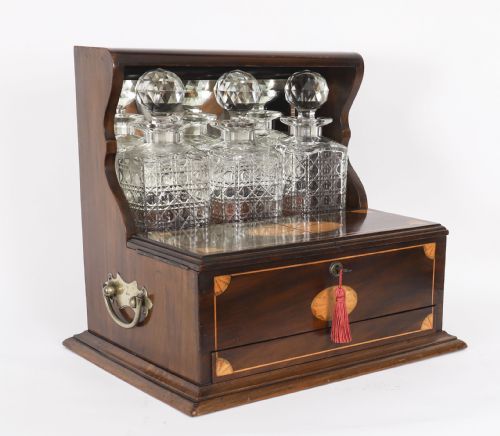
- A locking beverage stand holding decanters securely visible behind a wooden and metal bar. This form occasionally shares materials and manufacturing traits with related cabinet pieces.
Victorian Mahogany Chest Mirror: Frequently Asked Questions
How do I date these mirrors?
Dating relies on observing construction techniques, timber thickness, and stylistic clues inherent to the Victorian period. Pieces from the later nineteenth century often feature machine-sawn elements or specific revival styling.
Comparing the brass hardware and inlay methods against known production eras helps narrow down the exact decade of manufacture.
Where should I place one?
These pieces function effectively in bedrooms as traditional dressing units or atop matching chests of drawers. Their compact footprint also suits hallways or dressing rooms.
Ensure the placement avoids direct, prolonged sunlight to protect the mahogany finish and the silvering behind the glass plate.
How do I care for the wood?
Maintenance involves dusting the mahogany regularly with a soft, dry cloth and avoiding silicone-based polishes. Period timber benefits from occasional applications of traditional beeswax.
Keep the items away from extreme temperature shifts and high humidity to prevent the veneer from lifting or the wood from cracking.