
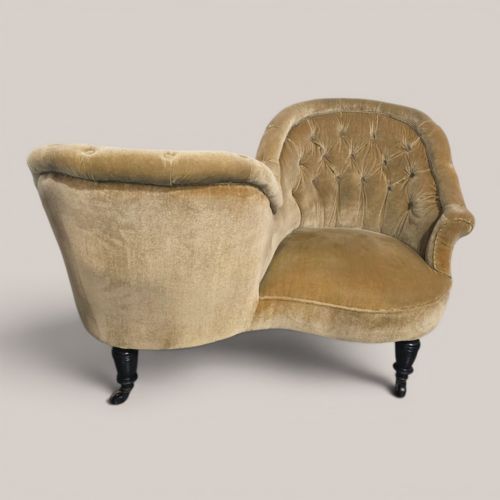


Victorian Love Seat
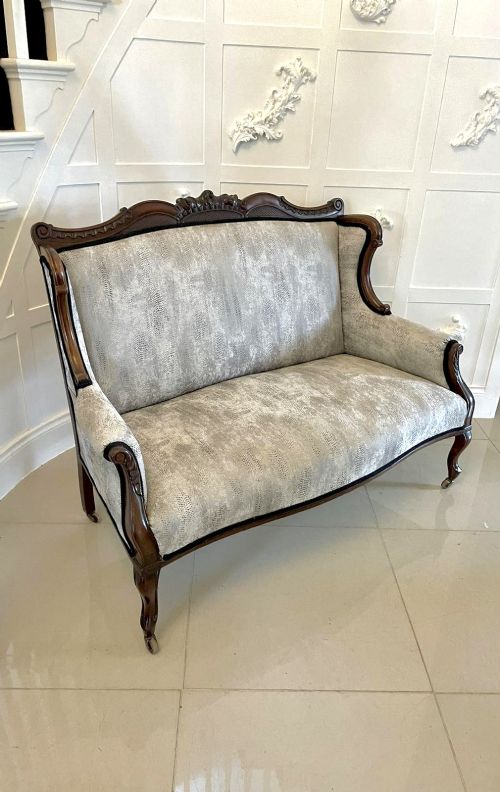
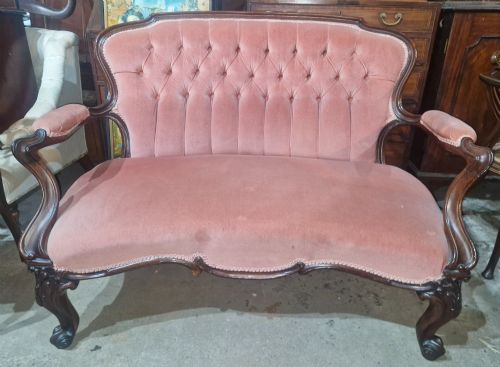
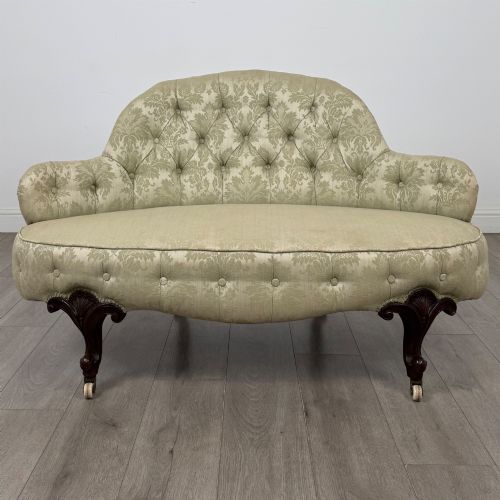
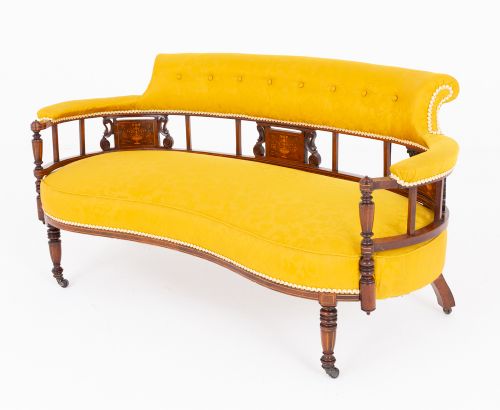
A victorian love seat brings intimate seating and rich timber frames to a room, offering a distinct double perch designed for two.
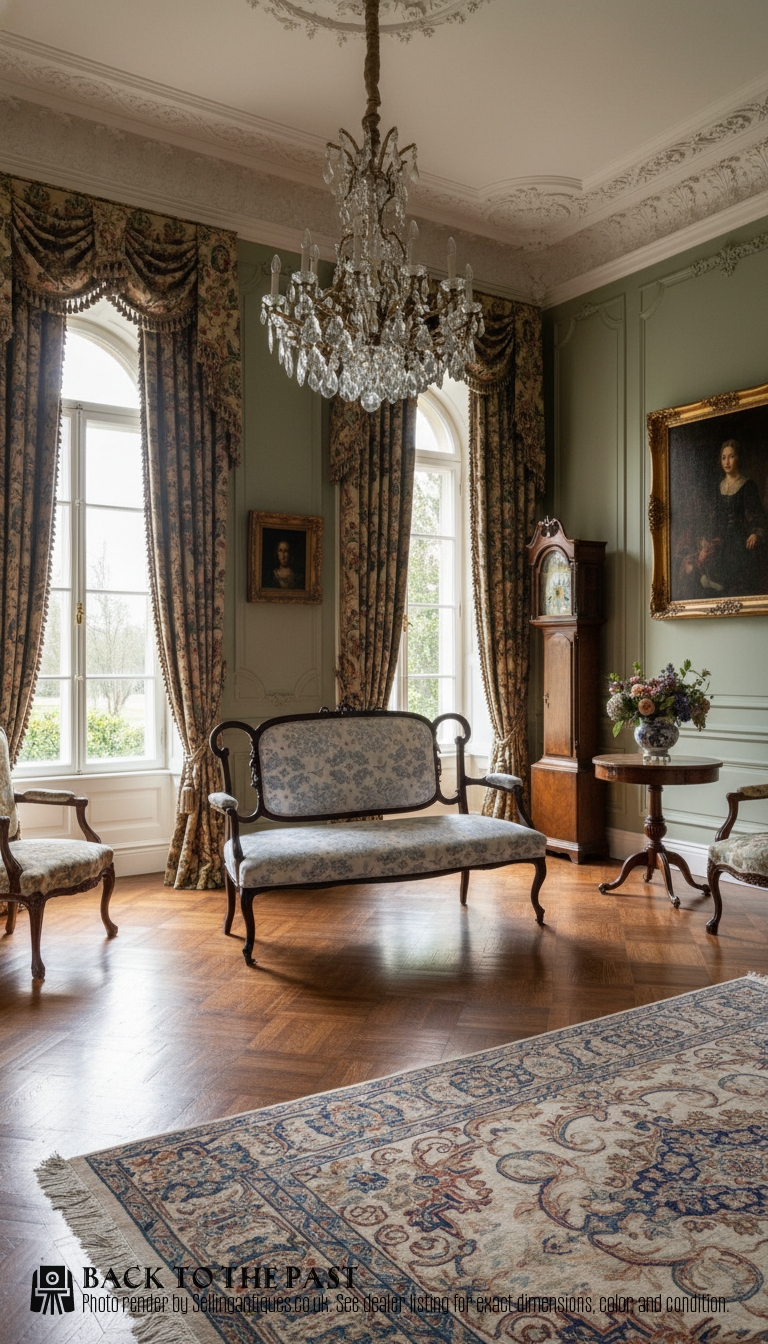
Victorian Love Seat
A victorian love seat takes various forms across the decades, appearing as double-ended conversation seats, curved serpentine settees, and small upholstered couches. Pieces range from mid-century walnut frames to late-century inlaid rosewood designs, reflecting changing tastes throughout the nineteenth century.
Makers produced these twin seats in styles spanning from early Victorian and Victorian Rococo Revival to the Aesthetic Movement and Edwardian periods. Buyers also encounter related seating such as window seats, salon sofas, and garden benches constructed from pine, oak, and mahogany.
Materials and Construction
Frames rely predominantly on solid timbers including mahogany, walnut, rosewood, and pine, shaped through carving, turning, and inlay work. Joinery supports sturdy structural skeletons designed to hold upholstered sections safely.
Upholstery incorporates velvet, damask, and standard fabric, frequently complemented by deep buttoning and tassel trim. Specialised details like barley twist wooden supports and gilt wood finishes appear on select pieces.
Victorian Love Seat Retail Price Guide 2026
Typical asking prices for victorian love seat among the pieces listed under this phrase on Sellingantiques today, from the lower quarter to the upper quarter. They describe what is for sale here now, not the wider market.
Listings for a victorian love seat span multiple decades of the nineteenth century, utilising walnut, mahogany, rosewood, and pine.
Evaluating the Pieces
Quality rests upon the crispness of the timber carving and the sophistication of any marquetry inlay on the rosewood or mahogany frames. Superior examples display balanced proportions, robust structural joinery, and refined secondary details like barley twist turnings or gilt highlights.
The standard of upholstery and the preservation of original fabric or velvet textures heavily influence the tactile appeal of an item. Solid timber frames that retain their original polish without excessive timber replacement hold greater authority.
Butlers of Dublin
The Victorian Love Seat Glossary
- Love seat
- A small double seat or conversation settee designed to seat two people comfortably. These pieces often feature serpentine fronts or dual backrests.
- Serpentine
- A furniture front or edge shaped with a central concave curve flanked by convex curves. This contour adds fluid movement to the timber frame.
- Rosewood
- A dense, dark timber featuring pronounced figuring and a rich reddish-brown tone. It was a favored material for high-end nineteenth-century salon furniture.
- Buttoned
- An upholstery technique where stitches pull the fabric deep into the padding in a grid pattern. This creates distinct padded recesses and a tailored finish.
- Aesthetic Movement
- A late nineteenth-century design style prioritizing artistic visual qualities over strict historical revivals. Pieces from this movement often incorporate stylized natural motifs like sunflowers.
Victorian Love Seat: Frequently Asked Questions
What is a victorian love seat?
A victorian love seat is a compact double settee or conversation chair created during the nineteenth century. These items provide paired seating configurations for two occupants.
Designs vary from curved conversation seats to deep-buttoned salon couches framed in rosewood or mahogany. They function as both decorative furnishings and practical seats.
How were they used originally?
These seats occupied principal reception rooms, salons, and intimate parlours where polite conversation took place. Their configurations allowed two people to sit facing opposite directions or side by side.
Wealthy households utilised them to display fine upholstery fabrics and polished timber frames to visiting guests.
How do I live with one?
Place a victorian love seat in a bedroom, hallway, or drawing room where its scale will not overwhelm the floor plan. Pair the timber frame with complementary antique tables or lighting.
Protect delicate velvet or damask upholstery from direct sunlight to preserve the fabric colours over time.
How to tell periods apart?
Early examples often display substantial mahogany or rosewood frames with restrained carved decoration. Mid-century and later pieces incorporate walnut, elaborate serpentine curves, and intricate inlay work.
Later Victorian and Edwardian items sometimes feature lighter woods, barley twist turnings, or Aesthetic Movement motifs.