




Victorian Livestock Portrait
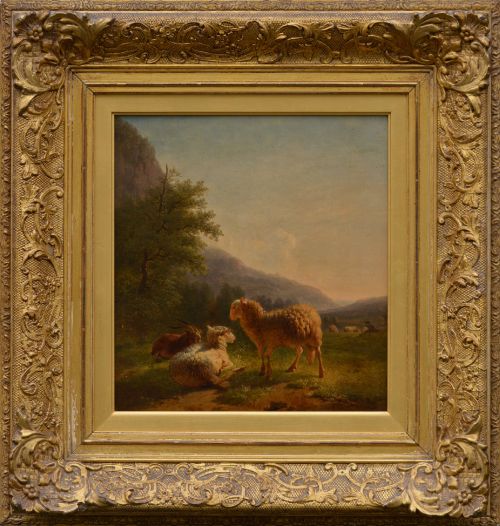
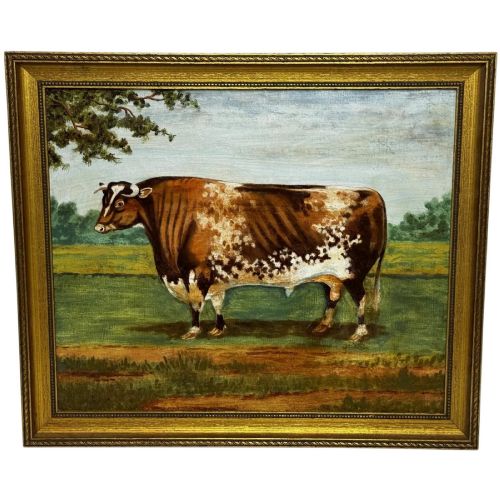
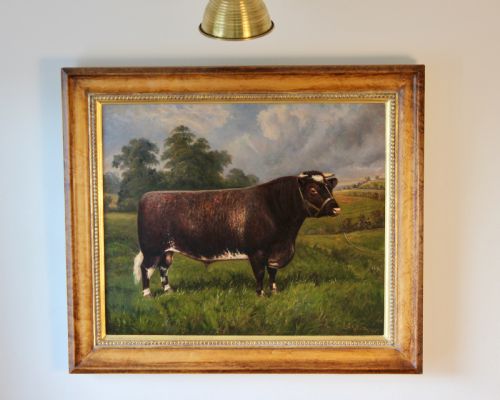
A victorian livestock portrait brings the heavy-shouldered prize bull and the woolly ewe indoors in rich oil paint.
Victorian Livestock Portrait
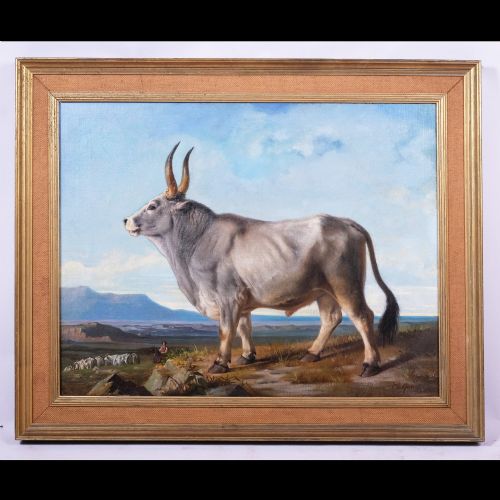
A victorian livestock portrait takes cattle, sheep and horses as its sole subject, painted across the nineteenth century in styles ranging from detailed realism to English folk art. You will find canvases depicting shorthorn bulls, highland cattle in Scottish winter landscapes, and sheep resting in fields.
Most examples hail from the Victorian period and the wider nineteenth century, created by artists working within the British school or rural landscape traditions. These works record prized farm animals with a seriousness once reserved for human sitters.
Materials and Method
These works are painted in oil on canvas, utilising oil paint layered to capture the thick fleece of sheep and the heavy hide of cattle. The pigments are held on woven canvas supports that show the texture of nineteenth-century manufacture.
Many of these paintings remain set within their original gesso and giltwood frames, which use moulded ornamentation to complement the pastoral subject matter.
The inventory spans the nineteenth century, capturing scenes from snowy Scottish highlands to quiet English pastures.
Quality and Hand
The distinction between a standard rural landscape and a superior victorian livestock portrait lies in the anatomical accuracy and presence of the beast. Master painters render bone structure, muscle and fleece with convincing weight, whereas naive works lean towards charm and flat perspective.
The handling of the surrounding landscape also marks the grade of the work. Finer canvases integrate the animal into atmospheric weather and detailed pasture, while lesser pieces treat the background as a simple backdrop.
Eugène Verboeckhoven·A M Gauci·William Henry Mander·Thomas Sidney Cooper·Charles Jones·Claude Cardon·John W Morris·W. A. Clark·William Huggins·A Davis
The Victorian Livestock Portrait Glossary
- Canvas
- A heavy woven fabric used as a support for oil painting. It provides the tensile strength needed for large nineteenth-century pastoral scenes.
- Giltwood Frame
- Wood carved and coated with gold leaf or metal leaf. These frames surround many nineteenth-century oil paintings and often feature gesso mouldings.
- Gesso
- A plaster-like mixture applied to wood before gilding. It forms the base for the intricate relief work found on period frames.
- Victorian Pastoral
- A nineteenth-century artistic genre celebrating rural life and agriculture. It focuses heavily on farm animals, shepherds and pastoral landscapes.
- English Folk Art
- Art produced by self-taught or provincial painters working outside academic traditions. These pieces prioritise directness and charm over strict anatomical proportion.
Victorian Livestock Portrait: Frequently Asked Questions
Why did Victorians paint farm animals?
Prized livestock represented agricultural wealth, breeding triumphs and the pride of landowners during the nineteenth century. Farmers and gentry commissioned portraits of champion bulls and sheep much like family portraits.
These paintings also reflected a growing romantic attachment to rural life as industrialisation changed the British countryside.
How do I date a livestock painting?
Examine the canvas stretcher, the style of the oil paint, and the framing materials. Nineteenth-century works often carry signatures, dates, or canvas stamps from period art suppliers.
The clothing of any human figures, the breed of the animal, and the painting style - ranging from folk art to nineteenth-century realism - help narrow down the decade.
Where should I hang a large animal painting?
These works suit dining rooms, libraries, or above a fireplace where their substantial scale can anchor the room. Pair them with traditional wood panelling or neutral walls to let the dark tones of nineteenth-century oil paint stand out.
Keep them away from direct sunlight to protect the canvas and the giltwood frame from drying out.
What is the difference between naive and realist styles?
Realist paintings from the British school focus on precise anatomy, shadow and light to make the animal look tangible. Artists like Thomas Sidney Cooper mastered this academic approach.
Naive works simplify perspective and form, placing charm and character above strict biological accuracy.