




Antique Bull Painting
An antique bull painting captures the muscle and substance of livestock through nineteenth-century oils and watercolours, offering a direct view into historical agricultural life.
Antique Bull Painting
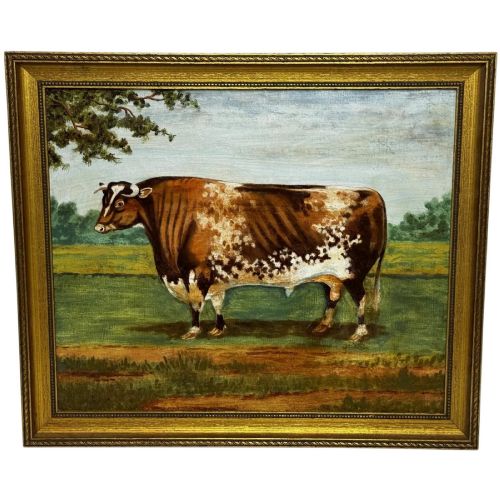
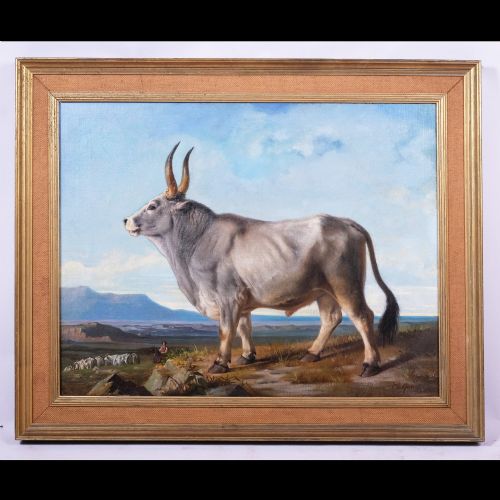
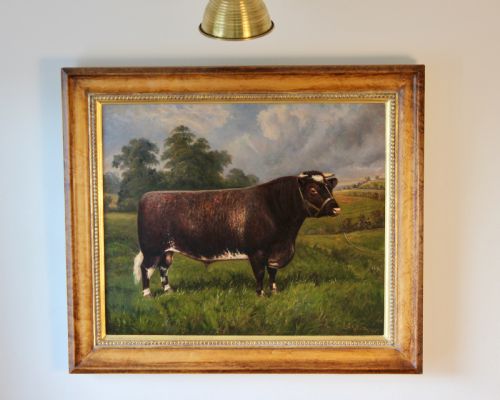
An antique bull painting covers works produced across the nineteenth and early twentieth centuries, spanning Victorian realisms, Edwardian watercolours, and English folk art interpretations. You will frequently encounter oils on canvas and board alongside watercolours depicting prized shorthorns, longhorns, and working beasts in rural landscapes.
The material record includes framed canvas and board works, often housed within giltwood or gilt leaf frames that reflect the decorative standards of their respective periods. Alongside traditional paintings, the selection extends to related agricultural subjects and occasional decorative items such as papier mache figures and pearlware jugs.
Materials and technique
Artists relied primarily on oil paint applied to canvas or wood board, building depth through layered brushwork to render the heavy musculature and coats of the cattle. Watercolours on paper appear in Edwardian examples, capturing finer atmospheric details in pastoral settings.
Framing forms an integral part of the construction, utilising wood finished with gilt leaf to complement the painted surface. Support structures range from stretched canvas on wooden frames to rigid wooden boards.
A solitary papier mache bull figure occasionally wanders among the flat canvases, proving that some cattle refused to stay on the wall.
Markers of quality
Quality rests upon the anatomical accuracy and character captured by the painter, distinguishing professional British school portraits from cruder folk art pieces. Skilled handling of light across the hide and a convincing integration of the animal within its rural landscape elevate a work.
The condition of the painted surface and the originality of the frame contribute significantly to the standing of a piece. Works bearing clear artist signatures or documented provenances command greater interest than anonymous naive depictions.
Oswald Garside·Heinrich Harder·Michael Therkildsen·Rasmus Christiansen
The Antique Bull Painting Glossary
- Oil on canvas
- Pigments bound in a drying oil applied to a woven fabric support. This technique allowed artists to achieve rich textures and subtle tonal gradations.
- Giltwood frame
- Carved wood decorated with gold leaf or metallic powder. These frames protected the edges of the canvas while adding ornamental weight to the presentation.
- Folk art
- Artistic expression created by self-taught or provincial makers outside academic traditions. These pieces prioritize bold character and direct representation over strict anatomical proportions.
- Shorthorn
- A prominent breed of beef and dairy cattle developed in Britain. They frequently appear in agricultural portraits commissioned to record prized agricultural specimens.
Antique Bull Painting: Frequently Asked Questions
How do I identify a Victorian bull painting?
Victorian works often display a focus on prized livestock breeds like shorthorns, reflecting the era's fascination with agricultural improvement and breeding.
Examine the framing, canvas preparation, and stylistic markers such as nineteenth-century realism or Victorian British school conventions.
Where were these paintings displayed originally?
These pastoral works typically hung in country houses, estate offices, and agricultural homesteads to celebrate successful farming endeavours and prized livestock.
Owners often commissioned portraits of specific animals to document the quality of their herds.
What is the difference between naive and academic cattle paintings?
Academic paintings follow strict rules of perspective, anatomy, and realism, often signed by trained artists associated with recognised schools.
Naive works emphasise bold presence and charm with less concern for anatomical precision, typical of folk art traditions.
How should I care for an antique oil painting?
Keep the artwork away from direct sunlight and dramatic fluctuations in temperature or humidity to protect the canvas and oil pigments.
Dust the surface gently with a soft, dry brush and avoid using liquid cleaners on either the painting or the gilt frame.