


Antique Cattle Art
Antique cattle art captures pastoral life through oil paintings and watercolours spanning the Victorian and Edwardian eras.
Antique Cattle Art
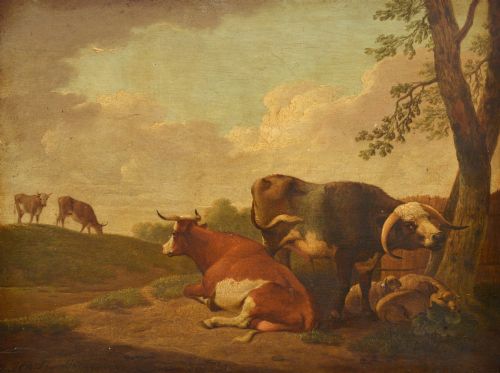
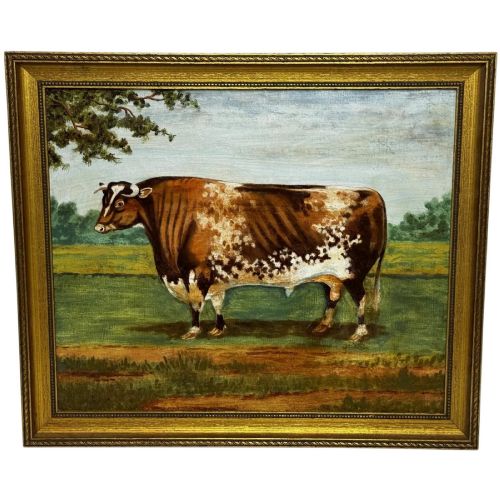
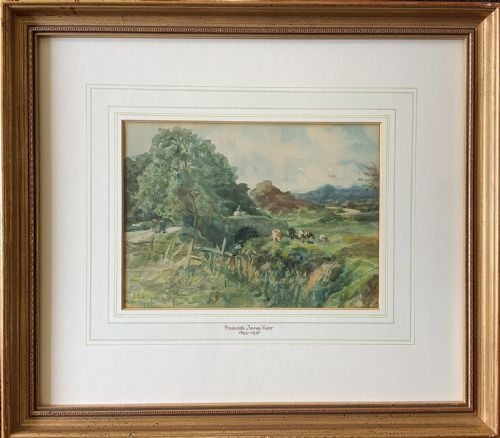
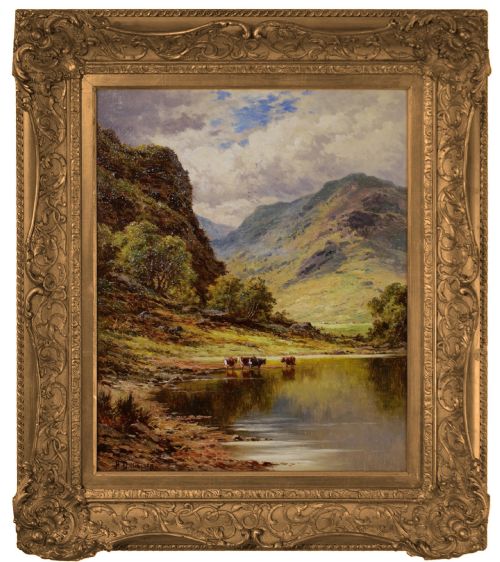
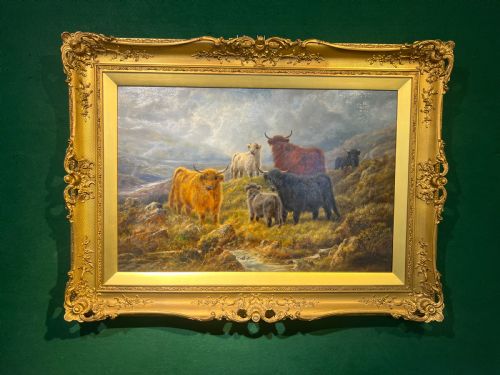
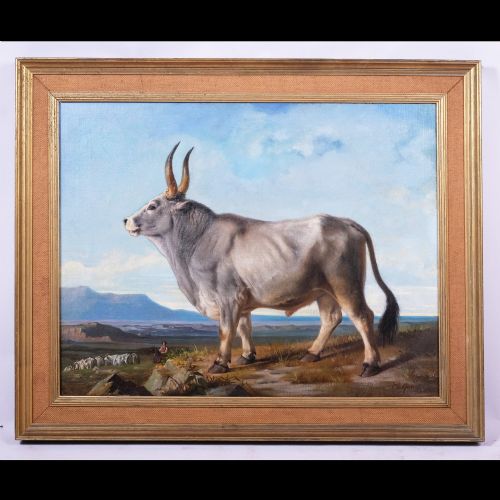
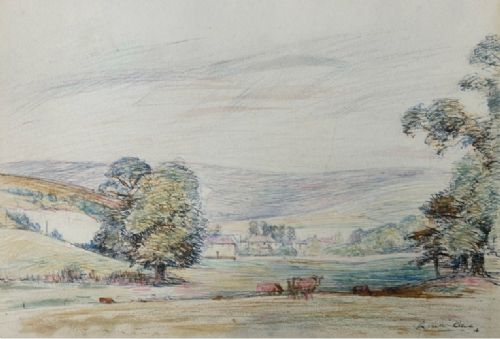
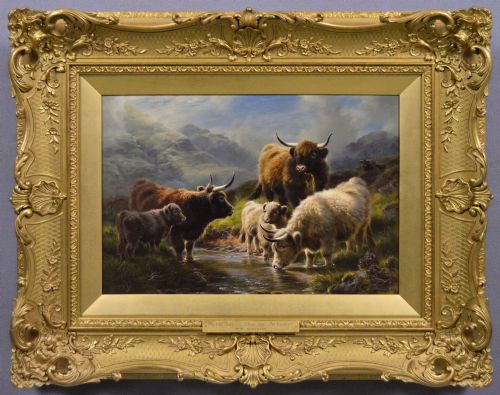
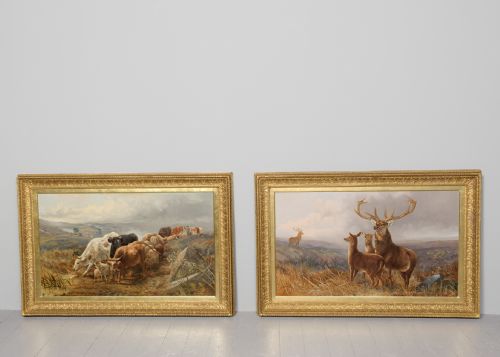
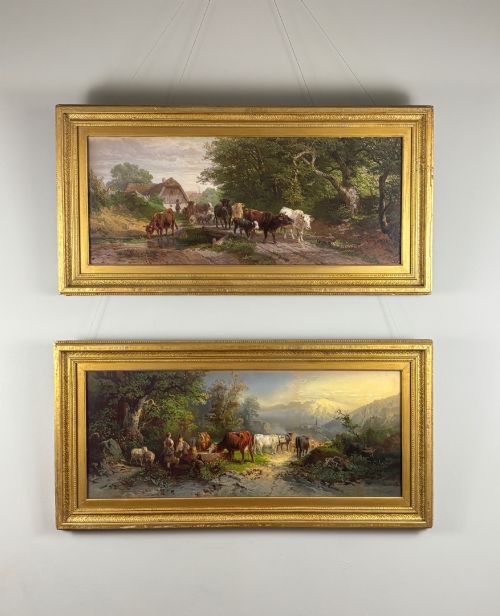
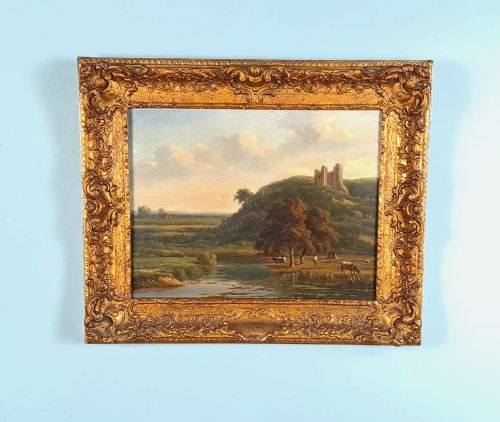
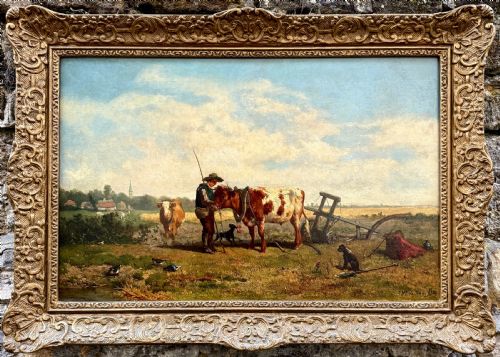
Antique cattle art encompasses oil paintings, watercolours, and mixed-media works focusing on pastoral landscapes, farming scenes, and animal portraits. When exploring antique cattle art, buyers encounter representations ranging from individual prize-winning bulls to herds grazing by Scottish lochs or riverbanks.
The selections span several periods, with a strong representation of nineteenth-century Victorian works alongside eighteenth-century Dutch influences and early twentieth-century British and European pieces. Common formats include framed oil on canvas, oil on board, and detailed paper watercolours showing cows, calves, and drovers.
How they were made
Artists primarily utilised oil paint on stretched canvas or wooden board, frequently building rich textures through layered brushwork and gesso preparation. Watercolour on paper forms another major technique, often paired with traditional framing materials like giltwood.
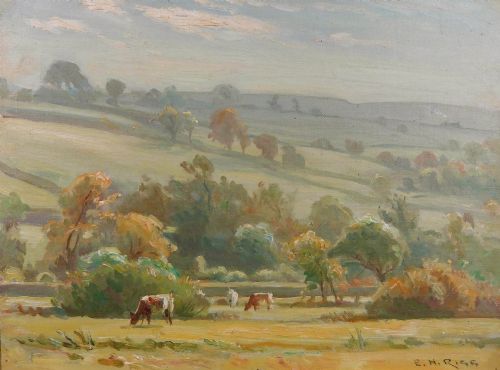
Makers applied pigments to capture natural light across rural fields, mountains, and river valleys. Many works retain their original frames, constructed from wood and embellished with moulded gesso details.
Subject matter centres on British and European landscapes, capturing bulls, cows, and sheep in natural outdoor environments.
What varies in quality
The nuance of anatomical rendering and the handling of atmospheric light distinguish superior pieces from simpler decorative works. Master painters achieved distinct depth in landscape backgrounds while capturing the specific physical traits of breeds such as Highland cattle or Shorthorn bulls.
The integration of livestock within the surrounding topography dictates overall artistic merit. Weaker compositions treat animals as isolated additions, whereas accomplished examples unite the cattle, drovers, and environment into a cohesive narrative.
William H Myers·Hendrik Willem Schweickhardt·David Bates·Thomas Sidney Cooper·Ernest Higgins Rigg·Frederick James Kerr·Henry H Parker·Robert Watson·Russell Sidney Reeves·William Watson Jnr·Robert Cleminson·Johann Friedrich Voltz·T C Hofland·Johannes de Haas·A M Gauci·Oswald Garside·Henry Robinson Hall·J C Grey·Henry Hillier Parker·Frederick Septimus Lewis·Ernest Pile Bucknall·Samuel Joseph Clark·William Sydney Cooper·Thomas Hunn·George Vicat Cole
The Antique Cattle Art Glossary
- Oil on Canvas
- Pigment mixed with drying oil applied to a woven fabric support. This technique allowed artists to achieve rich colour saturation and subtle blending.
- Watercolour
- Paint consisting of colour suspended in a water-soluble binder applied to paper. It creates transparent washes and delicate atmospheric effects.
- Gesso
- A paint mixture consisting of a neutral binder mixed with chalk, gypsum, or pigment. It served as a smooth preparation layer for wooden panels and frames.
- Giltwood
- Wood carved and treated with a thin layer of gold leaf. It formed the ornate framing standard for nineteenth-century fine art.
- Pastoral Landscape
- A genre of art depicting rural life, shepherds, and grazing livestock. These scenes idealised the harmony between humanity and nature.
Antique Cattle Art: Frequently Asked Questions
How do I identify Victorian cattle paintings?
Victorian cattle paintings frequently depict Highland scenes, river watering moments, or prize-shorthorn portraits executed in oil on canvas. Look for naturalistic realism combined with dramatic skies and detailed landscape elements.
Signatures, dates, and framing styles often corroborate the period. Many works from this era carry heavy giltwood frames and exhibit the characteristic romanticism of nineteenth-century British art.
What subjects appear alongside cattle in these artworks?
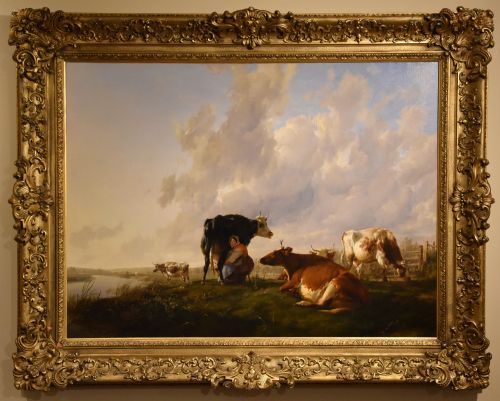
Artists regularly placed drovers, milkmaids, sheep, and horses within the same composition to establish rural scale and activity. Rivers, mountains, woodlands, and farmyards serve as the primary backdrops.
These complementary elements help anchor the livestock within working agricultural environments. The interaction between human figures, animals, and the weather defines the mood of the scene.
How should I care for antique watercolours?
Antique watercolours on paper require protection from direct sunlight to prevent fading of the pigments and yellowing of the paper support. Display them in rooms with stable humidity levels.
Ensure framing utilises acid-free mount boards to safeguard the paper over time. Professional framing conservation preserves the integrity of nineteenth-century works.
Are these paintings signed by the artists?
Many listings feature original signatures or monograms applied by the artist, sometimes accompanied by dates or inscription notes on the reverse. Documentation on the backboard frequently provides provenance or exhibition details.
Unsigned works often fall under regional school classifications, such as the British School or Dutch tradition. Both signed and unsigned pieces reflect the prevailing aesthetic standards of their production eras.