


Framed British Livestock Art
Framed british livestock art captures rural heritage through oil and watercolour depictions of cattle, sheep, and horses in pastoral settings.
Framed British Livestock Art
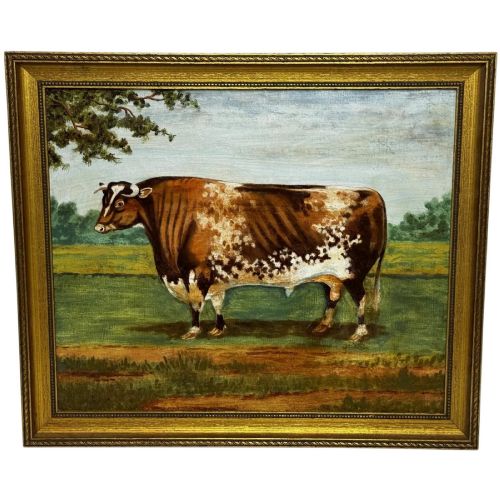
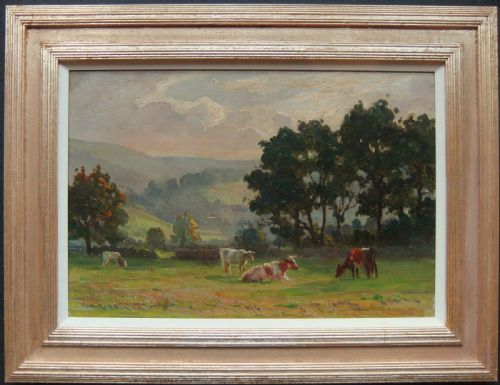
When you search for framed british livestock art, you encounter pastoral scenes dominated by cattle, sheep, and bulls set within nineteenth-century rural landscapes. These works reflect a agricultural society that prized prized shorthorns and rolling pastures, rendered by artists working across the Victorian era into the early twentieth century.
The versions most likely to meet you on this page are oil paintings on canvas and watercolours on paper, often housed in heavy giltwood frames. Examples range from intimate watercolours by the followers of Thomas Sidney Cooper to large oils depicting herds gathered by rivers or sheltering in barns.
Materials and Technique
The works utilise oil on canvas or watercolour on paper, mounted within wooden or gilt wood frames that complement the pastoral subject matter. Painters built up the rural scenes using traditional brushwork, capturing the texture of animal coats and the atmospheric light of British landscapes.
Framing played a central role in presentation, employing ornate giltwood designs that enhanced the depth and presence of the painted canvas or paper sheet.
Several paintings pay specific homage to named animals, ensuring prize-winning bulls achieve immortality in gilt.
Assessing Quality
Quality rests upon the anatomical accuracy of the livestock and the skill with which the artist handles natural light and atmosphere in the landscape. Stronger pieces display careful observation of cattle or sheep in their environment, whereas lesser works rely on formulaic compositions and stiff figures.
The condition of the original canvas, the preservation of the pigment, and the integrity of the period gilt wood frame contribute significantly to the standing of any given piece.
William Henry Mander·Ernest Pile Bucknall·Thomas Sidney Cooper·Claude Cardon·Frederick Richard Lee·Henry Brittan Willis·William Sidney Cooper·Thomas Baker of Leamington
The Framed British Livestock Art Glossary
- Oil on Canvas
- Pigment bound in drying oil applied to a stretched woven fabric support. This medium allowed artists to build rich textures and deep tones suitable for nineteenth-century pastoral scenes.
- Watercolour Painting
- Pigments suspended in a water-soluble vehicle applied to paper. It yielded translucent washes of light frequently utilised for rural landscapes.
- Giltwood
- Wood carved and covered with a thin layer of gold leaf or metallic gilt powder. Frames created in this manner provided ornate borders for fine art pieces.
- Victorian Pastoral
- A nineteenth-century artistic style focusing on idealized rural life, agricultural workers, and livestock grazing in tranquil countryside settings.
Framed British Livestock Art: Frequently Asked Questions
What periods do these paintings come from?
The works span from the Georgian period through the nineteenth century, including Victorian examples and pieces created up to the 1920s.
This timeline reflects the height of British pastoral realism and animal portraiture.
How were these artworks displayed?
These paintings were traditionally hung in country houses and rural properties to celebrate prized agricultural stock and agrarian wealth.
They remain suited to domestic interiors that favour traditional country aesthetics.
What subjects appear most frequently?
Cattle, shorthorn bulls, and flocks of sheep dominate the compositions, often shown grazing near rivers or sheltering in barns.
Human figures such as farmers and drovers occasionally accompany the animals.
Are the frames original to the art?
Many pieces retain their period wooden or gilt wood frames, which were selected to match the aesthetic of the painting.
Framing styles range from simple moulded wood to decorative gilt designs.