
Victorian Library Side Table
A victorian library side table offers sturdy workspace and generous proportions, built for serious study or daily correspondence in nineteenth-century interiors.
Victorian Library Side Table
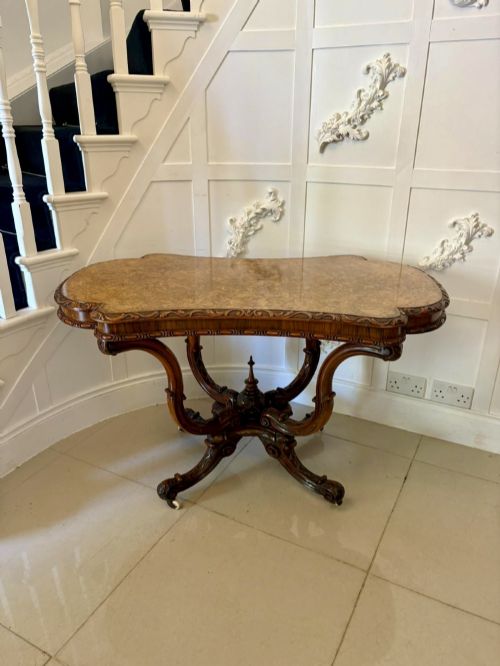
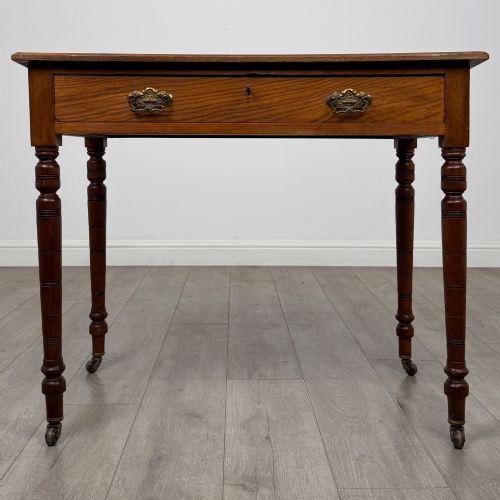
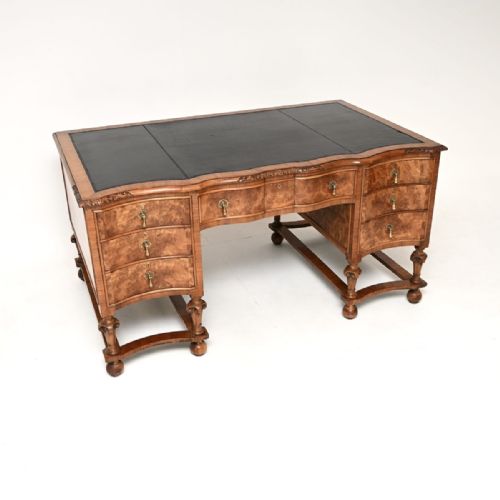
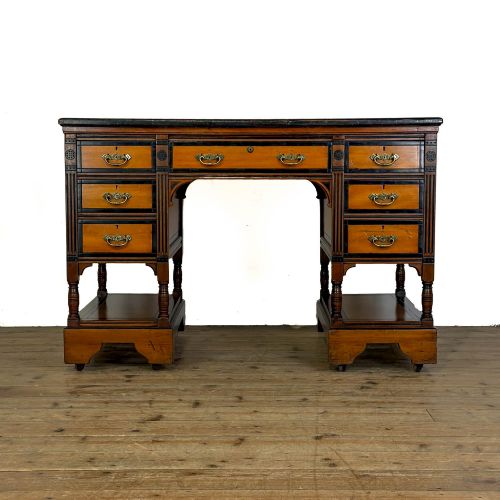
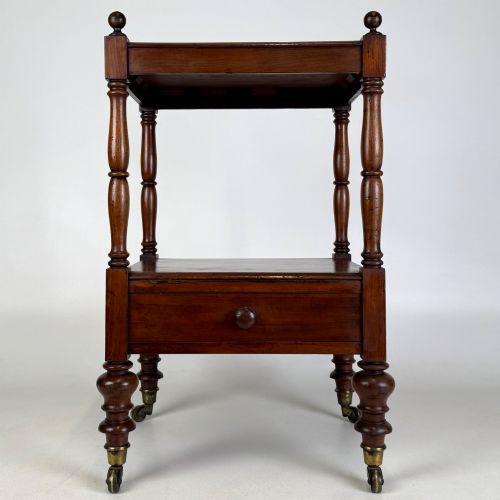
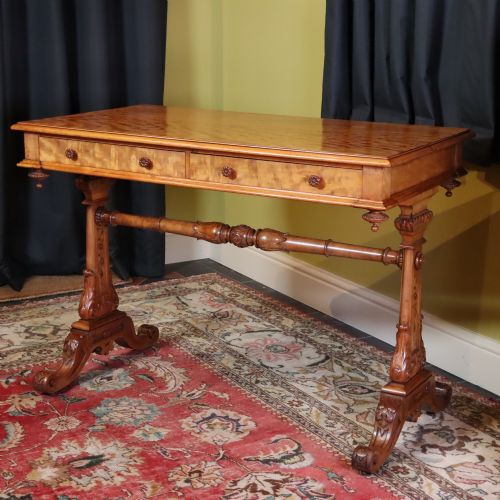
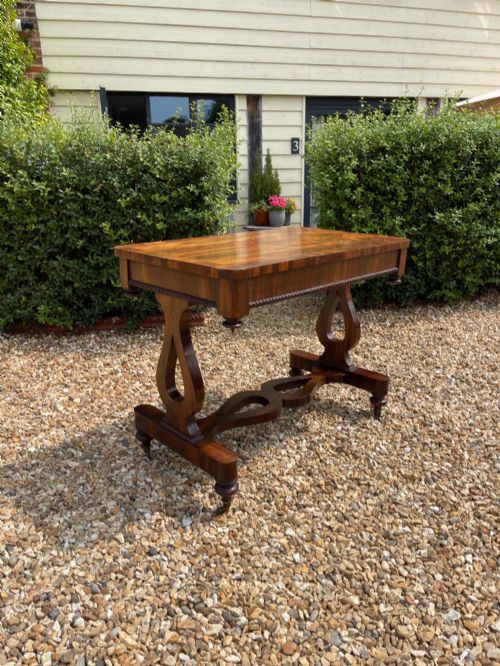
A victorian library side table is a substantial piece of nineteenth-century furniture designed for reading, writing, and holding heavy volumes in studies or reception rooms. These pieces frequently appear in robust timbers such as mahogany, oak, and walnut, often featuring fitted drawers for storage.
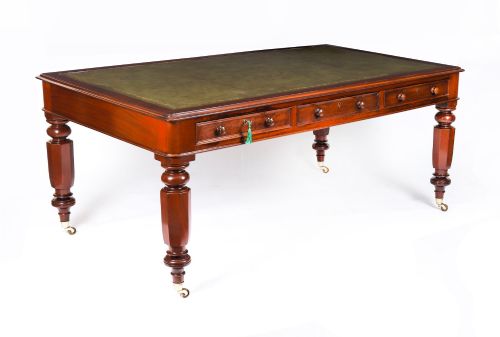
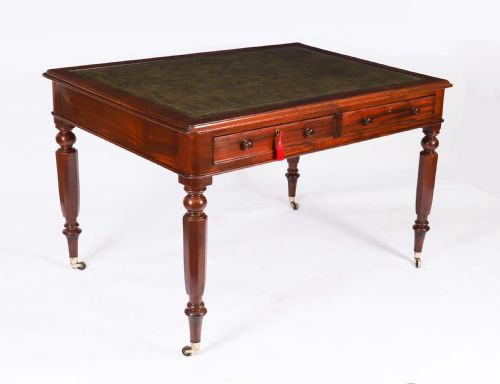
The version most commonly met on this page is the Victorian writing or library table, spanning decades from the mid nineteenth century into the Edwardian era. Many examples incorporate leather inserts to their tops, serving as practical desks or centre tables within domestic spaces.
How they were made
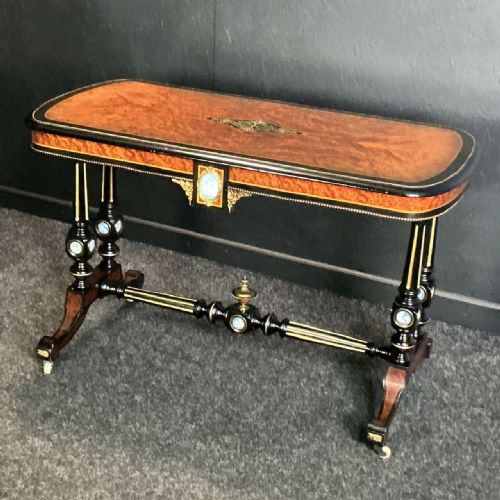
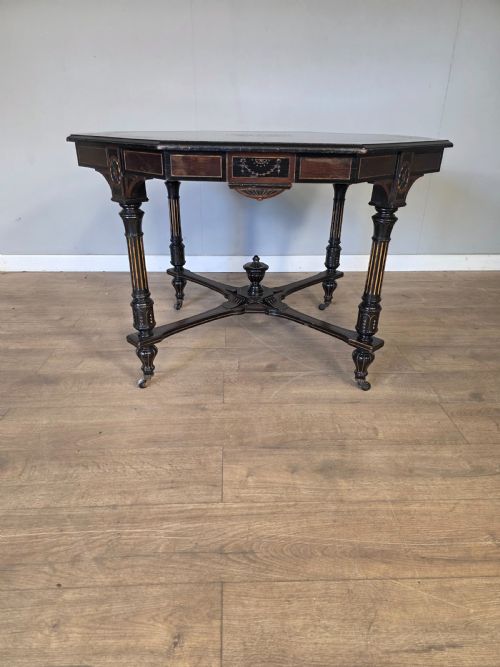
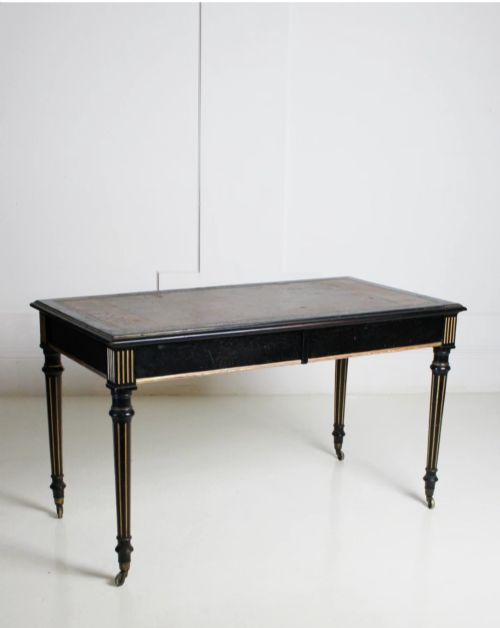
Cabinet makers constructed these tables from dense hardwoods including mahogany, burr walnut, rosewood, and oak, frequently applying ebonised finishes or brass mounts for decorative contrast. Timber selection dictated both the visual weight and the structural integrity required for daily scholarly use.
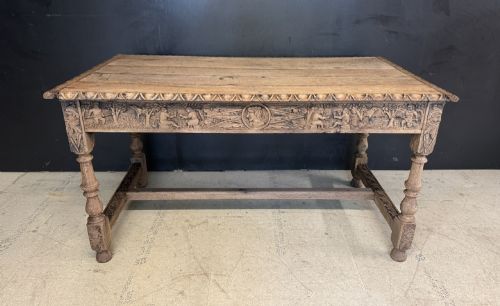
Joinery techniques relied on solid framing, dovetailed drawer construction, and hand-carved ornamentation typical of the period. Leather top surfaces were commonly tooled with gold leaf and secured within wooden rebated borders to provide a smooth writing plane.
Listings feature woods spanning mahogany, oak, walnut, rosewood, burr walnut, and ebonised finishes across nineteenth-century periods.
What varies in quality
Quality separates ordinary utility pieces from exceptional commissions through the choice of timber figurations, such as flame mahogany or burr walnut, and the depth of hand-carved detailing. Finer tables demonstrate superior grain matching across drawer fronts and tops, alongside crisply executed mouldings.
The sophistication of the internal mechanics and secondary woods also defines the tier of craftsmanship. Master workshops employed robust secondary timbers and refined drawer linings, whereas simpler versions utilised straightforward structural framing without decorative flourish.
Maple and Co·Edwards and Roberts·Charles Andrea Nosotti
The Victorian Library Side Table Glossary
- Partners desk
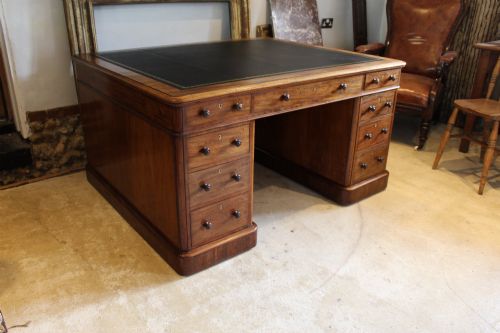
- A large double-sided desk designed for two people to work opposite one another, featuring drawers on both long sides.
- Ebonised
- Wood treated with a dark stain or finish to imitate expensive ebony.
- Sofa table
- A rectangular occasional table with drop leaves at either end, originally designed to stand in front of a sofa.
- Leather top
- A writing surface inset with hide, frequently decorated with blind and gilt tooling around the perimeter.
- Burr walnut
- Timber taken from the gnarled growth of a walnut tree, prized for its swirling, highly decorative grain pattern.
Victorian Library Side Table: Frequently Asked Questions
Where did these tables sit?
These tables stood centrally in libraries, studies, or parlours where they could be accessed from all sides. Their finished backs made them suitable for placement away from walls.
They also functioned effectively against walls as serving surfaces or console tables in grand hallways.
How are desks and tables different?
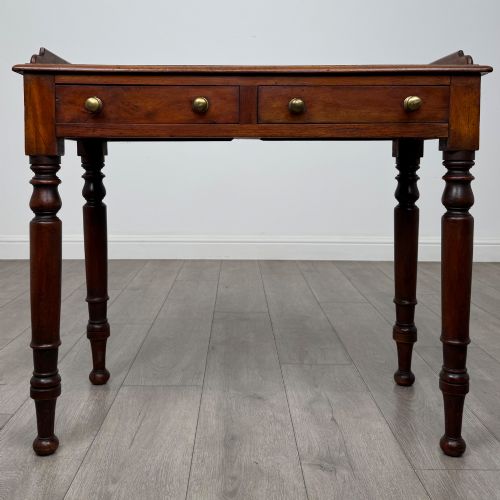
Desks generally feature built-in pedestals with banks of drawers down to the floor, whereas library tables are supported by four legs with shallower drawers beneath the top.
Many library tables were double-sided to allow seating on both faces, matching the layout of larger partner desks.
What woods were used most?
Mahogany and oak form the vast majority of surviving examples due to their strength and abundance during the nineteenth century. Walnut and rosewood appear frequently on finer decorative pieces.
Ebonised finishes and exotic veneers like burr walnut denote higher status commissions from fashionable workshops.
How do I spot an Edwardian piece?
Edwardian examples tend to display lighter framing and refined proportions compared to the heavier forms of the mid nineteenth century. Lighter timbers such as satinwood or softer mahogany finishes often characterise this later period.
Decoration on Edwardian pieces frequently reflects revived eighteenth-century styles rather than heavy Victorian carving.