



Victorian Library Clock
A victorian library clock is a dependable timepiece built for serious study, prized for its mechanical precision and handsome timber case.
Victorian Library Clock
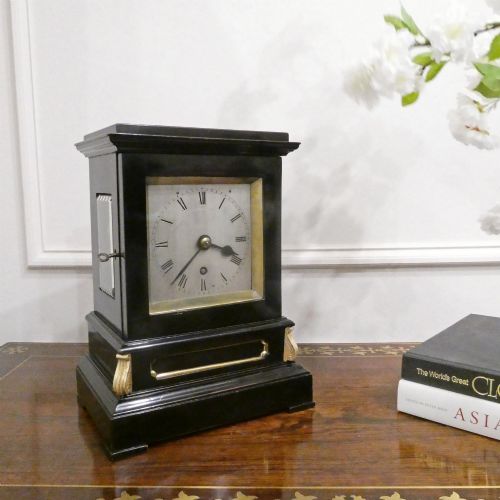
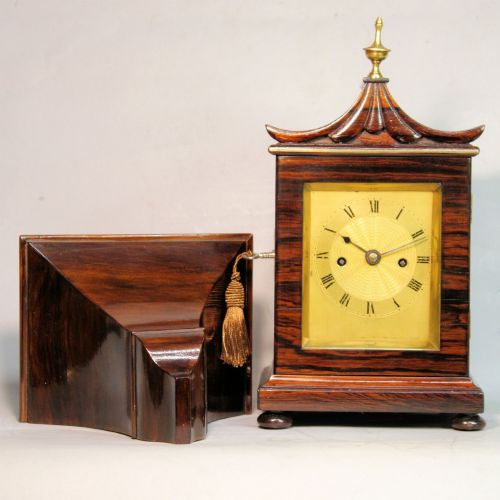
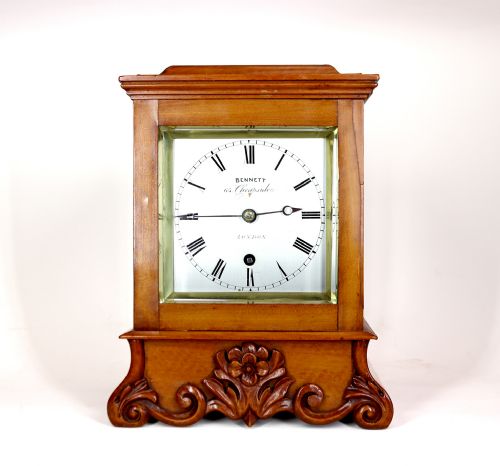
A victorian library clock serves as a reliable instrument designed for reading rooms and studies, appearing most frequently on this page as a bracket clock, mantel clock, or four-glass timepiece. These instruments originate primarily from the nineteenth century, spanning decades from the early Victorian era through to later decades like eighteen-ninety.
Buyers encounter various forms, ranging from compact desk clocks to larger wall-mounted instruments housed in rich wooden cases. The selection reflects diverse aesthetic influences, including Gothic Revival, Grand Regency, and industrial styles alongside standard Victorian designs.
Makers housed these movements in robust enclosures suitable for quiet rooms where precision mattered. They range from simple single fusee timepieces to complex examples featuring striking mechanisms or mercurial pendulums.
Construction and Materials
Craftsmen built the cases using dense timbers such as mahogany, rosewood, satinwood, and ebonised wood, occasionally employing intricate inlays like burr walnut or bird's eye maple. These woods were polished to showcase the natural grain, providing a dignified exterior for daily use in a study.
The interior mechanics rely on brass and steel components, featuring chain fusee movements or platform escapements designed for consistent timekeeping. Dials often incorporate silvered metal, sometimes enhanced with engine-turned gilding or visible glass panels that reveal the gear train.
Materials span traditional brass and steel alongside decorative ebonised wood, satinwood, and silvered metal dials.
Evaluating Quality
Quality rests upon the refinement of the movement and the integrity of the timber case, separating standard production from the work of premier horologists. Superior examples display meticulous hand-finishing on the brass plates and precise gear cutting within the fusee mechanism.
The choice of exterior materials also dictates value, with select figured woods and multi-glass panels indicating higher workshop standards. Engraved signatures from established makers further elevate an instrument's standing above anonymous or utilitarian pieces.
Webster Cornhill London·Sir John Bennett·Walker·Dent·Phillips Brothers·Arnold and Frodsham·Samuel Marti·McCabe London·Barraud and Lunds·John Massey London
The Victorian Library Clock Glossary
- Fusee
- A conical pulley used in mechanical clocks to maintain even power as the mainspring unwinds. This device ensures consistent tension on the gear train for greater accuracy.
- Platform escapement
- A self-contained escapement unit that allows portable clocks to keep accurate time in various positions. It eliminates the need for a hanging pendulum in smaller desk or carriage formats.
- Silvered metal
- A brass dial treated with a silver compound to produce a bright, legible face. Blackened numerals are typically engraved into this surface.
- Bracket clock
- A portable timekeeper originally designed to sit on a wall bracket or table. These spring-driven pieces often feature substantial carrying handles.
- Four glass clock
- A mantel clock enclosed in glass panels on all four sides, offering a clear view of the moving pendulum and mechanism. This design gained popularity during the Victorian period.
Victorian Library Clock: Frequently Asked Questions
What is a fusee movement?
A fusee is a conical drum connected to the mainspring by a chain or cord, designed to equalise the declining power of the spring as it unwinds.
This clever mechanical arrangement ensures the clock receives steady force from fully wound to empty, resulting in superior timekeeping accuracy.
How do I wind a library clock?
Most fusee clocks require a specialised key inserted into the dial to wind the mainspring via the fusee arbor.
Care must be taken not to overwind the mechanism, stopping as soon as resistance is felt to protect the historical chain and teeth.
Where should I place my clock?
These clocks belong in quiet, stable environments away from direct sunlight, dampness, and strong vibrations from heavy footsteps.
A sturdy mantelpiece or dedicated wall bracket provides the level surface necessary for a pendulum or balance wheel to beat evenly.
How can I date a Victorian clock?
Dating relies on stylistic clues, case timber choices, maker signatures, and mechanical signatures recorded on the brass plates.
Earlier Victorian models often feature heavy mahogany or rosewood cases with simple single fusee movements, while later examples might incorporate platform escapements.