



Satinwood Bracket Clock
These satinwood bracket clock examples combine rich timbers and intricate inlay, offering a refined timepiece for any mantel or desk.
Satinwood Bracket Clock
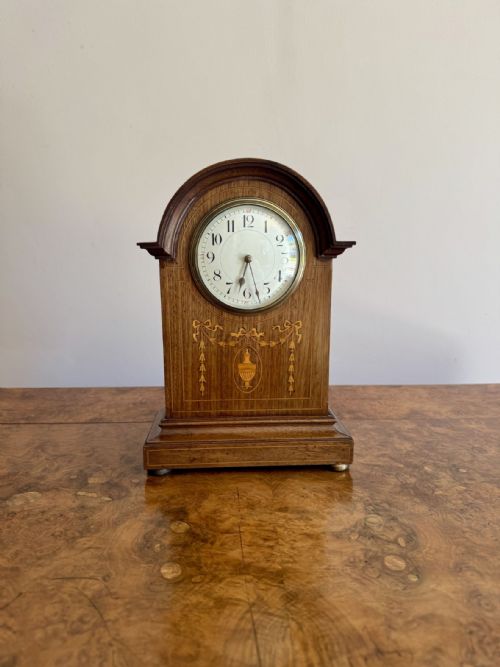
A satinwood bracket clock typically presents as a portable mantel or library timepiece encased in smooth, light timber with contrasting stringing and banding. These pieces span the Victorian and Edwardian eras, incorporating stylistic touches from Art Nouveau floral motifs to classical string inlay.
Most examples found in this category share proportions suited to desks and ledges rather than grand architectural wall mounts. They take the form of compact library clocks, mantel clocks, and occasional bracket clocks featuring visible glazed panels and enamel dials.
How they were made
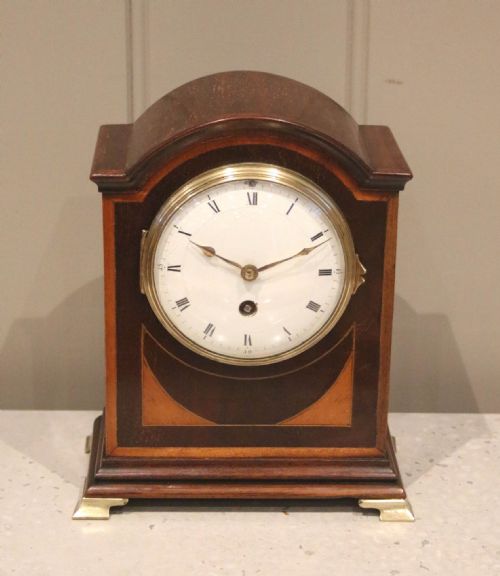
Cabinetmakers constructed these clock cases using foundational woods like mahogany or pine, veneered with figured satinwood and decorated with boxwood inlay. Dial surrounds and bezels utilised polished brass, protecting the white enamel faces behind bevelled glass panels.
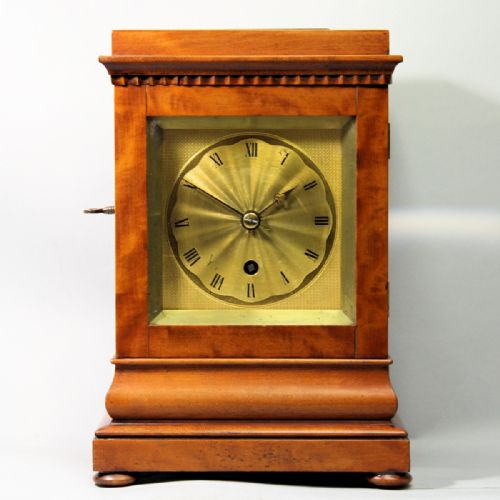
Interior mechanics relied on precision movements, such as chain fusee mechanisms, paired with engine turned gilded dials. Artisans applied hand-carved or inlaid decoration, including poppy designs and pictorial marquetry like Dutch girl motifs, directly onto the wooden cases.
Some Edwardian mantel clocks traded traditional numerals for inlaid Dutch girls and smiling poppies.
What varies in quality
Quality rests in the crispness of the satinwood grain, the complexity of the boxwood inlay, and the finesse of the brass components. Simpler Edwardian cases with straightforward geometric stringing differ significantly from elaborate Victorian five-glass library clocks.
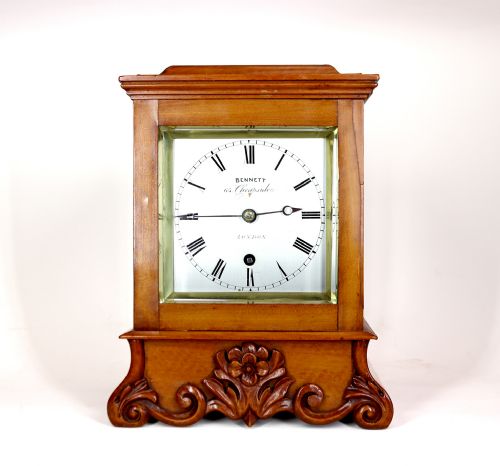
The sophistication of the internal movement dictates the tier of the piece, moving from standard mantel clock mechanisms up to refined chain fusee movements with engine turned gilded dials. Maker attribution, such as signed works by known watchmakers, further elevates the stature of an individual clock.
Sir John Bennett·Payne of London
The Satinwood Bracket Clock Glossary
- Satinwood
- A lustrous tropical timber known for its golden sheen and smooth grain. It forms the primary decorative veneer on these clock cases.
- Chain fusee
- A mechanical cone and chain device that equalises the driving force of the mainspring as it unwinds. This ensures consistent timekeeping.
- Stringing
- Thin lines of contrasting wood inlay, often boxwood, embedded into the surface of the cabinet to create geometric borders.
- Enamel dial
- A white fired-glass face featuring painted numerals. It provides a durable and legible surface for reading the time.
- Engine turned
- A decorative pattern mechanically engraved into metal surfaces. It adds texture and light reflection to gilded clock dials.
Satinwood Bracket Clock: Frequently Asked Questions
What is a satinwood bracket clock?
A satinwood bracket clock is a portable timepiece housed in a timber case finished with pale satinwood veneer. These pieces were designed for desks, tables, and mantelpieces rather than wall hanging.
They incorporate decorative elements like boxwood inlay, enamel dials, and glass panels. The category encompasses Victorian and Edwardian library clocks alongside traditional mantel clocks.
How do I wind the clock?
Winding requires a dedicated key matched to the square arbor on the dial face. Care must be taken not to overwind the mainspring.
Many examples utilise chain fusee movements which require steady, gentle pressure during winding. Consulting specific operational instructions for the movement type prevents internal damage.
Where should I place it?
These clocks suit stable surfaces away from direct sunlight, moisture, and temperature fluctuations. Placing them on a level mantel or sturdy library table ensures the pendulum or balance wheel beats evenly.
Because many feature glass panels on multiple sides, positioning them where they receive adequate light highlights the wood grain and internal mechanics.
How do I date these clocks?
Dating relies on stylistic clues, materials, and maker signatures recorded on the dial or movement. Victorian examples often feature robust five-glass case designs with chain fusee movements.
Edwardian pieces frequently display lighter satinwood inlays, floral motifs, or pictorial designs like poppies and figures. Comparing the dial typography and inlay style helps narrow the period of manufacture.