




Satinwood Table Clock
A satinwood table clock brings a warm, figured grain to the mantelpiece, combining precise horology with polished timber.
Satinwood Table Clock
A satinwood table clock sits upon a mantelpiece or library desk, telling the time with mechanical precision while displaying cabinet-maker skill. These pieces span the nineteenth and twentieth centuries, taking the form of mantel clocks, library clocks, and bracket clocks.
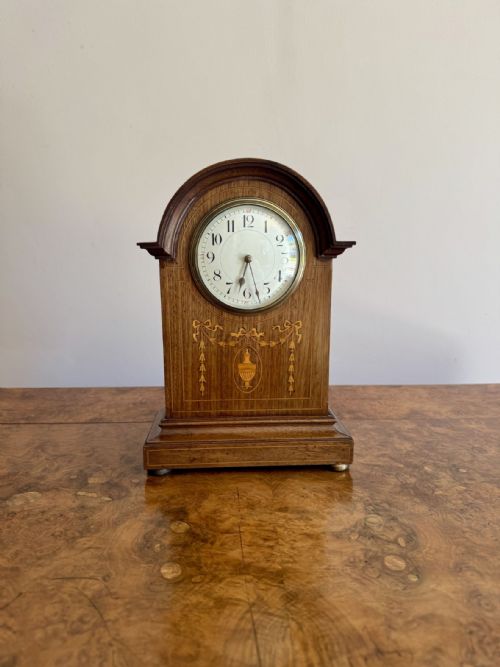
The satinwood table clock most commonly encountered here dates from the Victorian and Edwardian eras, often featuring delicate stringing or figural inlay. Pieces range from compact library clocks with visible movements to architectural portico designs.
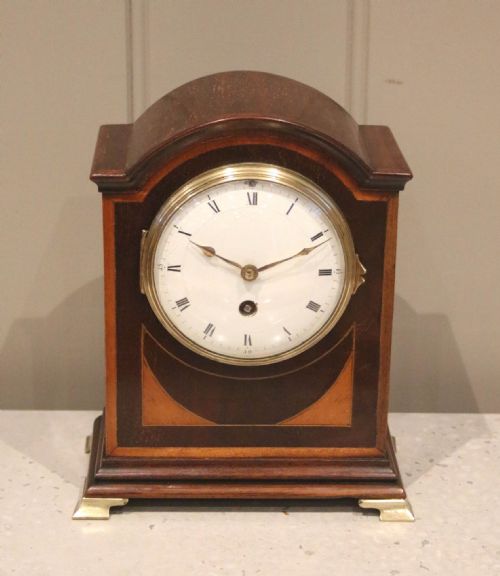
Makers housed these movements in woods such as mahogany, rosewood, and solid satinwood, frequently accented with boxwood inlay. The resulting objects serve as both reliable timekeepers and decorative items for the home.
How they were made
Cabinet-makers constructed the outer cases using timbers like satinwood and mahogany, frequently employing boxwood inlay to create contrasting borders and decorative motifs. Selected panels display the distinctive golden sheen and natural shimmer of the grain.
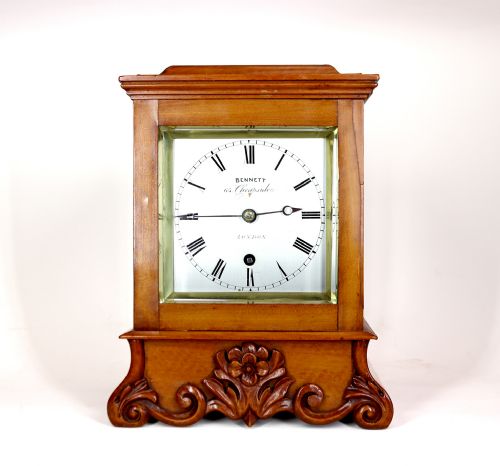
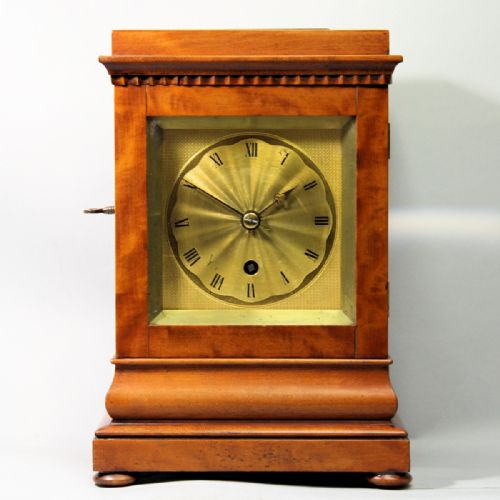
Horologists fitted these timber housings with brass mechanical movements, often utilising chain fusee mechanisms to maintain steady tension as the spring unwinds. Dials feature enamel markers and engine-turned gilding, protected beneath bevelled glass panels.
Listings feature timber cases in satinwood, mahogany, and rosewood, spanning the mid-nineteenth century to the Edwardian period.
What varies in quality
Quality rests in the crispness of the cabinet-work and the sophistication of the internal movement, distinguishing standard production from finer workshop output. Finely executed boxwood inlay and well-chosen satinwood veneer demonstrate superior craftsmanship.
Sir John Bennett
The Satinwood Table Clock Glossary
- Chain fusee
- A conical pulley mechanism with a fine chain that equalises the driving force of the mainspring as it winds down. This ensures the clock maintains consistent timekeeping throughout its running period.
- Engine-turned
- A decorative pattern of precise geometric lines engraved into metal surfaces by a specialised lathe. It adds texture and catches the light on clock dials.
- Stringing
- A narrow inlay of contrasting timber inserted into grooves in the primary wood to create delicate borders. It defines the edges of panels on Edwardian and Victorian cases.
- Portico clock
- A monumental clock design supported by columns, resembling a classical temple facade. These architectural pieces often combine rosewood and satinwood veneers.
Satinwood Table Clock: Frequently Asked Questions
How do I wind a chain fusee clock?
Winding requires a matching key inserted into the dial aperture, turning gently until resistance stops the movement. Care must be taken not to overwind antique mechanisms.
Consulting the specific winding direction prevents damage to the chain fusee system. Regular maintenance keeps the brass train running smoothly.
Where should I place a satinwood clock?
A mantelpiece, sideboard, or library desk provides a stable surface away from direct sunlight and draughts. Stable indoor temperatures protect the timber veneer from splitting.
Keeping the clock level ensures the pendulum or balance wheel beats evenly. Avoid damp rooms that might affect the internal brass components.
How do I tell an Edwardian clock apart from a Victorian one?
Victorian examples often favour rich mahogany or rosewood cases with formal architectural detailing or portico styling. Inlay work from this period tends to be robust and traditional.
Edwardian pieces frequently incorporate lighter satinwood finishes, floral marquetry, and motifs such as ribbons or poppies. The overall aesthetic feels lighter and more decorative.
What is a library clock?
A library clock is a portable timepiece designed for a desk or reading table, usually featuring glass panels that reveal the brass movement. They often employ high-grade mechanisms for dependable daily use.
Compact dimensions allowed scholars to move them easily between rooms. Their restrained styling prioritised clear timekeeping over excessive ornament.