


Victorian Letter Caddy
A victorian letter caddy is a desk accessory designed to keep your daily correspondence organised, combining functional wooden or brass construction with period craftsmanship.
Victorian Letter Caddy
A victorian letter caddy provides a dedicated home for correspondence, notes and stamps upon a desk or writing table. These pieces encompass correspondence boxes, stationery cabinets and brass mesh letters boxes originating primarily from the nineteenth century.
Materials and construction
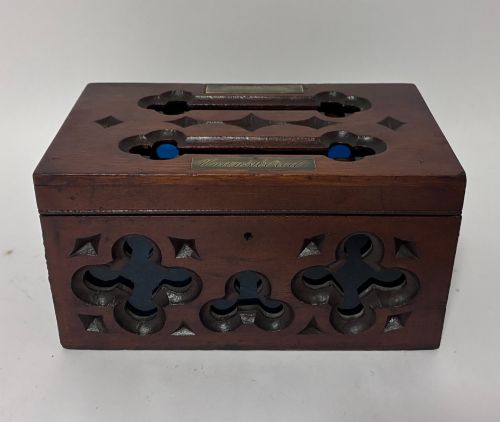
Makers utilised timber such as walnut, mahogany, rosewood and satinwood, frequently selecting veneers with rich grain patterns to form the main body of the box. Brass mounts, hinges and handles were commonly applied to reinforce corners and lift lids.
Metalwork played a structural role in items constructed from brass mesh or silver plate, particularly in specialised postal boxes and associated desk accessories. Hand-painted porcelain panels sometimes decorated the exterior surfaces of finer cabinetry.
Listings demonstrate a strong presence of Victorian burr walnut stationery boxes alongside brass mesh letter caddies.
Assessing quality and execution
Quality rests upon the selection of timber veneers and the precision of the joinery forming the interior partitions and exterior carcase. Finely figured burr walnut and clean brass mounts indicate superior execution by the maker.
The integration of decorative elements, such as hand-painted porcelain panels or Gothic revival tracery, separates standard desk accessories from more ambitious pieces intended for prominent display in a country house study.
Elkington
The Victorian Letter Caddy Glossary
- Correspondence box
- A desk box designed specifically to hold letters, envelopes and writing paper. These containers often feature hinged lids and fitted wooden interiors.
- Stationery cabinet
- A larger desktop housing with doors or folding fronts enclosing multiple letter slots and compartments. They provide greater capacity than a standard letter box.
- Burr walnut
- A prized timber veneer showing swirling growth knots and intricate grain patterns. It was frequently utilised on high-status Victorian boxes.
- Gothic revival
- An architectural and decorative style drawing inspiration from medieval design. It manifests in pointed arches, trefoil motifs and heavy brass mounts.
- Silver plate
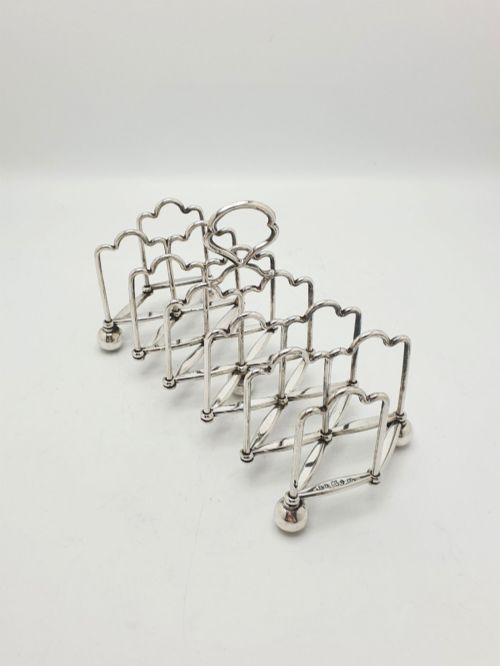
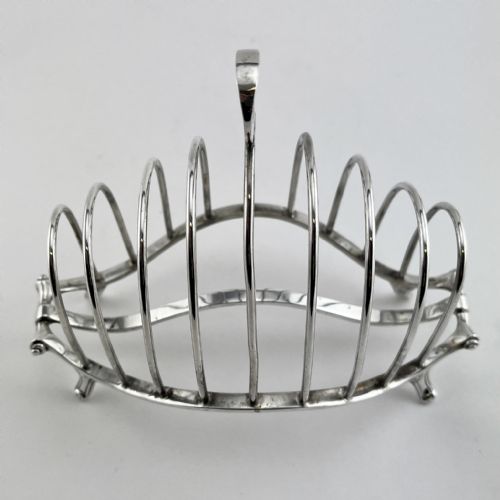
- A thin layer of silver fused to a base metal such as copper or Britannia metal. It appears on desk accessories and associated toast racks.
Victorian Letter Caddy: Frequently Asked Questions
What is a victorian letter caddy used for?
These pieces served as desktop receptacles for incoming and outgoing letters, envelopes, and writing paper in nineteenth century studies and drawing rooms.
They kept loose correspondence tidy and private before the widespread use of envelopes with gummed flaps.
How do I care for wooden stationery boxes?
Keep wooden boxes away from direct sunlight and heat sources to prevent the burr walnut or mahogany veneers from drying and cracking.
Apply a light application of appropriate wax polish occasionally to nourish the timber and maintain the lustre of the grain.
Are brass mesh letter boxes authentic?
Brass mesh letter boxes dating to the Victorian period were produced as functional items for sorting mail in country houses and offices.
They allowed the contents of the box to remain visible while keeping correspondence upright and separated.
How can I date my letter box?
Dating relies upon stylistic markers such as Gothic revival architectural details, the choice of timber veneers, and construction methods.
Many pieces bear construction traits typical of the mid to late nineteenth century, spanning from the Georgian era through to the end of the Victorian period.