




Antique Walnut Desk Box
An antique walnut desk box brings tactile warmth and disciplined storage to a room, ranging from brass-bound writing slopes to fitted stationery cabinets.
Antique Walnut Desk Box
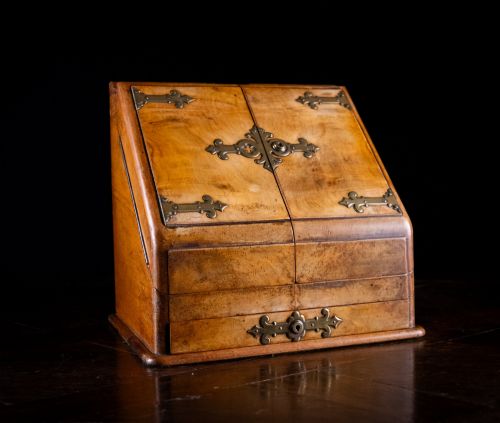
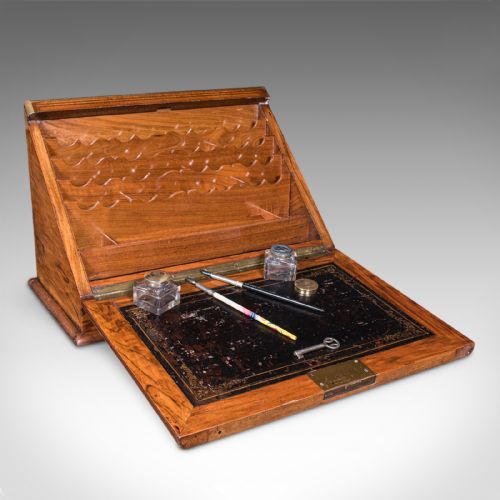
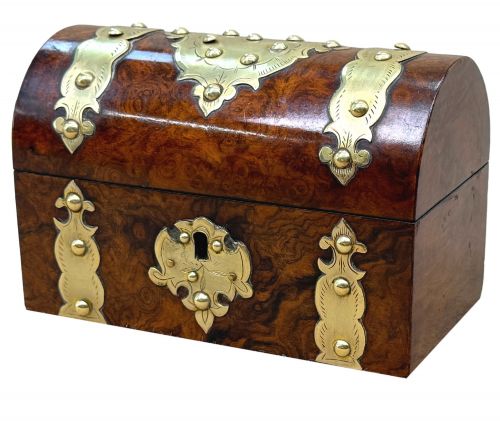
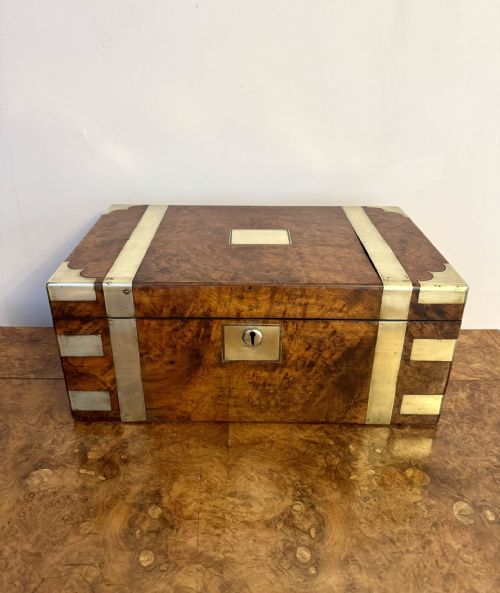
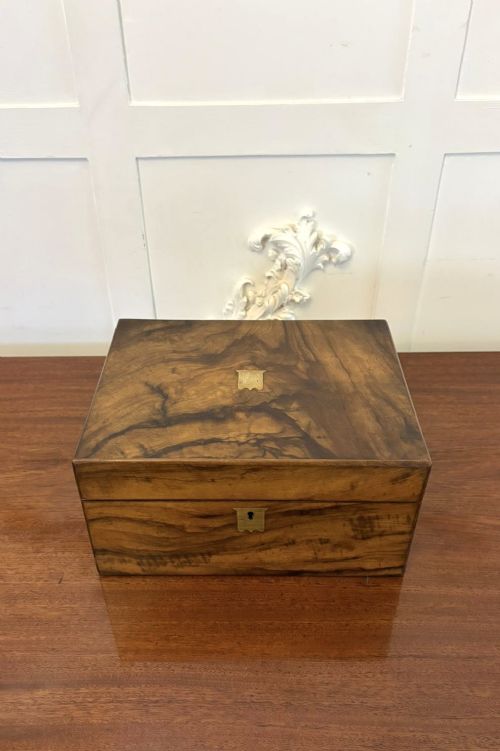
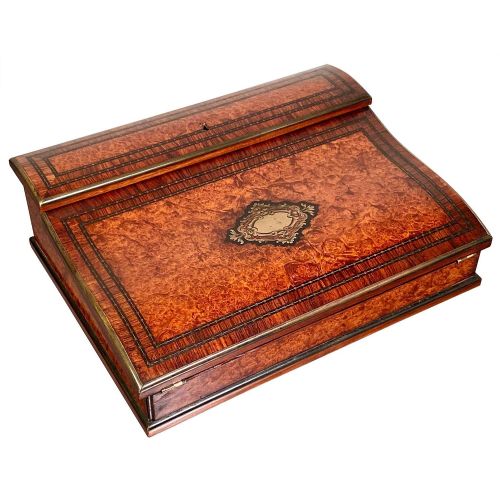
When you search for an antique walnut desk box, you encounter a specialised form of portable and desktop furniture designed for correspondence and organisation. The selections on this page span writing slopes, lap desks, and correspondence boxes intended for use in the study or drawing room.
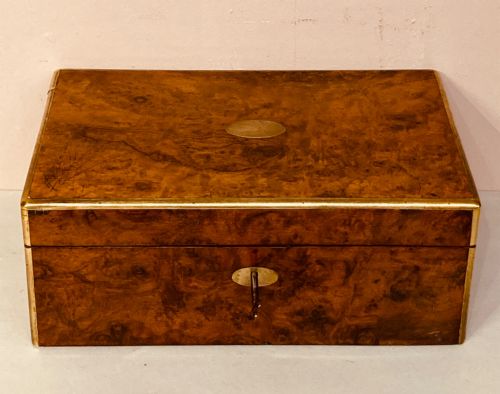
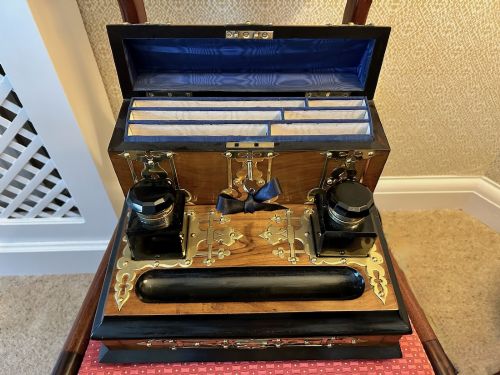
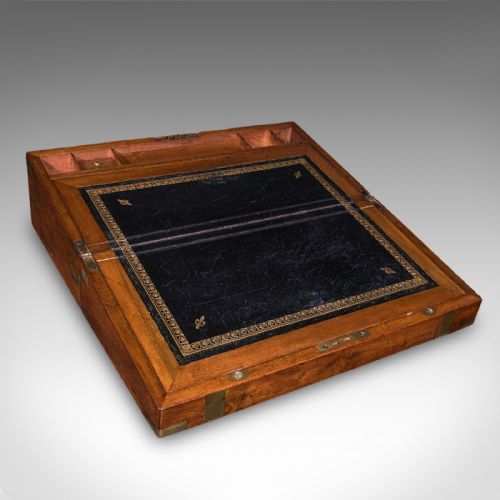
The Victorian period yields the highest concentration of examples, particularly those finished in burr walnut with fitted interiors. These boxes often open to reveal velvet-lined writing surfaces, pen trays, and secret drawers concealed behind dummy partitions.
Beyond slopes, the evidence shows stationary boxes, cigar humidors, and table cabinets sharing the same dense timber construction. These objects reflect a nineteenth-century preoccupation with keeping personal papers and writing implements orderly.
Materials and Construction
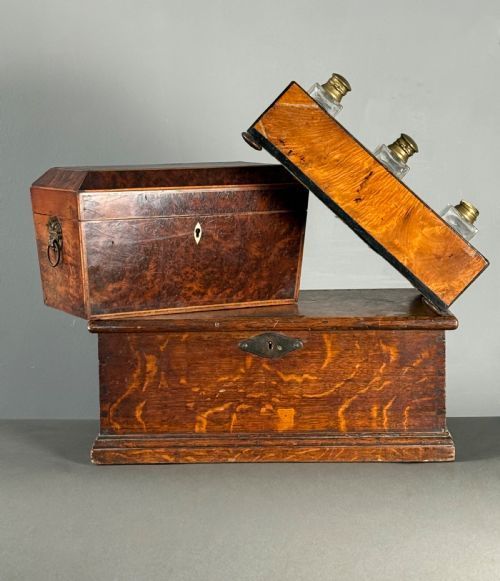
Cabinet makers utilised solid walnut or applied richly figured burr and burl walnut veneers over secondary woods to create dramatic surface patterns. This choice of timber provided both durability and a deep, lustrous grain that responded well to hand-finishing.
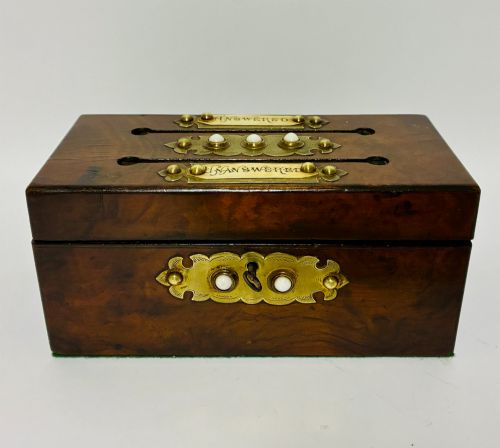
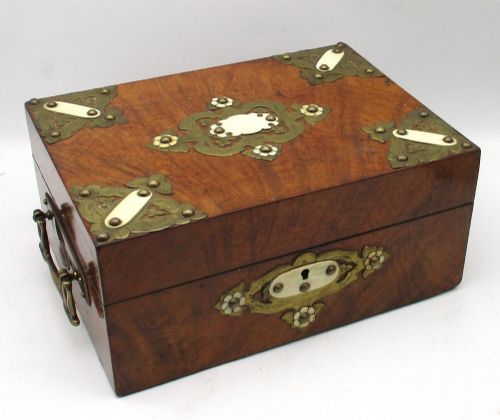
Metalwork played a structural and decorative role, with brass banding, campaign corners, and inset carrying handles reinforcing the corners of travel pieces. Complex locking mechanisms by makers such as Bramah secured the contents, often operated with specialised keys.
Inlaid details such as boxwood stringing, bone, mother-of-pearl, and Tunbridge ware mosaic panels frequently decorate the lids and escutcheons. These contrasting materials required precise woodworking techniques to insert geometric or floral motifs flush into the walnut ground.
Several boxes include hidden compartments so tight that previous owners left behind forgotten postage stamps and dried nibs.
Distinctions in Quality
The choice and grain alignment of the walnut veneer dictate visual success, with highly figured burr surfaces commanding greater presence. Makers who matched the grain symmetrically across the lid demonstrate superior joinery and aesthetic consideration.
Internal fittings reveal the original tier of manufacture, distinguishing standard boxes from those equipped with secret compartments, matched glass inkwells, and leather-lined slopes. The precision of the brass hardware and the inclusion of functioning Bramah locks further separate baseline utility pieces from high-status examples.
William Austin·Edmund Nye
The Antique Walnut Desk Box Glossary
- Writing Slope
- A portable box with a hinged, sloping lid that opens to provide an angled surface for handwriting. Inside, compartments hold stationery, ink, and pens.
- Burr Walnut
- A timber derived from the gnarled growth on a walnut tree, yielding complex, swirling grain patterns. Cabinet makers prized it for decorative veneering.
- Bramah Lock
- A high-security barrel lock invented by Joseph Bramah in the late eighteenth century. These mechanisms require cylindrical keys and resisted picking.
- Tunbridge Ware
- Woodware decorated with tiny mosaic tiles assembled from different coloured woods to form geometric or pictorial patterns. It frequently embellishes Victorian desk boxes.
- Stationery Box
- A desktop cabinet featuring tiered compartments or cascading ledges for organising letters, envelopes, and paper. They often include double doors or sloping lids.
Antique Walnut Desk Box: Frequently Asked Questions
What is a walnut writing slope?
A writing slope is a portable hinged box that folds open to create an angled writing surface lined with leather or velvet. Inside, partitioned compartments organise inkwells, pens, and paper.
Victorian examples frequently incorporate secret drawers beneath the stationery wells to secure valuables. The exterior relies on walnut or burr walnut, often reinforced with brass banding for travel.
How do I use an antique desk box today?
These boxes function effectively on modern desks for storing letters, fountain pens, stamps, and small everyday items. The internal compartments keep loose stationery neat while offering a decorative desktop object.
Writing slopes can remain closed as display pieces or open to hold current correspondence. The solid timber construction withstands regular use when treated with appropriate care.
How do I date a walnut desk box?
Dating relies on stylistic shifts in hardware, timber selection, and internal layout across periods from the eighteenth century to the Edwardian era. Georgian and Regency pieces often feature simpler brass mounts and campaign styling.
Victorian and later nineteenth-century boxes frequently utilise burr walnut veneers, Tunbridge ware inlay, and complex Bramah locks. Examining the secondary woods and construction methods inside the compartments confirms the era.
What are secret drawers in writing boxes?
Secret drawers are hidden compartments built into the framework behind removable partitions or false bottoms within the stationery well. Makers designed them to safeguard private papers and valuables.
To access them, owners typically lift out a pen tray or slide a wooden stop that releases the hidden spring or panel. These concealed spaces remain a characteristic feature of quality nineteenth-century slopes.