
Victorian Leather Dining Chairs
Victorian leather dining chairs combine solid timber frames with durable hides, offering substantial seating built for formal nineteenth-century dining rooms.
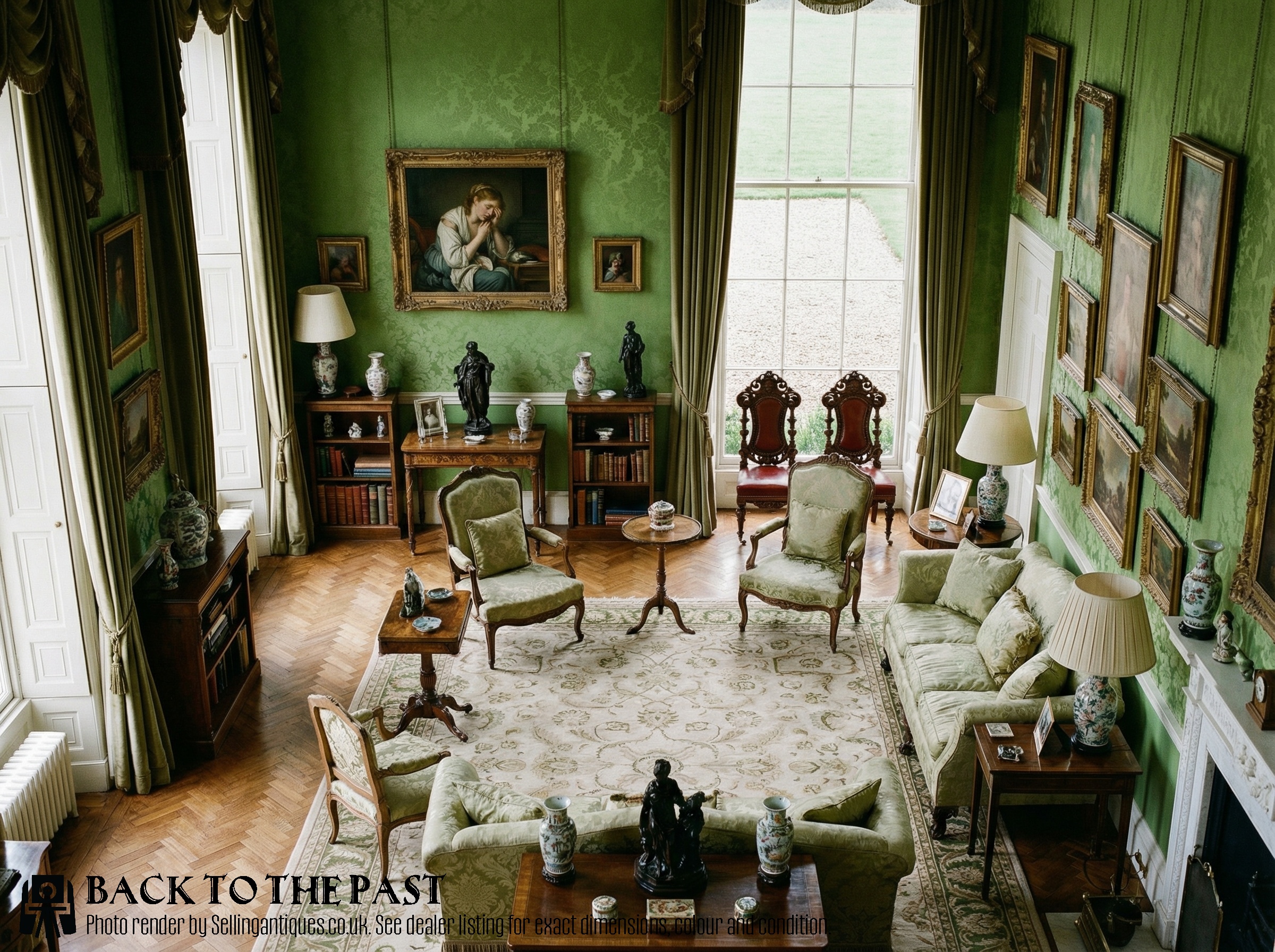
Victorian Leather Dining Chairs
When browsing for victorian leather dining chairs, collectors encounter robust seating framed in dense hardwoods like mahogany, oak, and walnut. These seating options emerge primarily from the nineteenth century, spanning various decades up to the Edwardian period.
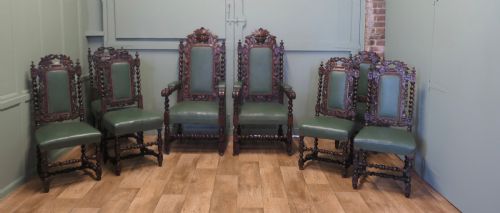
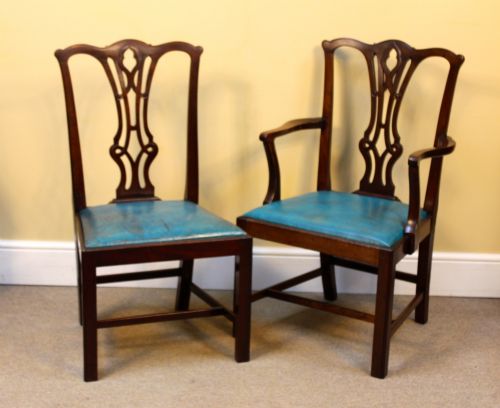
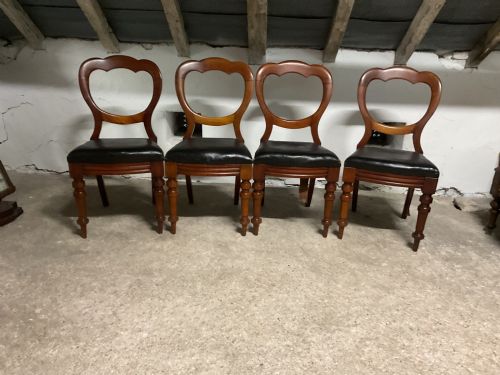
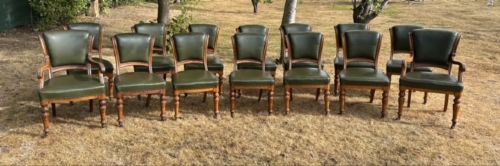
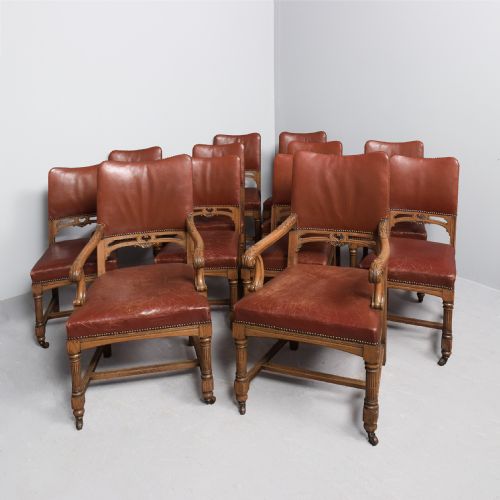
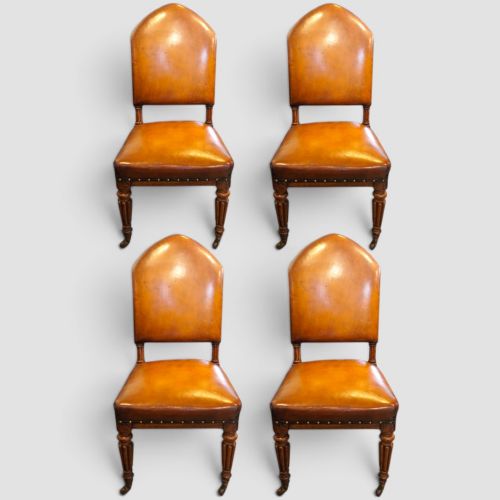
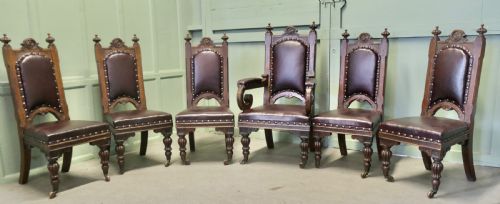
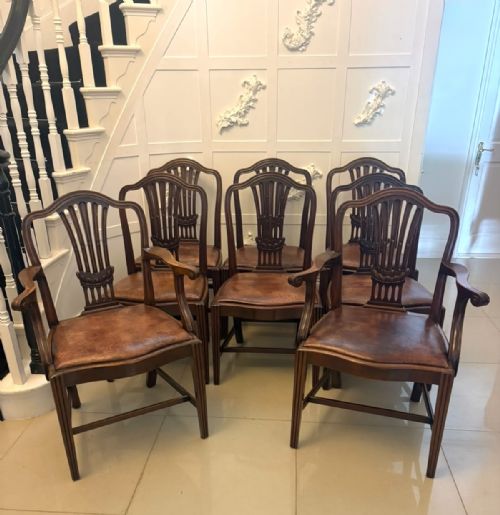
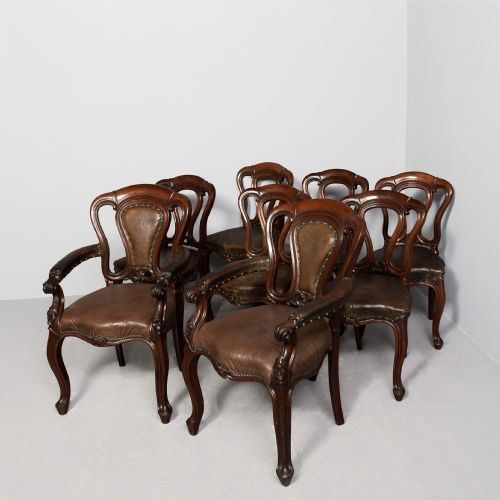
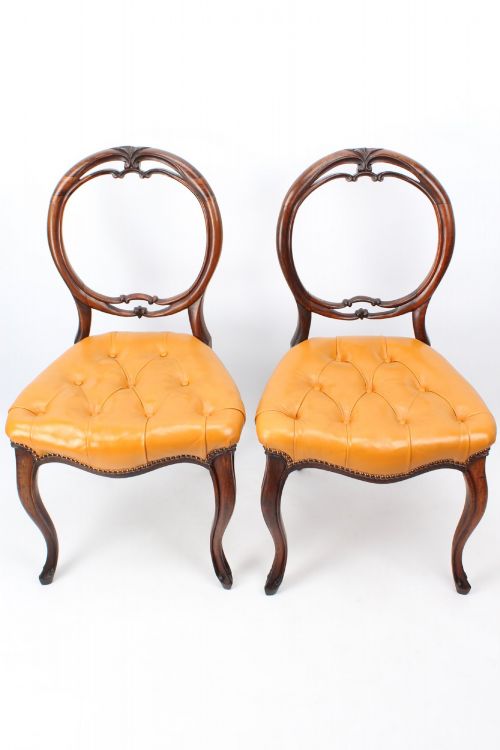
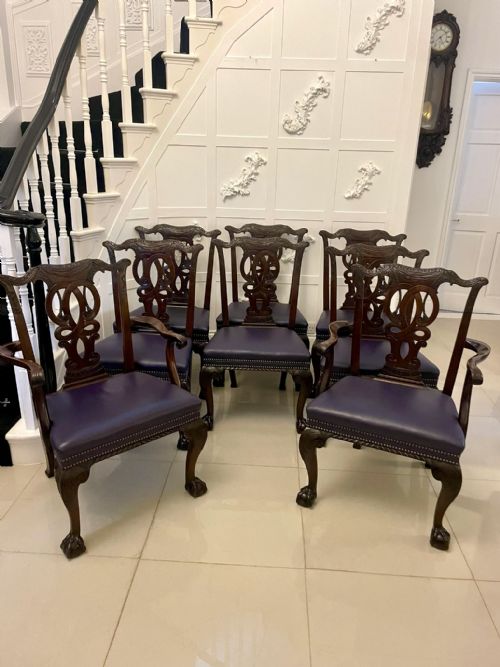
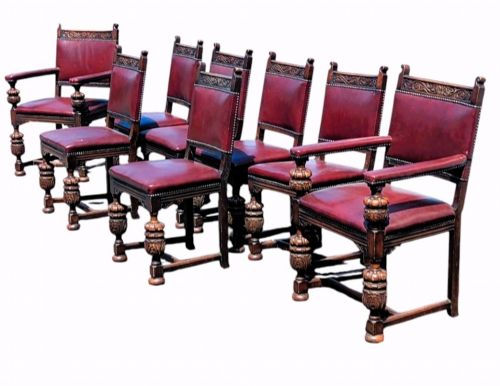
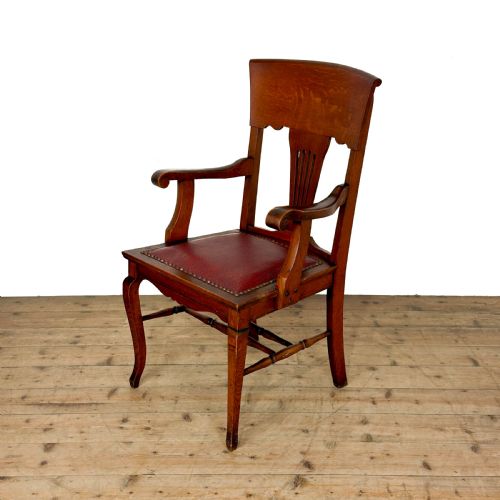
Sets frequently comprise four, six, eight, or more matching items, often incorporating carvers or armchairs alongside standard side chairs. Common forms include balloon backs, high-backed Gothic revival pieces, and Chippendale style variations.
Originating mostly from British workshops, these furnishings reflect the heavy domestic use of their era through sturdy construction and practical leather upholstery.
Materials and Construction
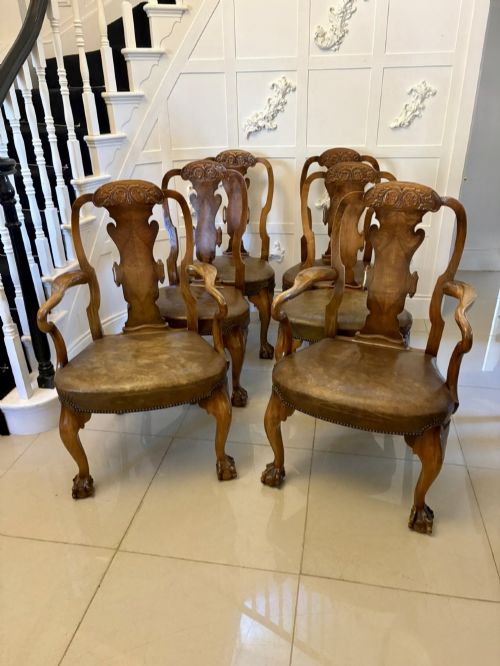
Cabinetmakers utilised solid timbers such as mahogany, oak, walnut, and rosewood to construct the structural frames, often employing hand-carving techniques for details like shield backs, scroll arms, and shell motifs.
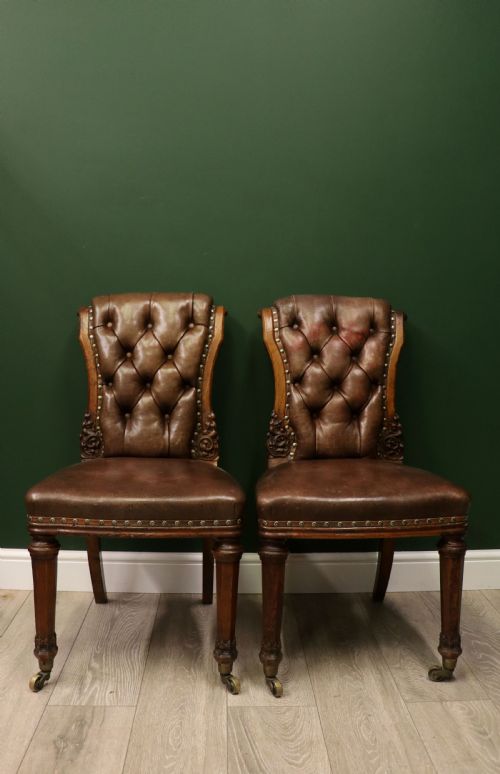
Upholstery involved stretching durable leather over padded seats and backs, frequently secured with decorative brass studs or finished with traditional buttoning.
Joinery relied on traditional mortise and tenon methods to ensure the stability required for heavy dining room use.
Victorian Leather Dining Chairs Retail Price Guide 2026
Typical asking prices for victorian leather dining chairs among the pieces listed under this phrase on Sellingantiques today, from the lower quarter to the upper quarter. They describe what is for sale here now, not the wider market.
Common structural forms include balloon backs, shield backs, and high-backed Gothic revival designs.
Quality Variations
The standard of a set depends heavily on the crispness of the timber carving and the density of the chosen wood, with dense mahogany and carved oak representing higher tiers of craftsmanship.
Originality plays a major role, distinguishing pieces retaining their initial leather upholstery and matching timber patination from those with later replacements.
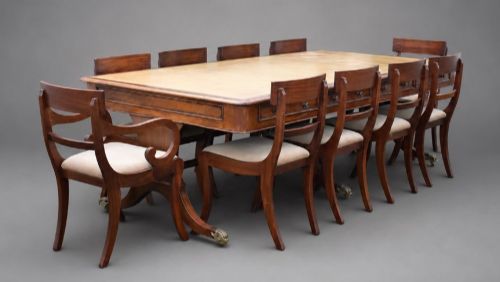
The scale of the set also matters, as larger matched groupings of eight, ten, or twelve chairs require greater consistency in maker skill across every frame.
John Taylor & Son·Lamb Of Manchester·William Walker & Sons·Charles Bevan
The Victorian Leather Dining Chairs Glossary
- Carver chair
- An armchair designed with open arms, traditionally placed at the heads of a dining table for the host.
- Balloon back
- A rounded, oval-shaped chair back design that curves outwards, highly popular during the nineteenth century.
- Gothic revival
- An architectural and decorative style incorporating medieval pointed arches, heavy carvings, and ecclesiastical motifs.
- Chippendale style
- A decorative aesthetic named after Thomas Chippendale, featuring interlaced ladder backs and cabriole legs.
- Brass studs
- Small metallic fastening nails with rounded heads used to secure leather upholstery firmly to the timber frame.
Victorian Leather Dining Chairs: Frequently Asked Questions
How many chairs came in a standard set?
Sets typically ranged from four to eight pieces for standard household dining, though larger dining rooms accommodated sets of ten, twelve, or fourteen.
Larger groupings often included a pair of matching armchairs or carvers for the heads of the table.
Were these chairs used only for dining?
While primarily built for the dining room, similar heavy timber frames served as library chairs, boardroom seating, or hall chairs.
Their sturdy construction suited formal communal spaces where durability was essential.
How do I identify a Gothic revival piece?
Gothic revival chairs display architectural influences through high backs, pointed arches, and deep hand-carved ornamentation.
They are almost exclusively constructed from heavy oak with dark patination.
Is buttoned leather original to the period?
Buttoned leather upholstery appears frequently on nineteenth-century library and dining seats, providing a tufted surface that secured the internal padding.
Many surviving pieces retain this treatment alongside traditional brass studding.