

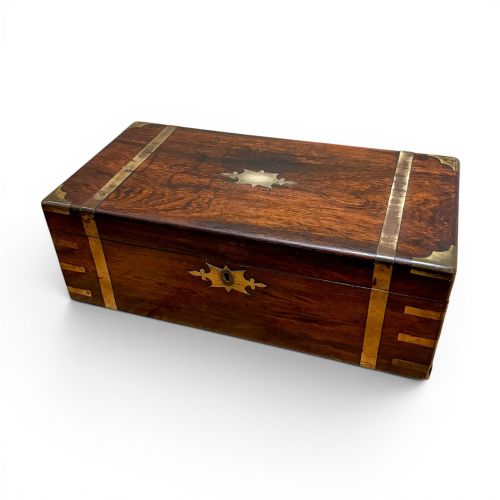
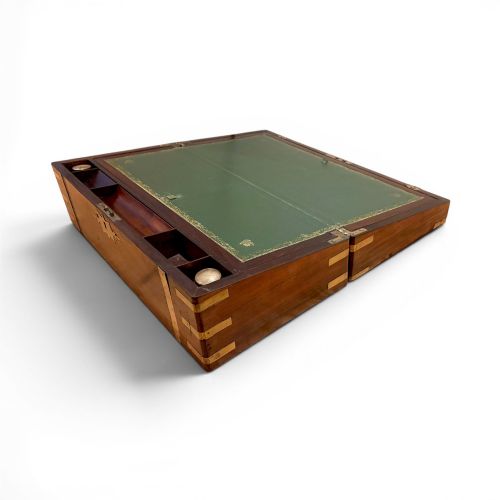


Victorian Lap Desk with Key
These Victorian lap desk with key pieces are handsome portable writing boxes designed for travel, offering secure compartments and fitted desks.
Victorian Lap Desk with Key
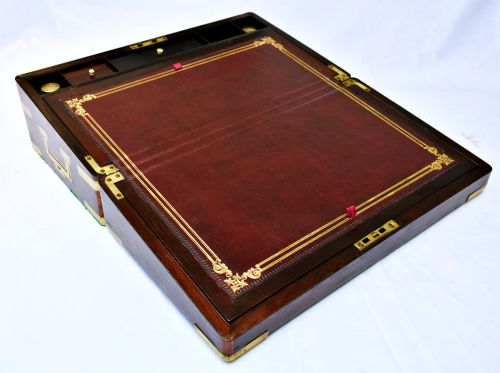
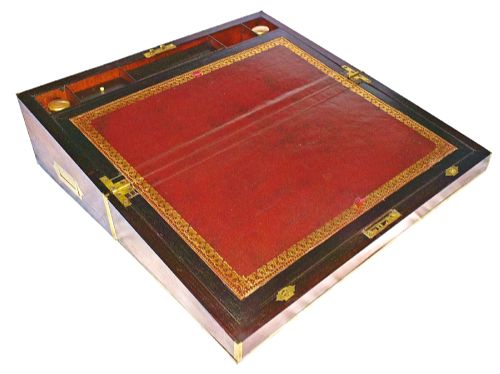
A Victorian lap desk with key is a portable writing slope built to hold stationery, inkwells, and correspondence while offering a slant surface for writing.
The versions met most often on this page date to the 19th Century, spanning the Regency and Victorian periods, and frequently take the form of writing slopes or writing boxes.
These items were constructed for travellers and home use alike, incorporating clever internal arrangements such as secret drawers alongside working locks.
How They Were Made
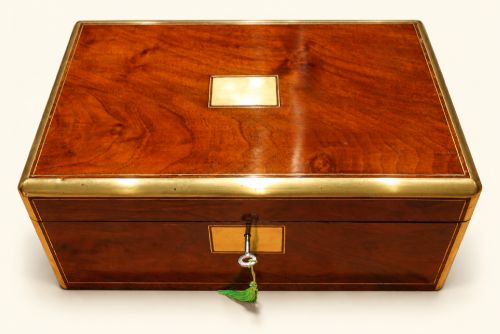
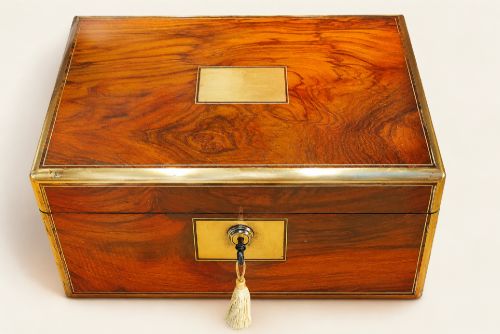
Cabinet makers utilised dense hardwoods such as walnut, mahogany, rosewood, and satinwood to build the foundational carcasses of these writing slopes.
Many examples feature contrasting inlay, banding, or corner reinforcement executed in brass and ebony to protect the edges during transport.
Interiors are frequently lined with fitted leather writing surfaces and house compartments for glass inkwells alongside concealed secret drawers.
Victorian Lap Desk with Key Retail Price Guide 2026
Typical asking prices for victorian lap desk with key among the pieces listed under this phrase on Sellingantiques today, from the lower quarter to the upper quarter. They describe what is for sale here now, not the wider market.
Listings feature woods like walnut, rosewood, mahogany, satinwood, and ebony combined with brass and leather.
What Varies in Quality
The choice of timber grain determines much of the visual appeal, with highly figured walnut and richly patinated rosewood sitting at the upper end of the scale.
Hardware quality distinguishes standard boxes from finer pieces, particularly the presence of high-security Bramah locks and precise brass inlay rather than simple flush plates.
The Victorian Lap Desk with Key Glossary
- Writing slope
- A portable box with a hinged sloping lid that opens to reveal a desk surface and storage compartments. These pieces were essential for correspondence before modern stationery cabinets.
- Campaign
- A style of portable furniture designed for military use or travel, characterised by brass binding and inset handles. Such items needed to withstand the rigours of transit.
- Secret drawers
- Concealed small compartments hidden behind false panels or removable partitions within a writing box. They were used to secure valuables and sensitive letters.
- Bramah lock
- A high-security cylindrical lock patented in the late 18th century by Joseph Bramah. These complex mechanisms were prized for their pick-resistance on fine boxes.
Victorian Lap Desk with Key: Frequently Asked Questions
What is a Victorian lap desk with key?
A Victorian lap desk with key is a portable wooden box that opens to form an angled writing surface. It typically houses compartments for inkwells, pens, and paper.
These boxes served as portable offices for travellers and writers during the 19th century, keeping correspondence organised and secure.
How do I use a lap desk?
You place the box on a table or across your knees, release the latch, and fold down the hinged lid to create a slanted writing board. The fitted interior holds your writing materials close at hand.
Many slopes include a leather-lined writing surface that provides a smooth texture for pen and ink.
How do I care for the wood and brass?
Maintain the timber by applying a light coat of appropriate wax polish to nourish the grain and protect the polished finish. Avoid placing the box in direct sunlight or near heat sources.
Keep the brass mounts clean with a soft cloth, taking care not to let polish residue stain the surrounding wood or leather.
How can I tell the period?
Examine the timber species, construction methods, and lock types used in the piece. Regency and early Victorian pieces often employ dense rosewood or mahogany with distinct brass corner bindings.
Fittings such as Bramah locks or specific hinge designs offer further clues to the manufacturing decade.