



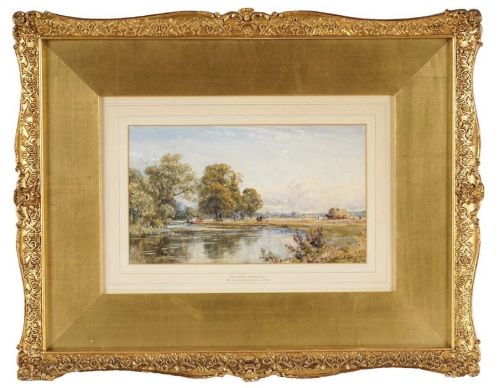
Victorian Landscape Watercolour Art
Victorian landscape watercolour art captures the topography, coastlines and rural life of the nineteenth century through pigment and paper.
Victorian Landscape Watercolour Art
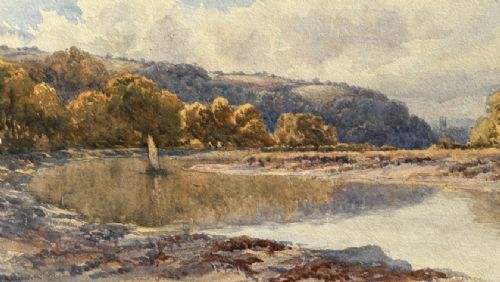
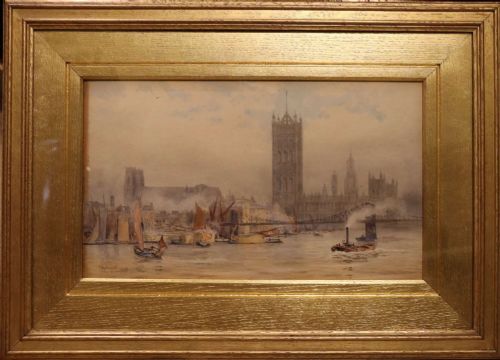
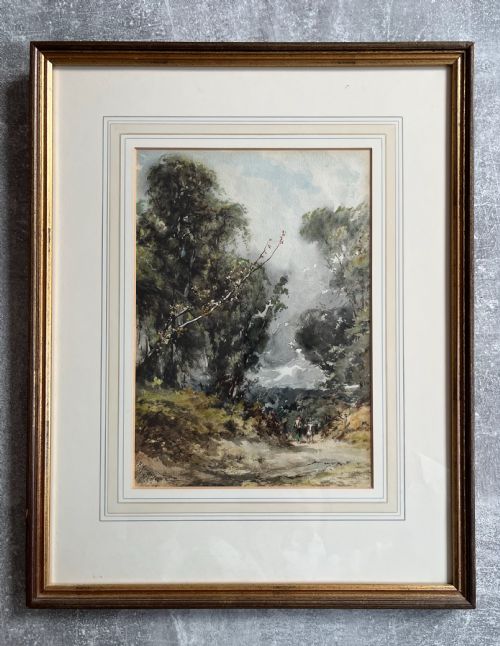
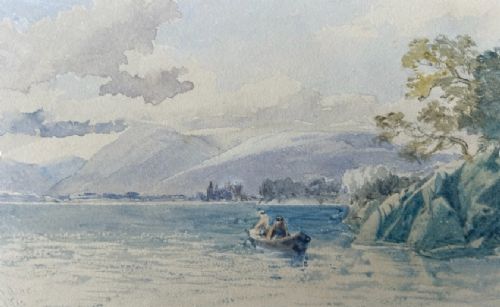
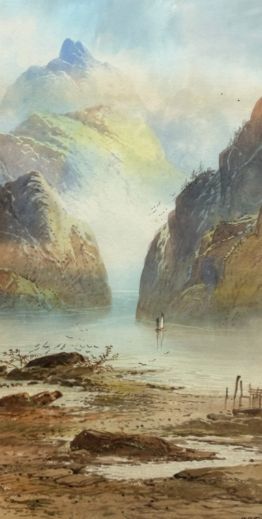
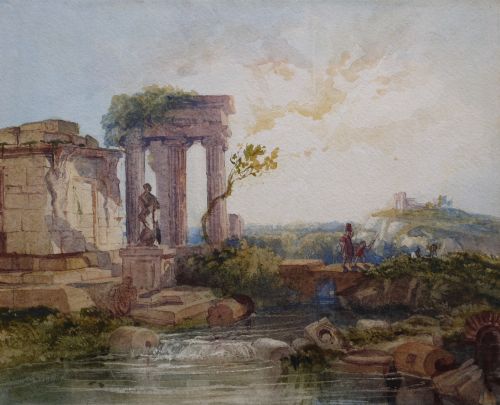
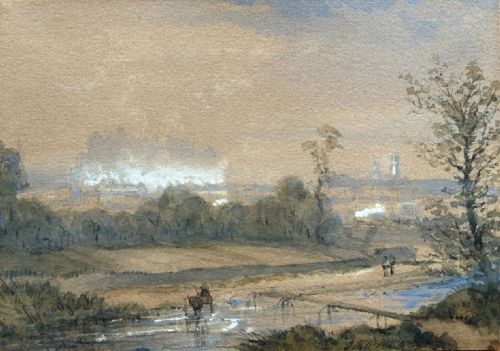
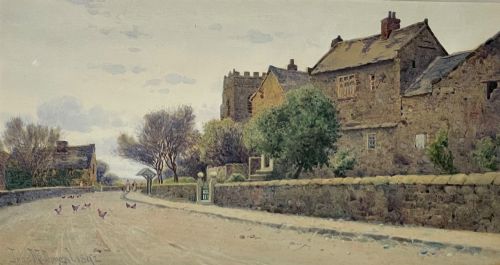
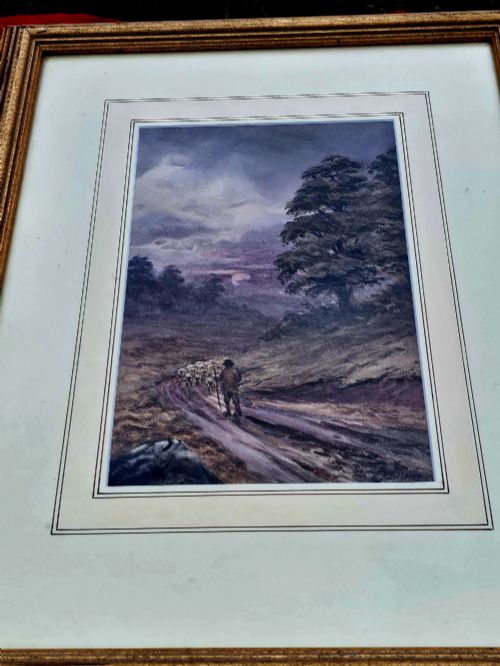
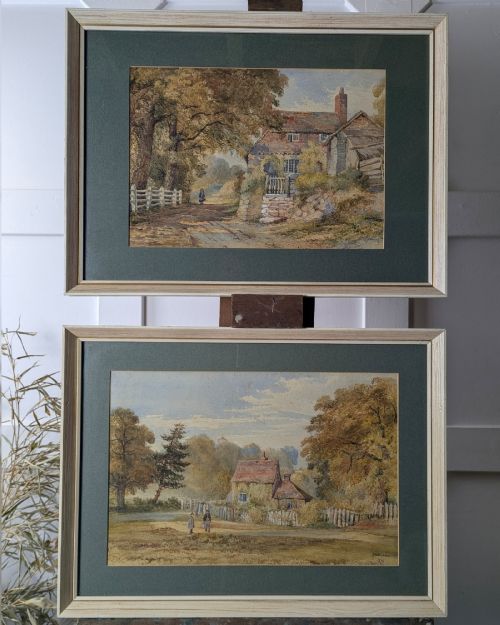
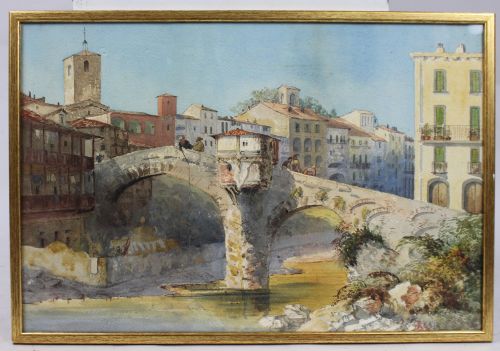
Victorian landscape watercolour art encompasses original painted views on paper produced across the nineteenth and early twentieth centuries, spanning rural scenes, coastal harbours and river valleys. These works range from intimate sketches to large framed gallery watercolours created by professional artists and Royal Academy exhibitors.
The selections encountered here frequently depict British and European geography, including Scottish highlands, Welsh passes, English rivers and Mediterranean shores. Subjects often incorporate figures, livestock, fishing boats or architectural landmarks integrated into expansive natural settings.
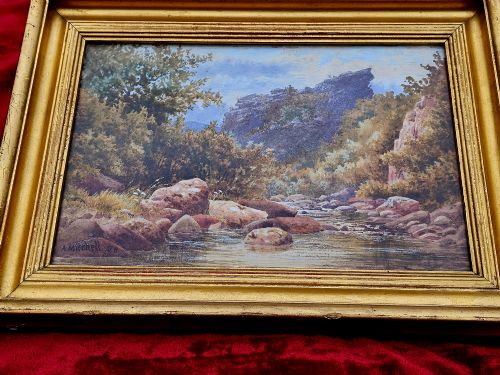
Framed watercolours from this period typically arrive behind glass within period wood and gilt frames that preserve the delicate pigment surface from atmospheric moisture and handling.
How They Were Made
Artists applied water-soluble pigments onto heavy rag paper or card using fine animal hair brushes, sometimes building transparency through layered washes or adding opaque bodycolour for highlights. Monogramming and signatures in ink or pencil frequently mark the lower margins of the composition.
Finished sheets were protected behind glass and secured in wooden frames, often accented with gold leaf moulding or gilt liners to separate the paper from the room environment.
Listings feature works executed on paper using watercolour pigment, housed within traditional glass and gilt wood frames.
What Varies in Quality
Quality rests upon the confidence of the brushwork, the subtlety of atmospheric tone and the preservation of the original pigment against fading from light exposure. Master practitioners achieved remarkable depth and luminosity through controlled washes, whereas weaker examples rely on heavy, rigid outlining with flat colour filling.
The sophistication of the composition and the artist's ability to render natural light, weather conditions and topographical detail separate competent topographical illustration from exceptional fine art.
George Fotherly Hargitt·Thomas Miles Richardson Jnr·James Orrock·William Henry Earp·Richard Principal Leitch·John R Prentice·Alfred Young Nutt·John McDougal·EJ Letheren·William Banks Fortescue·Robert A Nottingham·Robert Thorne Waite·Th Thibault·Hector Caffieri·Ernest Arthur Rowe·Frederick Walker·Frederick James Kerr·Alfred G Morgan·Carlo Ferranti·Bonomi Edward Warren·Henry Martin Pope·David Cox·Herman S Melville·George Stanfield Walters·Henry Barlow Carter
The Victorian Landscape Watercolour Art Glossary
- Watercolour
- A painting method in which the paints are made of pigments suspended in a water-soluble vehicle. It provides translucent washes of colour across a paper support.
- Gilt wood
- Wood treated with gold leaf or metallic gilding powder. This finish appears frequently on the antique frames enclosing nineteenth-century works.
- Bodycolour
- Watercolour paint mixed with a white pigment to make it opaque. Artists utilised this technique to introduce highlights and dense areas of detail.
- Monogram
- A motif made by overlapping or combining two or more letters to form a single symbol. Many period painters used these initials in place of a full signature.
Victorian Landscape Watercolour Art: Frequently Asked Questions
How should I hang Victorian landscape watercolour art?
Position these works away from direct sunlight to prevent the watercolour pigments from fading over time. Maintaining stable indoor humidity also protects the paper and the integrity of the gilt wood frame.
Use secure wall fixings suited to the weight of the framed glass and wood assembly. Grouping pieces by period or subject creates a balanced display on the wall.
Are these watercolours original antique works?
The pieces listed represent authentic nineteenth and early twentieth-century paintings executed on paper by period artists. Signatures, dates, artist biographies and framing materials help verify their age and origin.
Paper supports and water-soluble pigments from this era exhibit natural characteristics distinct from modern reproductions. Archival framing preserves these original materials for contemporary collections.
What subjects appear in these nineteenth-century watercolours?
Common subjects include Scottish and Welsh mountain landscapes, rural agricultural scenes with figures or livestock, and coastal fishing harbours. Artists also recorded architectural landmarks, river valleys and continental European views.
These compositions reflect the nineteenth-century interest in naturalism, picturesque topography and maritime trade. Each piece documents specific topography or idealized pastoral scenery from the period.
How do I care for antique works on paper?
Keep the framed artwork in rooms with minimal temperature fluctuations to prevent the paper from cockling or absorbing excess moisture. Professional conservation framing using acid-free mounts safeguards the sheet from chemical degradation.
Dust the wooden and gilt frames gently with a dry cloth without touching the glass surface directly. Avoid using liquid cleaners near the edge of the glass where moisture could seep inside.