







Victorian Lacquered Occasional Table
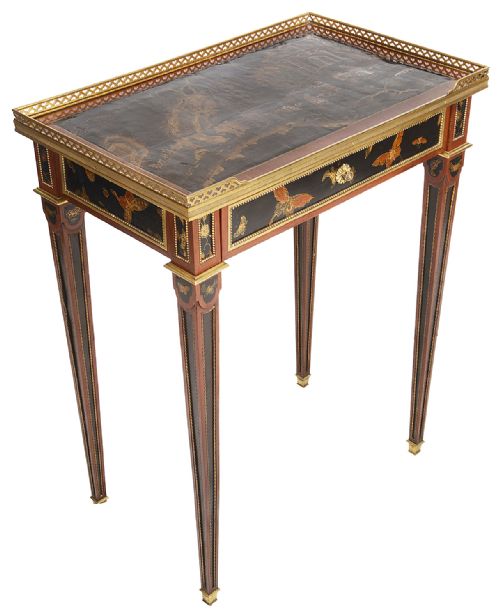
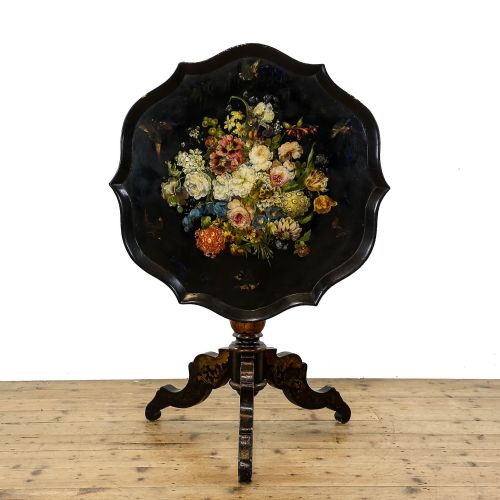
A victorian lacquered occasional table brings hand-painted Chinoiserie and rich papier-mâché surfaces into a room, offering a portable surface with deep historical character.
Victorian Lacquered Occasional Table
The aesthetic reaches across Chinoiserie decoration, Aesthetic Movement sensibilities, and Japanese Meiji influences, reflecting nineteenth-century Britain's fascination with Eastern design. Side tables and occasional tables appear alongside card tables and tray tables.
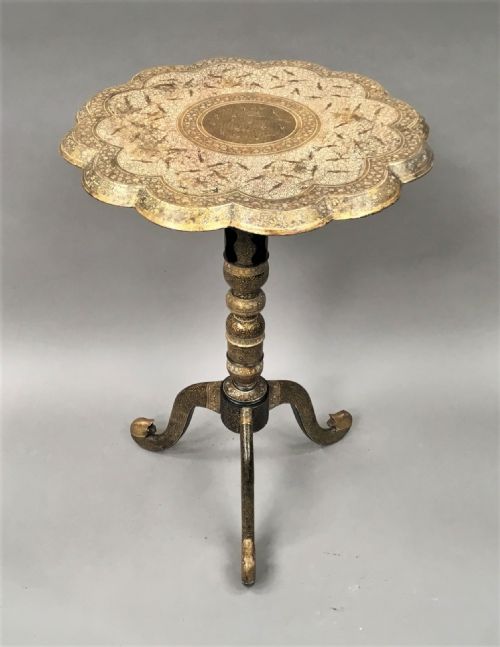
Origins stretch from English workshops to Japanese export studios and Kashmiri production, uniting diverse regional craftsmanship under the broad umbrella of nineteenth-century lacquerwork.
Materials and Construction
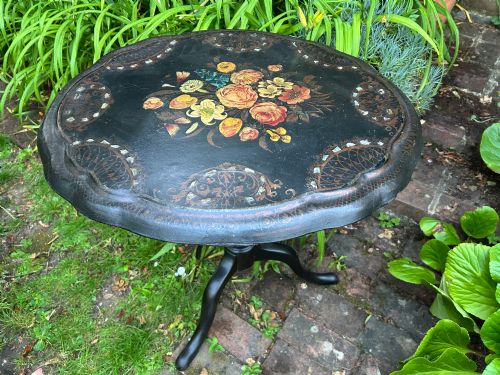
Papier-mâché forms many of the finest surfaces, built from layered paper pulp and binders pressed into rigid panels before receiving multiple coats of black lacquer and hand-painted or gilt ornamentation. Mother-of-pearl inlay frequently punctuates these dark grounds.
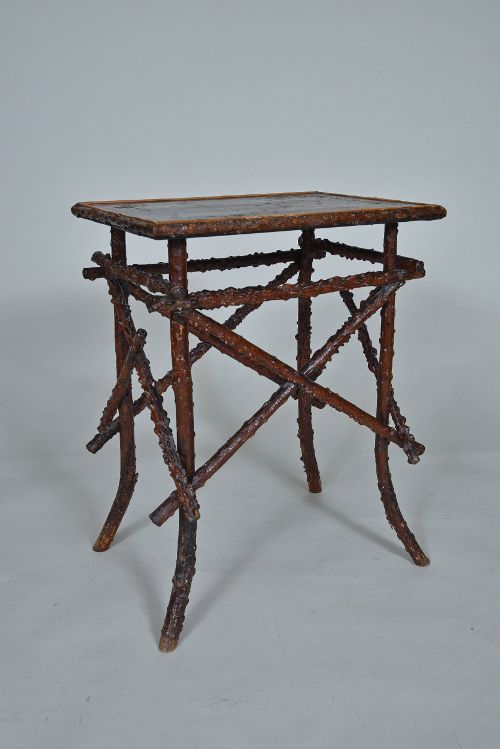
Bamboo and tiger bamboo construct lighter frames for two-tier side tables and occasional stands, often paired with lacquered wooden panels. Wood structures utilise paint, gold leaf, and brass hardware to complete the decorative scheme.
Victorian Lacquered Occasional Table Retail Price Guide 2026
Typical asking prices for victorian lacquered occasional table among the pieces listed under this phrase on Sellingantiques today, from the lower quarter to the upper quarter. They describe what is for sale here now, not the wider market.
Secret card tables wait quietly within these dark lacquer surfaces, transforming from unassuming stands into gaming boards.
Assessing Quality and Execution
The refinement of the hand-painted decoration separates standard production from exceptional pieces, particularly in intricate Chinoiserie landscapes and detailed floral motifs. The depth and clarity of the lacquer surface, free from heavy disruption, dictates visual success.
Structural integrity in complex forms like nests of four tables or tilting mechanisms on wine tables relies on precise joinery and original bases. The inclusion of genuine mother-of-pearl inlay and careful gilt work elevates an individual piece.
The Victorian Lacquered Occasional Table Glossary
- Chinoiserie
- European interpretation and imitation of Chinese artistic traditions and motifs, frequently featuring figures, pagodas, and landscapes rendered in gold and colour on black lacquer.
- Papier-mâché
- A composite material made from paper pulp or reinforced paper layers mixed with glue and resin, pressed and dried to create a smooth, durable surface for painting.
- Aesthetic Movement
- A late nineteenth-century design current that rejected Victorian moralising in art, championing beauty and Asian-inspired forms for their own sake.
- Tilt-top
- A table construction featuring a hinged top that pivots vertically for storage when not in use, common in nineteenth-century wine and occasional tables.
- Meiji
- Pertaining to the period of Japanese history spanning from 1868 to 1912, during which decorative arts were widely exported to Western markets.
Victorian Lacquered Occasional Table: Frequently Asked Questions
How were these tables used originally?
These pieces served adaptable roles in nineteenth-century interiors, functioning as portable stands for tea, sewing implements, or card games.
Their lightweight construction allowed servants or residents to move them easily around drawing rooms and parlours as social needs shifted.
Where should I place an occasional table?
An occasional table suits a sitting room or hallway where its dark lacquer surface and painted details can catch natural light.
Because surfaces can be sensitive to moisture and heavy wear, they perform best holding decorative objects, books, or lamps rather than active dining use.
How do I distinguish papier-mâché from wood?
Papier-mâché feels slightly warmer to the touch than timber and lacks natural grain beneath the lacquer layers, often showing a smooth, dense rigidity.
Tilt-top tables and trays in this medium frequently incorporate moulded edges and embedded mother-of-pearl details that differ from standard painted wooden panels.