
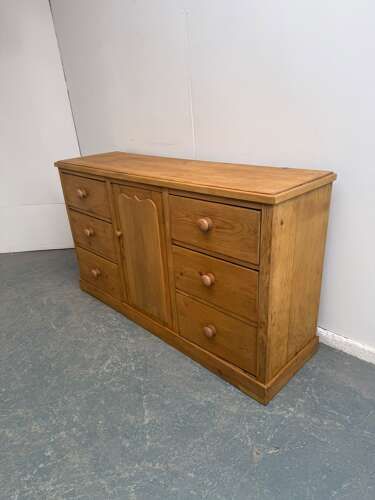
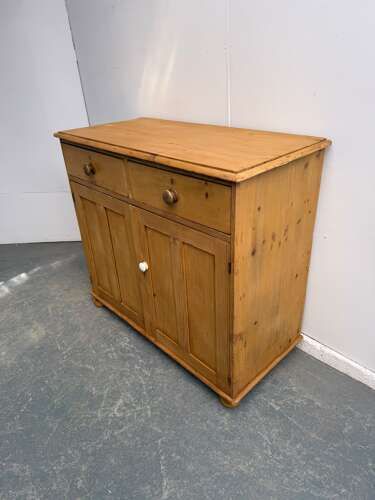
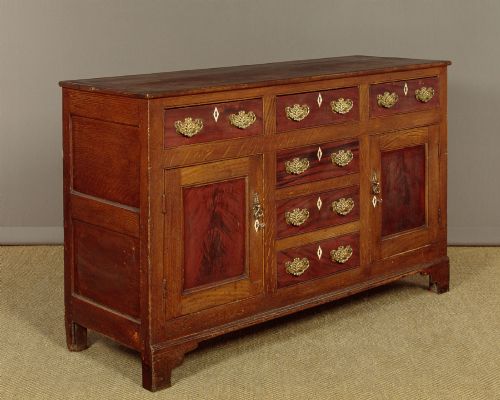
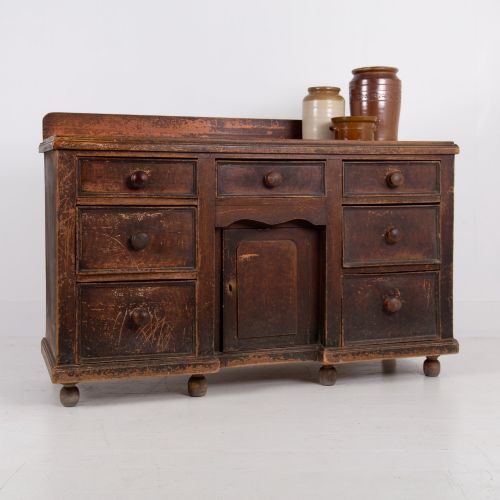
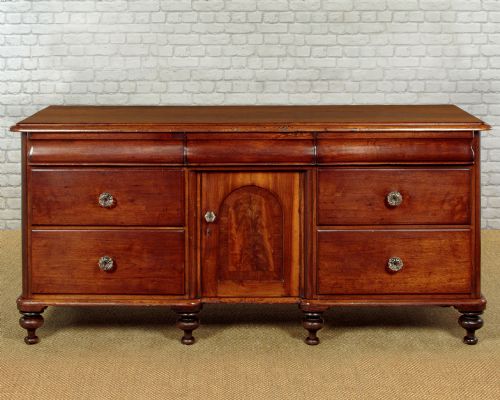

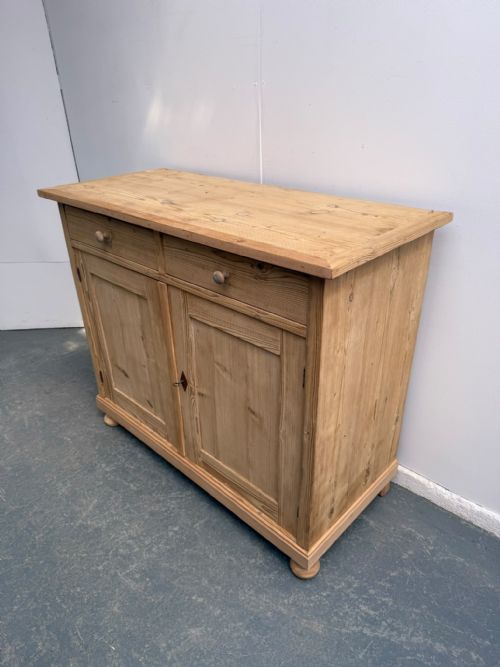
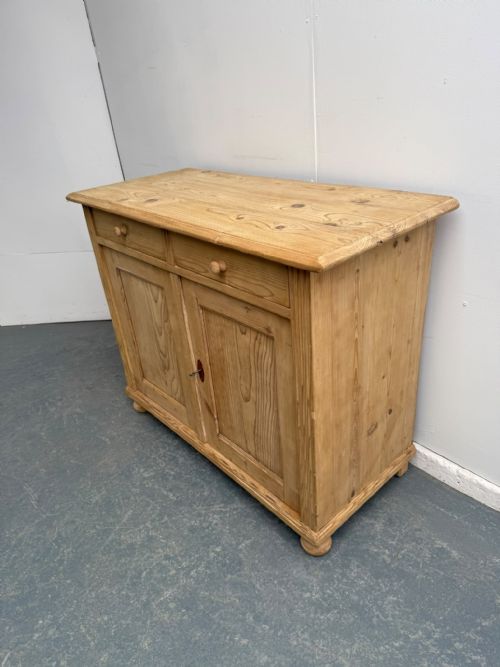
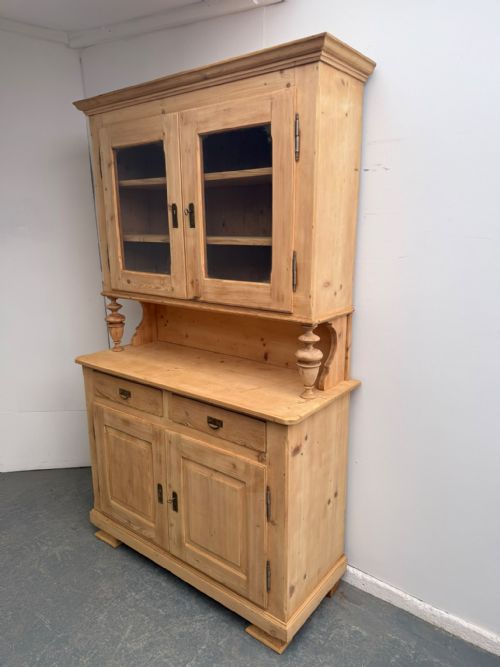
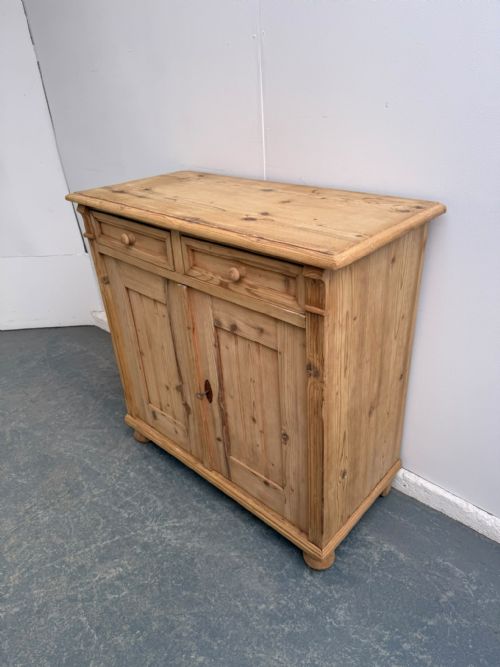
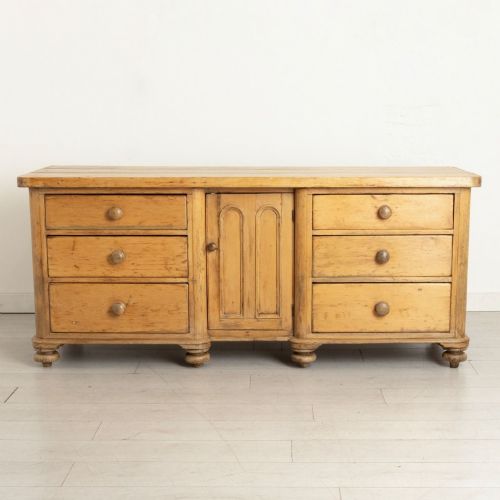
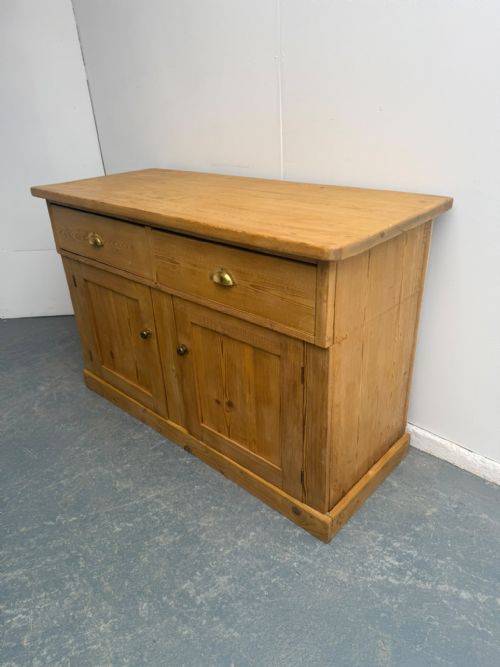
Victorian Kitchen Dresser Base
A Victorian kitchen dresser base is a robust, low-level storage unit built for heavy domestic work and practical utility in the heart of the home.
Victorian Kitchen Dresser Base
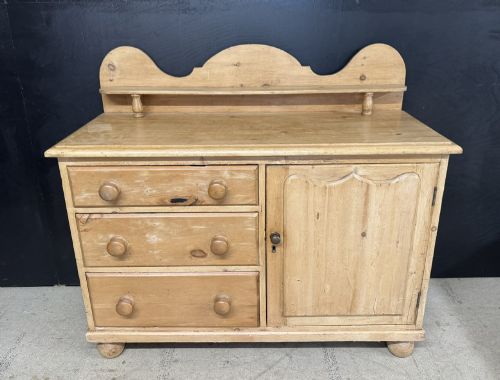
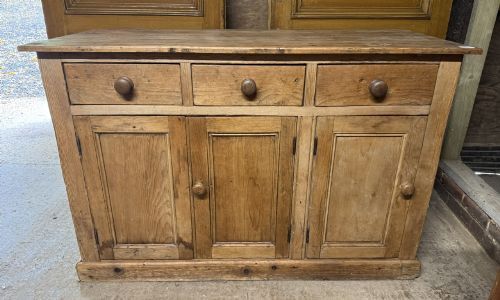
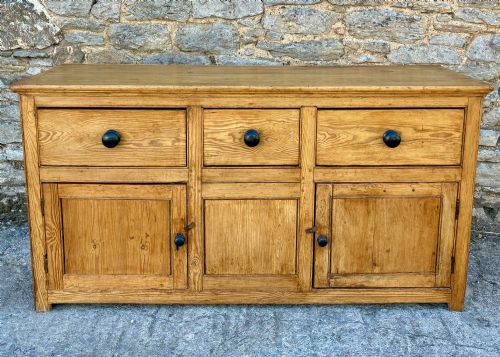
A victorian kitchen dresser base provides a low working surface paired with generous lower cupboards and drawers, historically used for food preparation and storing heavy cookware. These pieces range from compact two-door units to monumental country house examples, reflecting the varied scales of domestic service and rural homes.
Most pieces encountered on this page originate from the nineteenth century and are constructed from solid timber, predominantly pine. Regional variations appear across England, Scotland, Wales, and continental Europe, showing distinct local preferences in proportions and hardware.
Beyond standard cupboards, forms include specialist variants such as dog kennel dressers featuring a central open recess, units fitted with bread slides, and versions with lower pot shelves. Many survive in either their original painted finish or stripped down to reveal the bare waxed wood.
Materials and construction
Pine serves as the primary structural timber for these utilitarian pieces, frequently complemented by secondary hardwoods such as oak, ash, sycamore, or walnut used for drawer linings and working tops. Construction relies on traditional joinery methods designed to withstand daily wear in active domestic environments.
Iron and brass hardware, including drop handles, escutcheons, and hinges, secure doors and drawers. Finishes range from hand-applied lead-based or oil paints to wax coatings that protect the soft wood while accumulating a deep patina over decades of service.
Victorian Kitchen Dresser Base Retail Price Guide 2026
Typical asking prices for victorian kitchen dresser base among the pieces listed under this phrase on Sellingantiques today, from the lower quarter to the upper quarter. They describe what is for sale here now, not the wider market.
Some nineteenth-century kitchen dressers retain faint flour dust wedged deep within drawer dovetails from forgotten baking sessions.
What separates the fine examples
Quality in a dresser base rests on the integrity of its proportions and the retention of its original structural elements. Untouched surface treatments, whether a well-worn period paint finish or an even nineteenth-century wax patina, distinguish superior survivals from pieces that have undergone heavy modern alteration.
The sophistication of the joinery, from dovetail drawers to panelled doors, dictates the calibre of the piece. Regional detailing, such as carved mouldings or specialised storage configurations like bread slides and dog kennels, elevates certain examples above standard utilitarian workshop production.
The Victorian Kitchen Dresser Base Glossary
- Dresser base
- A low sideboard or cabinet featuring a flat working top above rows of drawers and cupboards, lacking the upper plate rack of a full dresser.
- Dog kennel dresser
- A specific form of dresser base featuring a central open lower recess flanked by cupboards or drawers, originally designed to house a small working dog or to store low kitchen baskets.
- Bread slide
- A pull-out wooden board integrated beneath the top surface of a dresser base, traditionally used for slicing bread or cooling baked goods in busy domestic kitchens.
- Pot shelf
- A low open lower shelf fixed between the legs of a dresser base, utilised historically for storing heavy pots, pans, and utilitarian earthenware.
- Stripped pine
- Wood furniture that has had layers of later paint removed to reveal the raw timber underneath, which is subsequently waxed or oiled.
Victorian Kitchen Dresser Base: Frequently Asked Questions
What is a Victorian kitchen dresser base used for?
These low units functioned as sturdy worktables with integrated storage for heavy culinary equipment, mixing bowls, and provisions. In contemporary interiors, they serve equally well as sideboards, kitchen islands, or television stands.
Their robust timber tops provide durable workspace, while the deep lower cupboards and drawers accommodate modern tableware and household linens with ease.
How do I tell if the paint is original?
Original nineteenth-century paint finishes typically exhibit a dry, chalky texture and show micro-cracking and natural wear patterns accumulated over generations of use. Examining corners, interior surfaces, and hardware recesses reveals underlying layers and consistent ageing.
Modern repainting often presents an unnaturally uniform thickness and lacks the subtle tonal variations found in authentic historic surfaces.
What is the difference between a dresser and a dresser base?
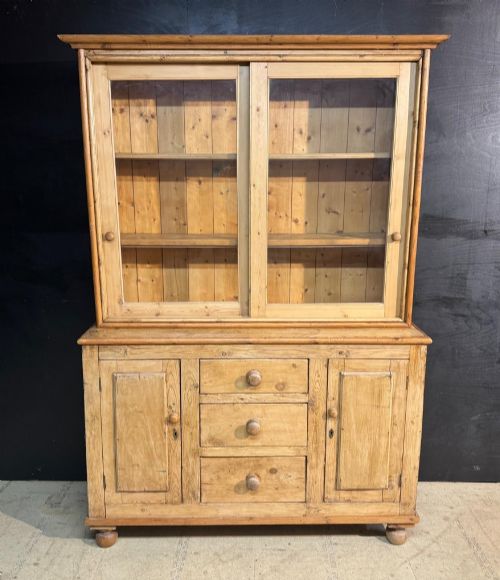
A complete traditional kitchen dresser comprises a lower cabinet base combined with an upper open plate rack for displaying ceramics. A dresser base consists solely of the lower section, terminating in a flat surface.
This configuration makes dresser bases more versatile for modern rooms with low ceilings or restricted wall space.
How should I care for a waxed pine dresser base?
Maintain waxed pine surfaces by dusting regularly with a soft cloth and applying a traditional beeswax polish sparingly when the wood appears dry. Avoid placing these pieces in direct sunlight or near intense heat sources to prevent the timber from warping or splitting.
Using coasters and placemats protects the historic wooden top from moisture rings and heat marks during daily use.