




Victorian Kidney Writing Desk
A victorian kidney writing desk offers a concave curve that pulls you close, combining nineteenth-century elegance with practical workspace.
Victorian Kidney Writing Desk
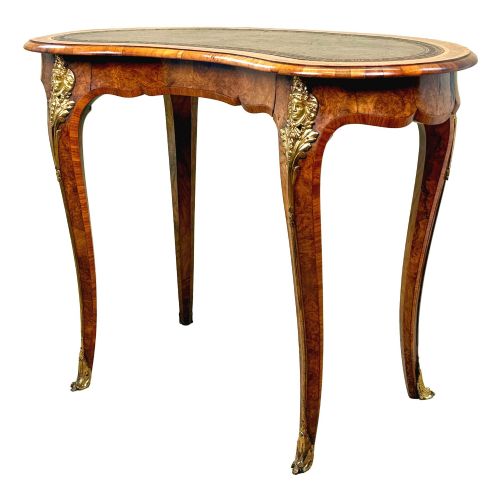
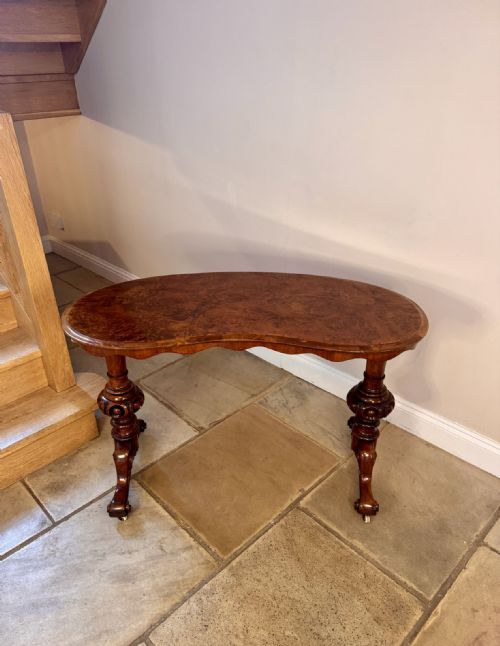
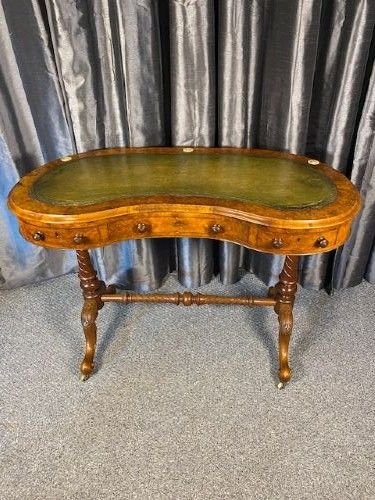
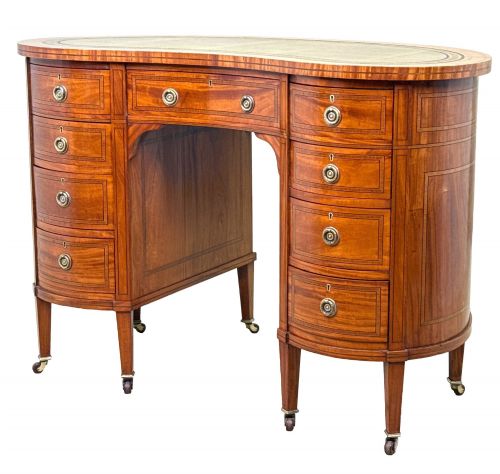
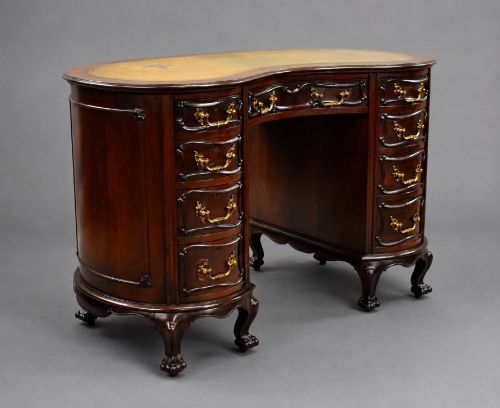
A victorian kidney writing desk takes its name from the curved, bean-shaped silhouette that allows the user to sit nestled comfortably into the centre. These pieces primarily date from the nineteenth century, spanning decades from the mid-Victorian era to the turn of the twentieth century, and frequently appear in fine mahogany, burr walnut, and satinwood.
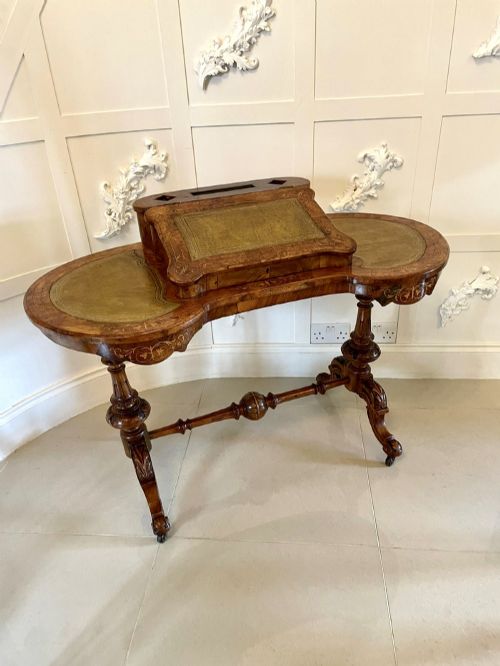
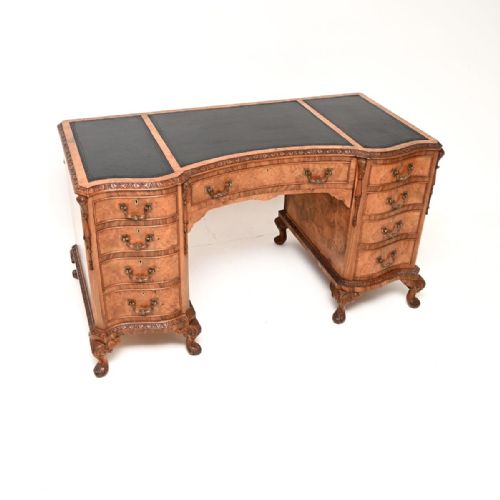
The form functions as a writing table, a ladies desk, or a freestanding library table designed to be viewed from all angles rather than pushed against a wall. The characteristic curve shapes both the writing surface and the arrangement of drawers or pedestals beneath.
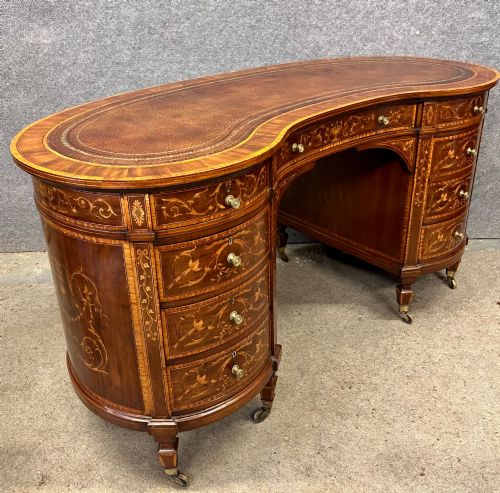
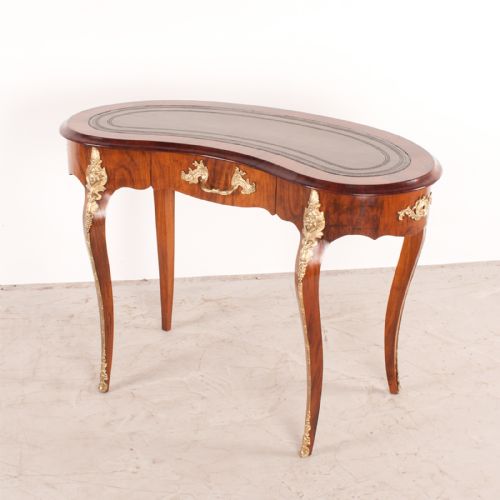
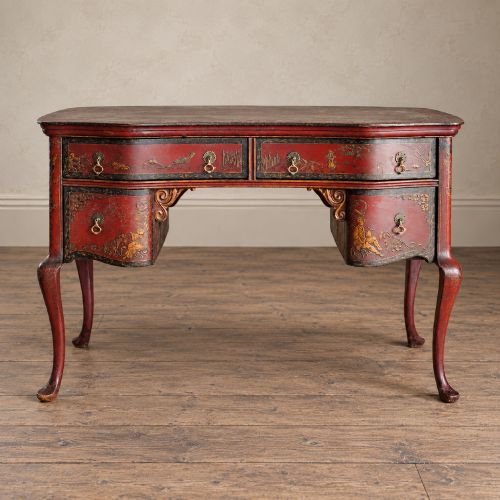
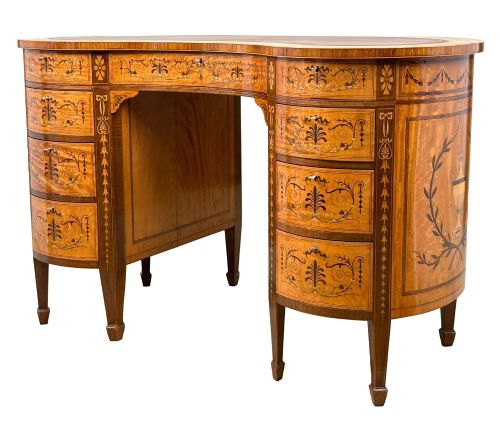
Most examples found on this page rely on classic Victorian craftsmanship, sometimes incorporating revival styles such as Sheraton, French, or Chinoiserie lacquering. They range from simple mahogany surfaces to heavily inlaid marquetry pieces mounted with brass and ormolu.
How they were made
Cabinetmakers constructed these desks using solid and veneered timbers, selecting highly figured burr walnut, rich mahogany, and smooth satinwood to cover the curved frames. Achieving the signature kidney shape required careful steam bending or segmented construction of the wooden rails to maintain structural integrity along the concave curve.
Writing surfaces were typically inset with panels of hand-tooled leather, bordered by blind or gilt tooling. Brass handles, ormolu mounts, and delicate marquetry inlay completed the ornamentation, reflecting the eclectic design revivals popular during the Victorian period.
Victorian Kidney Writing Desk Retail Price Guide 2026
Typical asking prices for victorian kidney writing desk among the pieces listed under this phrase on Sellingantiques today, from the lower quarter to the upper quarter. They describe what is for sale here now, not the wider market.
Some nineteenth-century writers praised the kidney shape for keeping every inkpot within arm's reach without requiring an awkward stretch.
What varies in quality
Quality reveals itself in the selection of wood veneers and the precision of the inlay work following the difficult curve of the desktop. Superior examples exhibit matched burr walnut or intricate marquetry that flows seamlessly across the drawers and top without awkward interruption.
The integrity of the structural frame, the smoothness of the drawer runners, and the quality of the bronze or ormolu mounts distinguish standard production items from master cabinetmaker commissions. A truly fine piece maintains its balance and rigidity despite the inherent stress placed on a curved wooden framework.
Edwards & Roberts·Wolfe & Hollander·Williams and Gibton·Gillows
The Victorian Kidney Writing Desk Glossary
- Burr walnut
- A highly prized wood timber harvested from the warted growths of walnut trees, yielding complex swirling grain patterns. It was extensively used as a decorative veneer on high-end Victorian furniture.
- Marquetry
- The art of applying pieces of veneer to a structure to form decorative patterns and pictures. Cabinetmakers utilised contrasting woods like satinwood, rosewood, and mahogany to create elaborate floral or geometric designs.
- Ormolu
- Gilded bronze ornamentation applied to the mounts, feet, and handles of fine furniture. The technique was widely revived during the nineteenth century in pieces influenced by French cabinetmaking.
- Kneehole
- The central recessed space beneath a desk designed to accommodate the legs of a seated user. In kidney desks, this space conforms to the concave curve of the top.
- Bureau-plat
- A French style of large flat-topped writing desk freestanding in a room. Nineteenth-century makers occasionally applied this term to large kidney-shaped writing tables finished on all sides.
Victorian Kidney Writing Desk: Frequently Asked Questions
Where should I place a kidney desk?
Because these desks are usually finished on all sides, they look best freestanding in the middle of a room or positioned near a window where natural light hits the leather top.
Avoid pushing them flat against a wall, as the curved back is designed to be seen and appreciated from multiple angles.
Are these desks comfortable for daily writing?
The concave curve was specifically engineered to pull the user closer to the writing surface while keeping stationery and ink within easy reach. The proportions suit letter writing, laptop use, and reading.
Most examples stand at a standard writing height, though contemporary chair selection requires checking the clearance beneath the central drawer.
How do I care for the leather top?
The inset leather surfaces benefit from occasional treatment with appropriate leather dressings to prevent cracking and maintain suppleness. Keep them away from direct sunlight and excessive heat.
Clean spills immediately with a dry cloth, as moisture can damage both the leather and the gold tooling surrounding the edges.
How can I tell an earlier Victorian desk from a later one?
Mid-nineteenth-century examples often rely on rich mahogany or burr walnut with restrained construction and subtle brass details. Pieces from the late nineteenth and early twentieth centuries frequently show influences from Sheraton or French revivals.
Later pieces may also incorporate painted finishes, satinwood panels, or maker stamps from prominent cabinetmakers active towards the end of the Victorian era.