

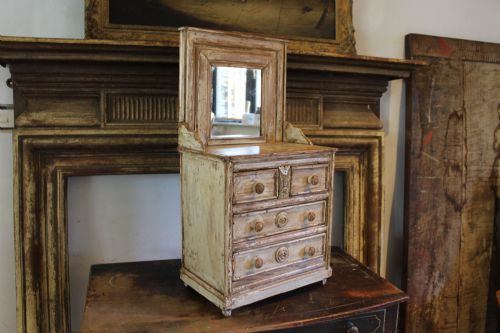

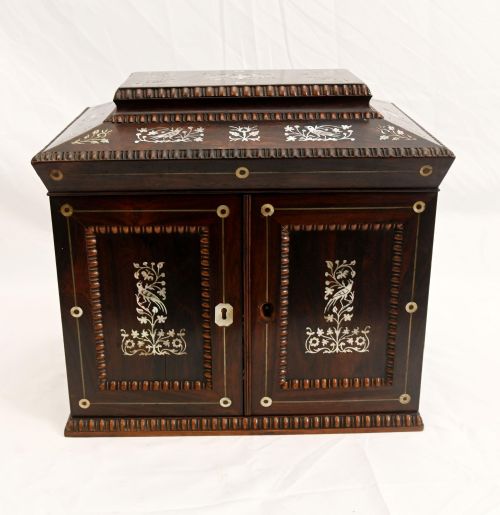


Victorian Jewellery Table
A victorian jewellery table brings small treasures into plain view on a surface built for display.

Victorian Jewellery Table
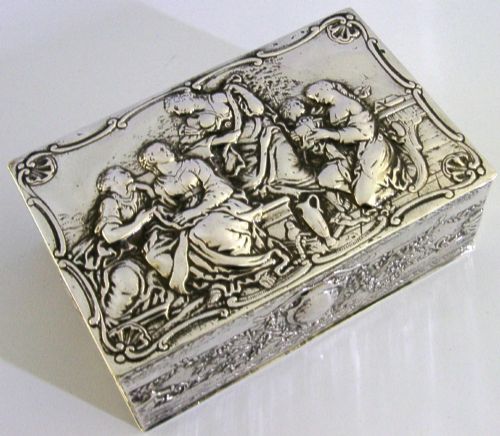
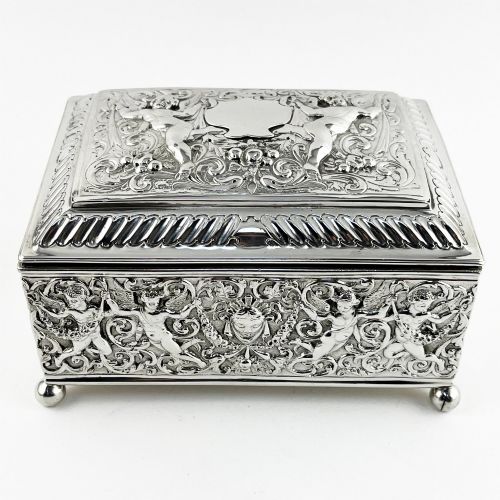
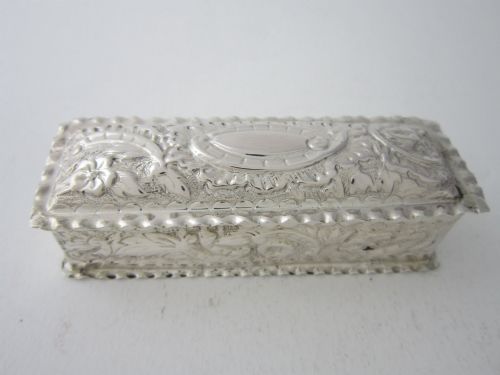
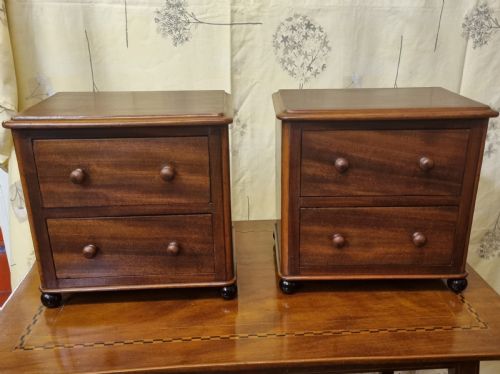
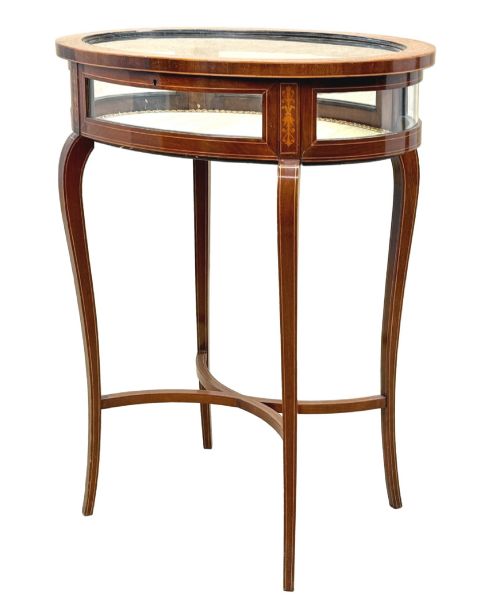
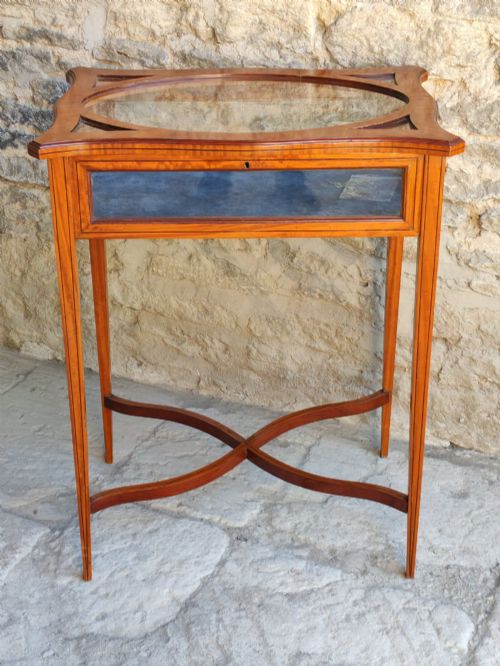
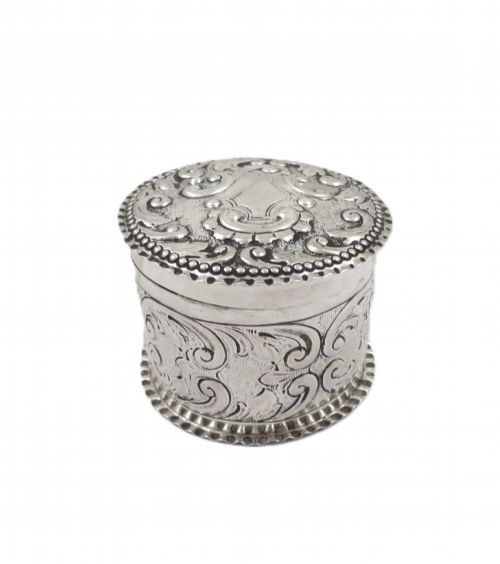
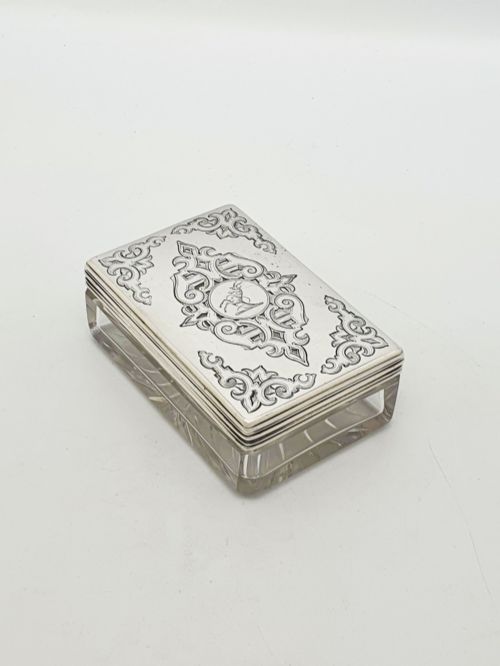
A victorian jewellery table encompasses a variety of tabletop display pieces, from glazed bijouterie vitrines to fitted burr walnut dressing boxes and silver caskets. The selection on this page leans heavily toward mahogany and satinwood display tables alongside sterling silver trinket boxes dated across the nineteenth century.
Makers and craftsmen produced these forms in styles ranging from simple Victorian and Edwardian lines to ornate rococo revival and neoclassical designs. Buyers will find occasional tables designed with glass panels for viewing contents alongside compact tabletop cabinets and miniature chests.
Materials and construction
Makers utilised rich hardwoods such as mahogany, walnut, burr walnut, and satinwood, frequently pairing them with brass mounts, glass panels, and velvet linings. Sterling silver appears extensively in smaller trinket boxes and vanity pots, often carrying hallmarks from London and Birmingham.
Surface decoration involved marquetry inlay, tortoise shell, lacquer, and pietra dura mounting, giving these pieces their characteristic texture and detail. Structural framing relied on traditional joinery to support glazed vitrine lids and fitted internal compartments with mirrors.
Listings feature sterling silver from Birmingham and London alongside burr walnut and mahogany.
Judging quality in a victorian jewellery table
The degree of refinement in timber selection and cabinetwork determines the upper tier of these pieces, particularly where burr veneers and marquetry inlay align precisely. Quality reveals itself in the crispness of brass mounts, the weight of solid silver elements, and the smooth operation of hinged glazed lids.
Interior fittings also distinguish better examples, such as original velvet linings, intact mirror glass, and multi-tiered drawer arrangements within table cabinets. Pieces bearing documented maker marks command particular attention for their verified workshop provenance.
H Mitchell·Edwards and Roberts·William Comyns
The Victorian Jewellery Table Glossary
- Bijouterie table
- A display table with a glazed top designed specifically for exhibiting small ornaments and jewellery. These pieces usually stand on slender legs.
- Vitrine
- A glass-sided cabinet or display case. This form protects delicate objects while allowing light to enter from multiple angles.
- Trinket box
- A small container for holding minor valuables and personal items. They appear in silver, glass, and inlaid wood across the period.
- Ormolu
- Gilded bronze mounts applied to furniture and decorative boxes. This technique adds metallic highlights to wood and lacquer surfaces.
- Pietra dura
- Inlaid work using cut and fitted polished coloured stones to create pictorial designs. It frequently decorates Italian imported boxes.
Victorian Jewellery Table: Frequently Asked Questions
What is a bijouterie table?
A bijouterie table is a raised display surface featuring a glazed lid or compartment. It was used in drawing rooms to exhibit small decorative items and personal collections.
The glass top protects the contents from dust while keeping them visible to guests seated nearby.
How do I date these pieces?
Dating relies on a combination of timber types, construction methods, and official hallmarks on silver components. Silver pieces often carry assay office marks and date letters that pinpoint the exact year of manufacture.
Stylistic cues such as neoclassical proportions or later rococo revival details also help establish the decade.
Where were they placed?
These tables and boxes sat in principal reception rooms, boudoirs, and dressing areas. Their compact dimensions allowed them to fit against walls or beside seating without dominating the floor plan.
Tabletop variants rested on existing chests or desks.
How do I care for velvet interiors?
Velvet linings require gentle treatment with a soft brush to remove dust and prevent pile crushing. Direct sunlight should be avoided to prevent fading of both the fabric and the surrounding timber.
Maintaining stable room humidity protects the wood and any glued joints.