
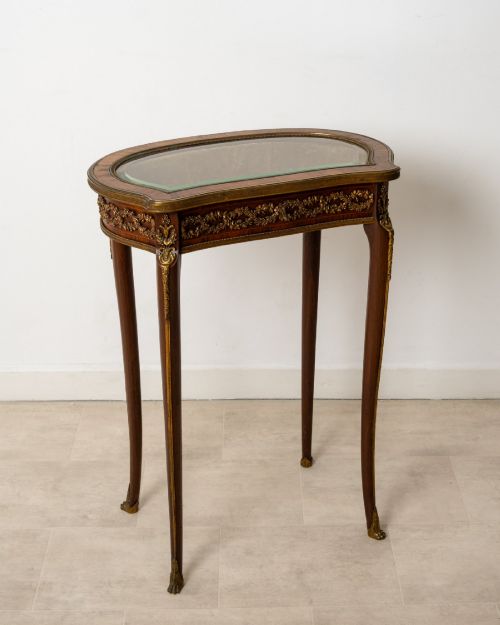
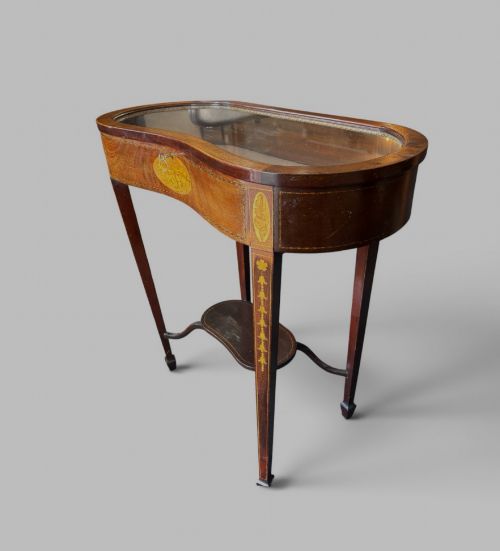


Shadow Box Side Table
A shadow box side table combines surface utility with a glazed cabinet to show off small treasures beneath the top.
Shadow Box Side Table
A shadow box side table serves as both a functional piece of furniture and a miniature showcase for personal collections. These tables appear in forms such as display tables, bijouterie tables, and bijouterie cabinets.
Buyers are most likely to encounter Edwardian examples fashioned from mahogany, often enhanced with satinwood inlay or brass mounts. Other variations span Victorian and George III periods, alongside French Louis XV revival pieces.
The defining characteristic across these items is the glazed compartment designed to protect and exhibit items like medals, coins, and small trinkets. They function equally well beside a chair or sofa while keeping precious objects visible.
How they were made
Cabinet makers utilised solid mahogany and rich veneers for the primary structure, applying satinwood inlay to create delicate contrast and geometric patterns on the wood. Brass and ormolu mounts provide structural definition and decorative accents along the legs and glass frames.
Glass panels are fitted securely into wooden lids or hinged tops to allow easy access to the lined interior compartment. Velvet or fabric lining cushions the base of the display area to protect delicate artefacts placed inside.
The listings here span the George III, Victorian, and Edwardian periods, utilising mahogany, satinwood, and glass.
What varies in quality
The refinement of the timber selection and the precision of the satinwood inlay set finer pieces apart from standard workshop production. Subtle details in the cast brass or ormolu mounts indicate the amount of artisan labour invested in the construction.
Proportion and the integration of the glazed compartment into the overall frame dictate the aesthetic success of the furniture. Superior examples maintain structural elegance while securely housing the display section without appearing heavy.
The Shadow Box Side Table Glossary
- Bijouterie table
- A specialised display table featuring a glass-topped compartment specifically designed for housing small valuables and curiosities. These pieces became particularly popular during the nineteenth and early twentieth centuries.
- Ormolu
- Gilt bronze ornamentation applied to furniture for decorative effect. The technique involves a mercury gilding process on a bronze base.
- Satinwood
- A lustrous, durable timber prized for its yellow colour and fine grain. It frequently serves as a contrasting veneer for inlay work on mahogany furniture.
- Display table
- A piece of furniture incorporating a glass viewing area into the top surface. It bridges the gap between conventional utilitarian tables and cabinets.
Shadow Box Side Table: Frequently Asked Questions
What is a shadow box side table used for?
These tables provide a convenient surface for everyday items while incorporating a glazed compartment underneath for displaying small collections. They allow owners to exhibit medals, pocket watches, and curiosities securely within living spaces.
By keeping delicate items enclosed, the glass top protects objects from dust and handling while remaining fully visible. This dual function makes them practical furniture choices for drawing rooms and sitting areas.
How do I date a mahogany display table?
Dating relies on examining the timber preparation, the style of inlay, and structural characteristics associated with specific periods. Edwardian and Victorian pieces often show specific veneer techniques and leg shapes distinct from earlier George III examples.
French revival pieces from the nineteenth century frequently incorporate ormolu mounts and distinctive curved lines. Comparing the secondary timbers and construction methods helps narrow down the decade of production.
What materials are used in these tables?
Mahogany forms the primary structural timber for the vast majority of these display pieces, paired with satinwood for contrasting inlay work. Glass panels create the top viewing window, supported by brass or ormolu mounts.
Internal spaces are typically lined with velvet or fabric to cushion the base of the display compartment. These material combinations reflect the decorative priorities of Edwardian and Victorian cabinet makers.
Where should I place a bijouterie table?
These tables sit comfortably beside armchairs, sofas, or in reception rooms where natural light enhances the glazed display compartment. Their modest footprint allows them to function effectively as traditional side tables.
Positioning them away from direct, harsh sunlight helps protect the internal fabric lining and sensitive collectibles from fading. They serve as focal points for conversation when populated with interesting small artefacts.