
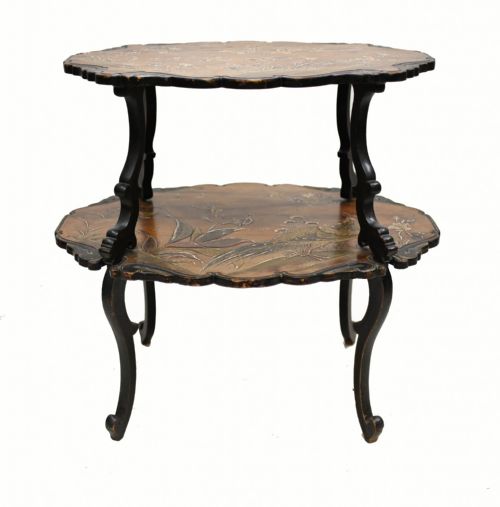
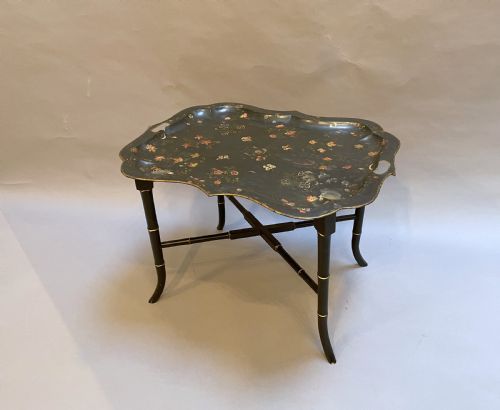


Victorian Japanned Side Table
A victorian japanned side table brings black lacquer and gilt Chinoiserie scenes into a room through nineteenth-century craft.
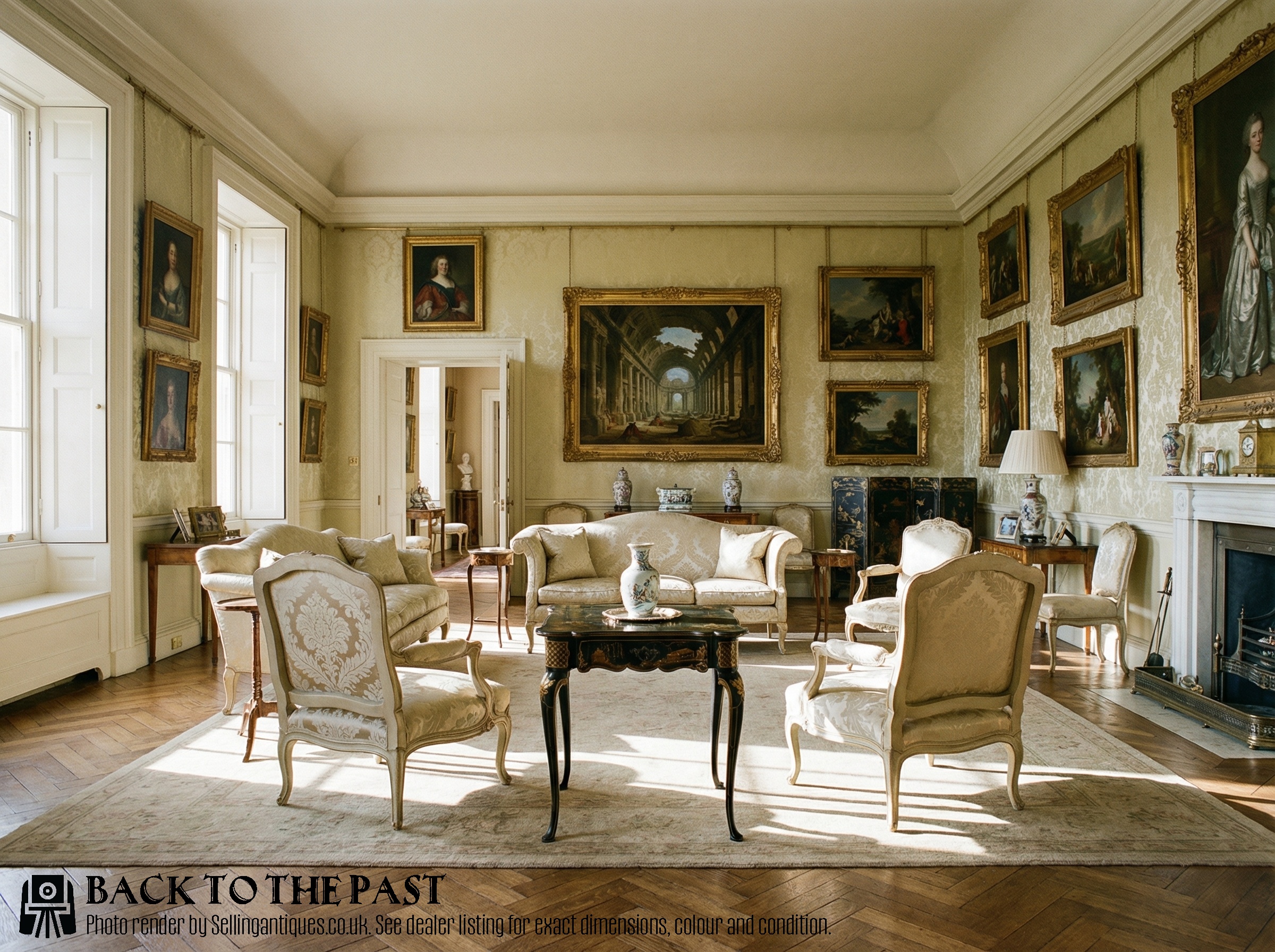
Victorian Japanned Side Table
A victorian japanned side table sits low beside a chair or sofa, designed for occasional use to hold books, work baskets, or tea. These pieces emerge primarily from the nineteenth century, running from the eighteen-seventies through to nineteen-twenty, and include related forms such as sewing tables, tray tables, and card tables.
The materials span wood, ebonised wood, papier-mâché, and bamboo, dressed in lacquer and gold leaf. Many examples adopt the Aesthetic Movement or Japonisme styles, blending British furniture forms with decorative schemes inspired by Asian export goods.
Buyers will find two main construction types on this page. One relies on traditional timber framing finished with heavy black lacquer and hand-painted decoration, while the other builds its structure from tiger bamboo combined with lacquered panels or shelves.
How they were made
The makers of these tables built foundational structures from timber, papier-mâché, or bamboo. Papier-mâché was pressed and dried into rigid trays or table tops, whilst bamboo stalks were selected for their straightness and natural grain before being assembled into two-tier frames.
Surface decoration relied on japanning, a European imitation of Asian lacquerwork. Craftsmen applied successive layers of dark varnish or lacquer to wood, paper, or metal bases, then hand-painted oriental motifs in gold leaf and polychrome pigments.
Details such as brass fittings, ebonised wood supports, and tripartite bases added stability and visual weight to lighter bamboo or papier-mâché frames.
Listings feature items spanning from eighteen-hundred through to the nineteen-twenties, incorporating wood, bamboo, lacquer, papier-mâché, and brass.
What varies in quality
Quality rests upon the execution of the hand-painted decoration and the integrity of the lacquered surface. Tables with crisp, detailed Chinoiserie figures and intact gold leaf sit above pieces where heavy wear has obscured the original brushwork.
The choice of structural material also defines the tier of the piece. Robust papier-mâché trays mounted on sturdy stands and tightly bound bamboo frames with original lacquered inserts represent more accomplished manufacturing than later replacements or loose joints.
The Victorian Japanned Side Table Glossary
- Japanning
- A European technique of finishing furniture with dark varnish and metallic decoration to imitate Asian lacquerware. This method was widely used across nineteenth-century occasional tables.
- Chinoiserie
- European artistic style reflecting Chinese motifs and landscapes. It appears frequently in the hand-painted decoration of black lacquered surfaces.
- Papier-mâché
- A composite material made from paper pulp or layers of paper bound with glue, pressed into moulds, and baked. It provided a smooth, durable base for lacquered table tops.
- Japonisme
- The influence of Japanese art on Western design during the late nineteenth century. This aesthetic informed many bamboo and lacquer side tables.
- Bijouterie table
- A glass-topped display table designed for showing small ornaments and curiosities. Some examples incorporate bamboo frames and lacquered panels.
Victorian Japanned Side Table: Frequently Asked Questions
What is a japanned table?
A japanned table is a piece of furniture finished with a simulated Asian lacquer using European varnishes and paints. These tables typically feature dark backgrounds decorated with gold leaf and hand-painted scenes.
They became popular in Britain during the Victorian period as part of a wider fascination with eastern design and Chinoiserie interiors.
How do I care for a lacquered table?
Keep lacquered and japanned surfaces away from direct sunlight and excessive heat, which can cause the varnish to crack. Dust gently with a dry, soft cloth.
Avoid using liquid polishes, abrasive cleaners, or water on the hand-painted gold decoration, as moisture can damage the fragile finish.
Are bamboo tables sturdy?
Nineteenth-century bamboo tables are surprisingly resilient when the natural cane bindings remain tight and undamaged. The bamboo stalks are selected for strength and joined securely to create light occasional furniture.
However, they are designed for holding lighter items like books or cups rather than heavy loads.
What is the difference between Chinoiserie and Japonisme?
Chinoiserie draws upon Chinese artistic traditions, featuring imaginary oriental landscapes, pavilions, and figures rendered in gold and dark lacquer. It has a long history in British decoration.
Japonisme reflects the later nineteenth-century influx of Japanese art, focusing on asymmetrical floral and natural arrangements, which strongly influenced Aesthetic Movement bamboo furniture.