




Lacquered Cabriole Leg Table
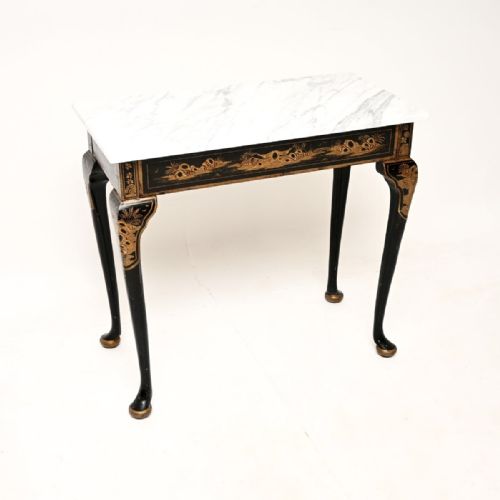
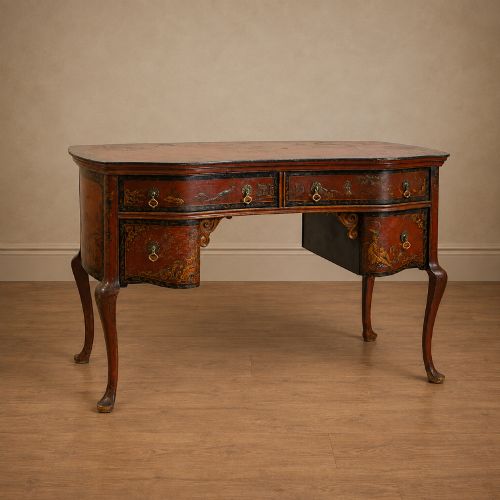
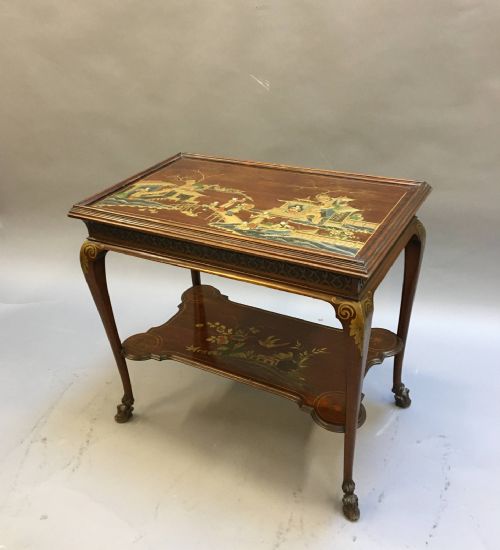
A lacquered cabriole leg table brings rich orientalist ornament and curving eighteenth-century silhouettes into a room, offering a functional surface with distinct artistic presence.
Lacquered Cabriole Leg Table
When you search for a lacquered cabriole leg table, you encounter a diverse group of occasional, side, and coffee tables shaped by distant design traditions. The pieces appearing here span from the nineteenth century through the 1930s, reflecting enduring revivals of Chinese taste and European Rococo forms.
The most frequent examples on this page are occasional and side tables decorated with Chinoiserie motifs, often exhibiting the characteristic double-curving leg profile derived from Queen Anne and Louis XV styles. You also find dressing tables, nesting sets, and console surfaces finished in black or red lacquer.
Origins range from English Victorian and Edwardian interpretations to Chinese productions and Kashmiri workshops. This variety means that while the core silhouette remains consistent, the decorative vocabulary shifts noticeably between European homage and Asian execution.
Materials and construction methods
Construction relies upon traditional hardwoods and softwoods, sometimes surfaced with walnut, which provide stable foundations for the complex finishing processes required. Brass hardware appears selectively, while marble insertions occasionally form inset table tops.
The defining surface treatment involves multiple layers of lacquer applied to wood, building up a hard, smooth ground that accepts painted decoration or carved relief. Artisans then applied gold leaf and gilt detailing to render intricate figures, landscapes, and floral scenes across the panels.
Materials recorded across the inventory include hardwoods, marble, brass, and traditional gold leaf applied over black and red lacquer.
Assessing quality in lacquered tables
Quality rests primarily on the depth and execution of the lacquer work and the refinement of the cabriole leg carving. Superior examples display meticulous hand-painted detail in gold leaf with crisp linework, whereas simpler pieces show coarser, stencilled decoration.
Structural integrity of the curving leg joints dictates longevity, as the graceful S-bend bears significant weight downwards. Finer pieces demonstrate seamless integration between the wooden frame and the glossy lacquer surface without premature crazing or extensive touch-ups.
The Lacquered Cabriole Leg Table Glossary
- Cabriole leg
- A furniture leg that curves outward at the knee and tapers inward toward the foot, mimicking animal limbs in the manner of classical and Rococo design.
- Chinoiserie
- European decorative style from the seventeenth and eighteenth centuries that imitated Chinese artistic motifs and techniques.
- Lacquer
- A durable resin finish applied in successive layers to wood objects, creating a glossy, protective surface suitable for detailed painting.
- Gilt
- A thin layer of gold leaf or gold paint applied to the surface of wood or metal to simulate solid gold enrichment.
- Console table
- A wall-mounted or freestanding table designed to stand against a vertical surface, frequently featuring decorative legs and a marble top.
Lacquered Cabriole Leg Table: Frequently Asked Questions
How do I clean a lacquered table?
Dust gently with a soft, dry microfibre cloth to prevent scratching the delicate surface finish. Avoid all chemical cleaning sprays, abrasive pads, and excessive moisture, which can penetrate hairline cracks in the lacquer.
Keep the table away from direct sunlight and heat sources to prevent the wood underneath from expanding and causing the lacquer layers to craze or lift over time.
Are these tables sturdy enough for daily use?
Most occasional and coffee table formats are built to withstand normal everyday placement of lamps, books, and cups. However, the delicate decorative surfaces require care to avoid deep scratching from heavy ceramic or metal objects.
The curved joints on cabriole legs are structurally sound when well-maintained, but excessive weight or dragging across carpets can stress the ankles of the legs.
How do I date a Chinoiserie lacquer table?
Examine the secondary woods beneath the lacquer and inside the drawers, alongside the style of construction and fixings used. Victorian and Edwardian revivals often incorporate machine-cut timber or later brass screws, whereas nineteenth-century pieces display hand-cut joinery.
The palette and painting style also offer clues, as nineteenth-century Chinese export pieces differ perceptibly from British Edwardian interpretations of East Asian ornament.