



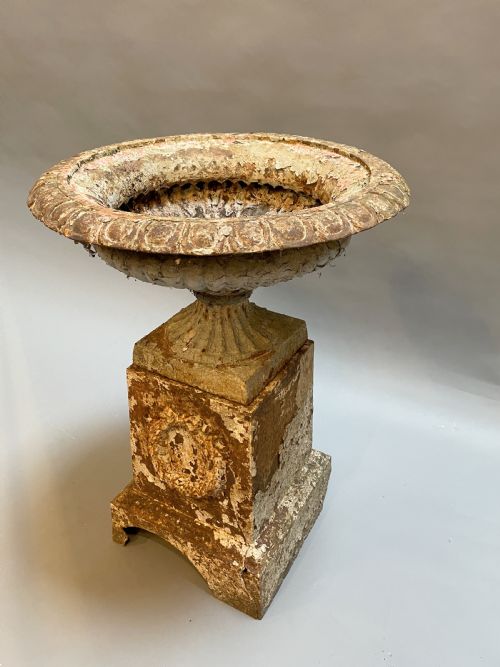
Victorian Iron Urns
Victorian iron urns bring heavy classical proportion to formal gardens and terraces through robust cast metal forms.
Victorian Iron Urns
Victorian iron urns represent the marriage of classical antiquity and nineteenth-century industrial founding. When searching for victorian iron urns, buyers encounter heavy garden vessels modelled on ancient stone and terracotta archetypes, predominantly cast in iron.
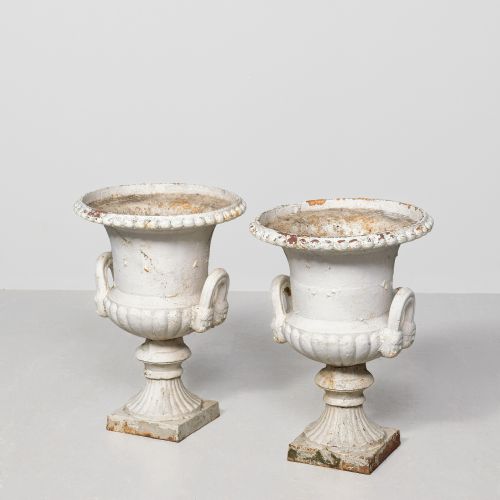
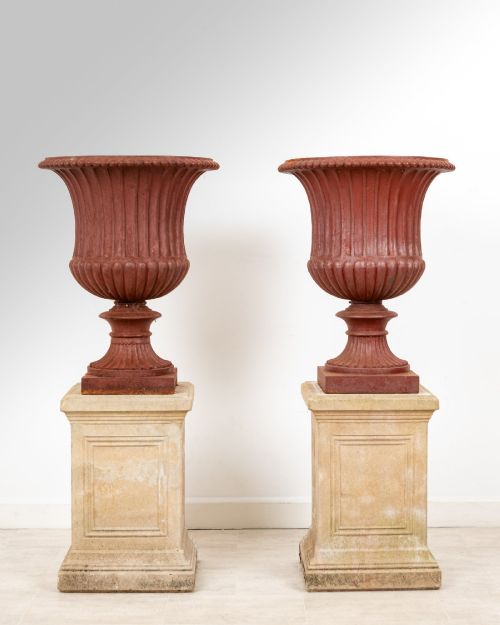
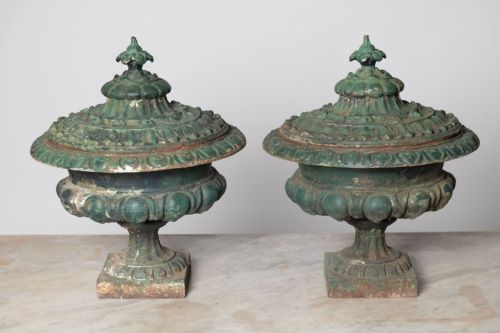
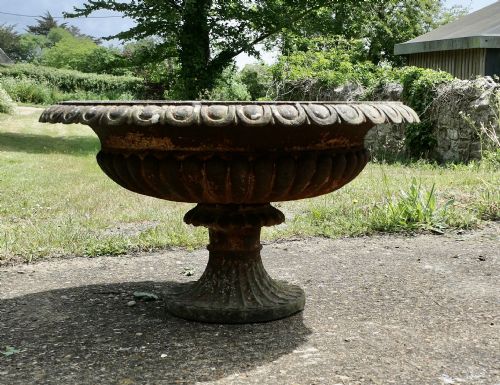
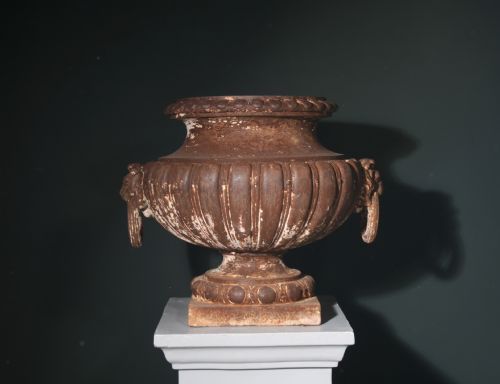
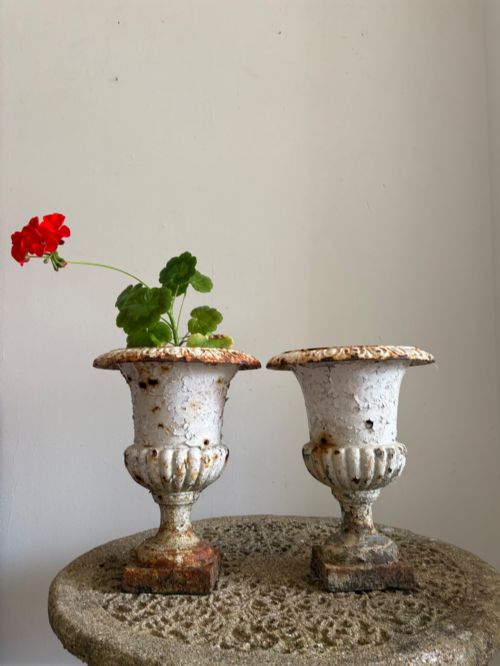
The campana shape dominates the selection, featuring an inverted bell form on a pedestal base. These pieces frequently appear in pairs, designed to anchor formal paths, terraces, and garden entrances.
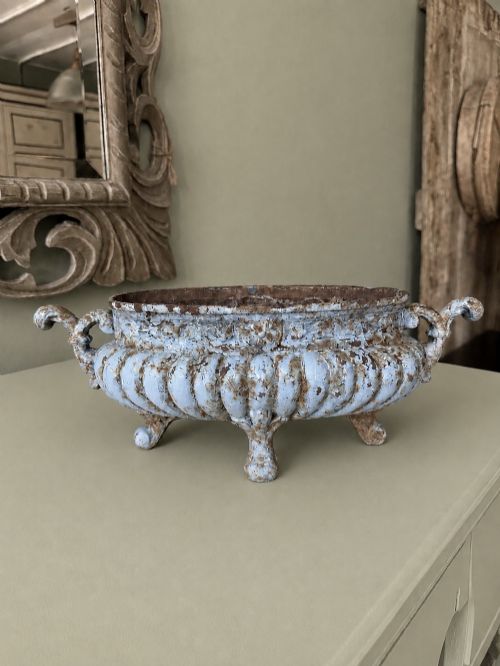
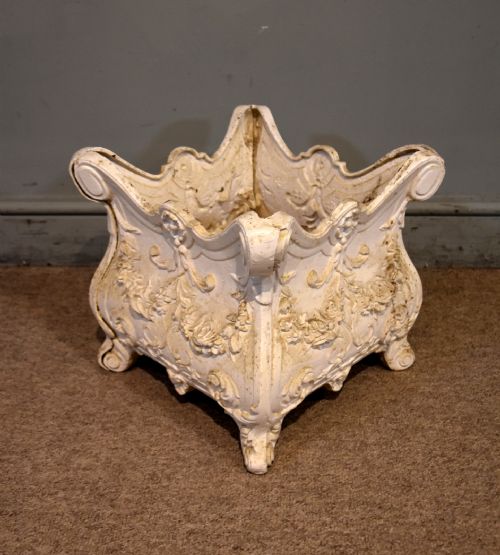
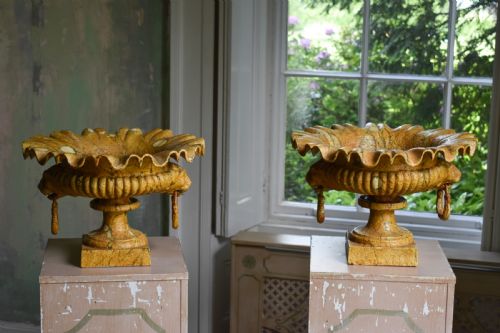
Alongside standard garden planters, the selection includes tazza forms, pedestal stands, and occasional French regional variations. Production spans the nineteenth century through to the early twentieth century, utilising durable metal alloys suited for permanent outdoor placement.
How they were made
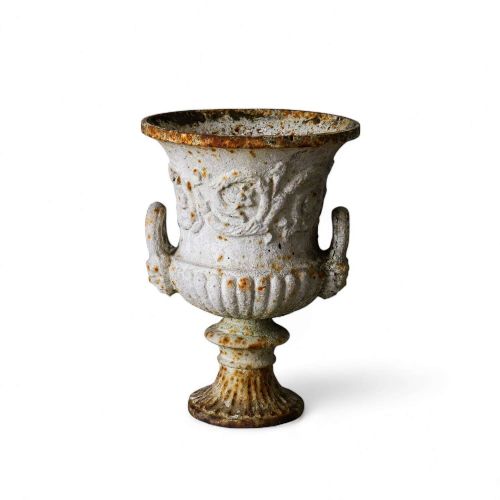
Foundries produced these vessels by pouring molten metal into sand moulds, a technique that allowed for repeated casting of complex classical ornament. Cast iron provided the primary structural body, offering immense strength and the ability to capture crisp relief details such as acanthus leaves and fluting.
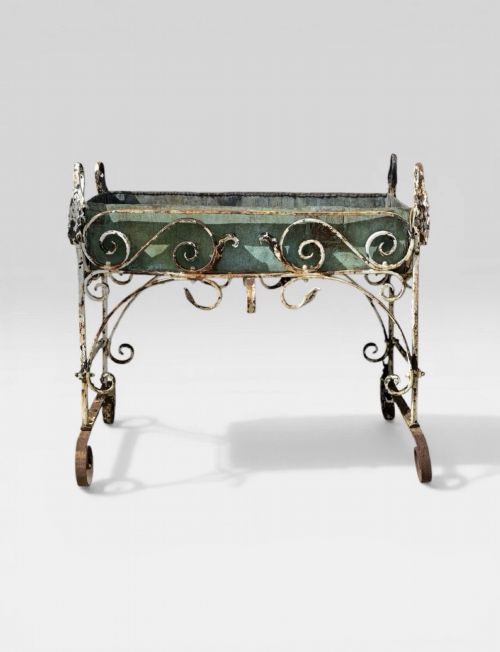
Wrought iron appears occasionally in strapwork planters, formed by manual forging and bending rather than casting. Finished pieces often received protective coatings of paint or weathering naturally over decades of exterior exposure.
What varies in quality
The distinction between ordinary foundry output and superior work rests on the crispness of the cast relief and the weight of the metal. Finer examples display sharply defined acanthus foliage, smooth finishing on unadorned surfaces, and well-proportioned pedestals.
Makers known for exceptional casting quality, such as Coalbrookdale or Andrew Handyside, incorporated maker marks or registration numbers that elevate the historical interest of the object. The presence of original matching plinths and surviving early painted surfaces also distinguishes superior survivals from later or mismatched assemblies.
Coalbrookdale·Andrew Handyside·Val d Osne Foundry
The Victorian Iron Urns Glossary
- Campana
- A bell-shaped garden urn with an everted rim and a tapering lower body resting on a pedestal. This silhouette derives directly from ancient Roman marble vessels.
- Tazza
- A shallow cup-shaped garden vessel mounted on a high stem and foot. These pieces are typically wider and shallower than traditional campana urns.
- Acanthus
- A classical leaf ornament modelled on the Mediterranean plant of the same name. Foundries frequently cast this foliage around the lower bowl of garden urns.
- Plinth
- A heavy square base or pedestal supporting the urn. Many garden pieces were designed to be elevated on these matching stone or iron blocks.
- Jardiniere
- An ornamental pot or stand intended for holding plants or floral arrangements. These terms often overlap with standard garden urn listings.
Victorian Iron Urns: Frequently Asked Questions
Can victorian iron urns stay outside all year?
These robust metal vessels are engineered specifically for exterior garden display and withstand seasonal weathering without structural failure.
Freezing water trapped inside unplanted bowls can occasionally cause stress, so proper drainage is essential during winter months.
How do I identify a campana urn?
The defining characteristic is an inverted bell profile with a wide flared rim that tapers smoothly toward a narrow base.
They frequently feature classical decorative relief around the exterior bowl and rest upon square plinths or stepped pedestals.
Are these urns extremely heavy?
Solid nineteenth-century metal castings possess considerable weight due to the density of iron and thick walls required for structural integrity.
Moving larger specimens typically requires mechanical lifting equipment or multiple people to prevent damage to the material or surroundings.
What is the difference between an urn and a planter?
Traditional urns follow classical stemmed architectural forms with distinct bowls, stems, and bases derived from ancient stone vessels.
Planters often encompass simpler cylindrical, rectangular, or trough-like containers intended strictly for holding vegetation rather than displaying classical proportions.