



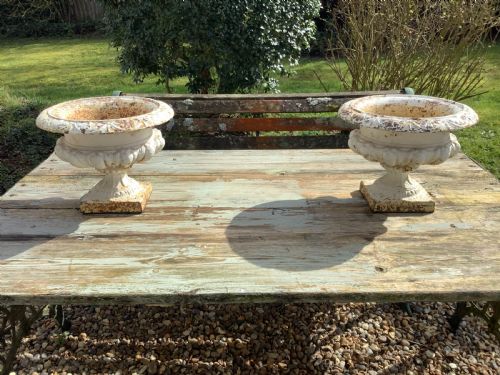
Classical Iron Urn
A classical iron urn brings neoclassical proportion and heavy garden presence, modelled on antique forms from the 19th century.
Classical Iron Urn
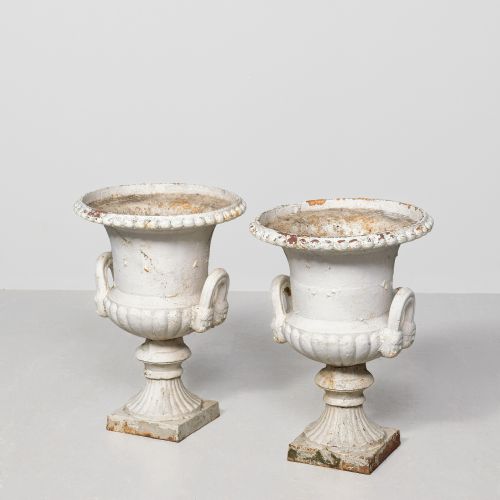
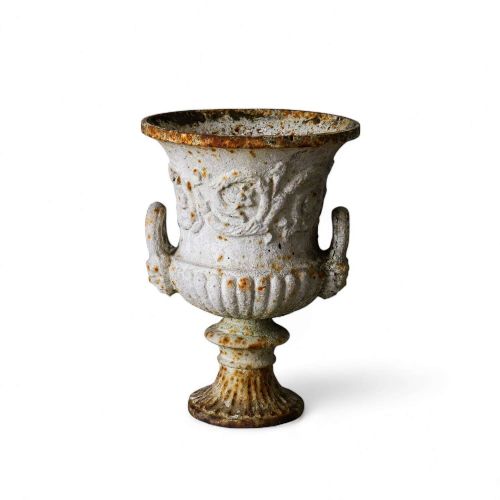
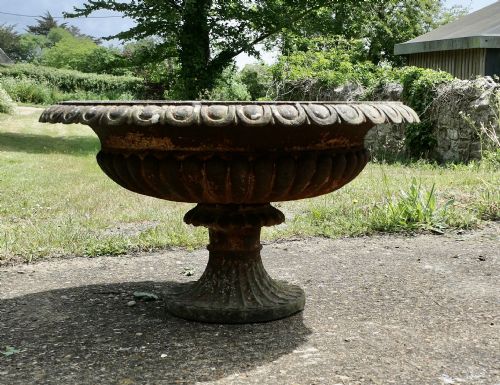
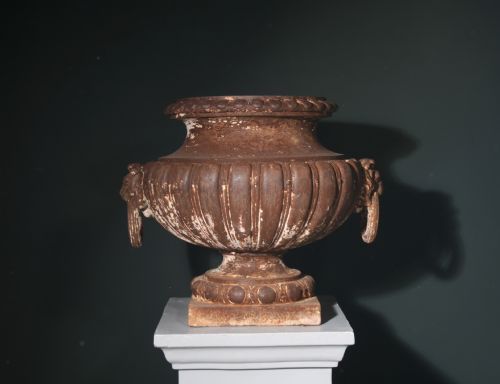
A classical iron urn draws on nineteenth-century garden and architectural designs, taking the form of campana vessels, tazza bowls, or garden planters set upon plinth bases. These pieces reflect neoclassical and Victorian revival aesthetics, mirroring ancient pottery and stone prototypes in heavy metal.
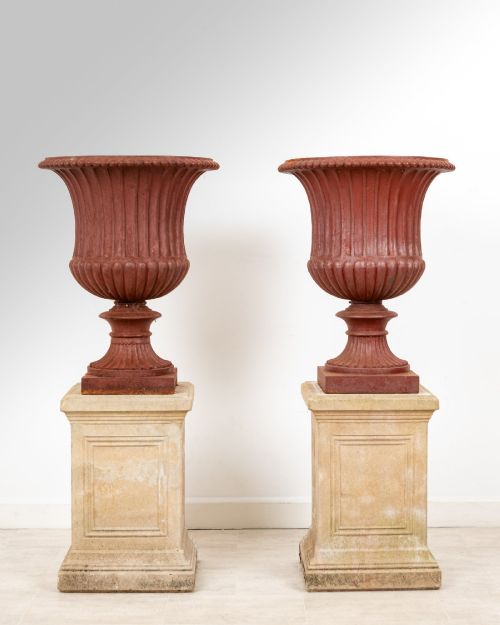
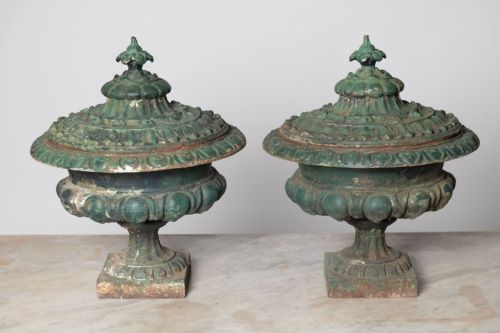
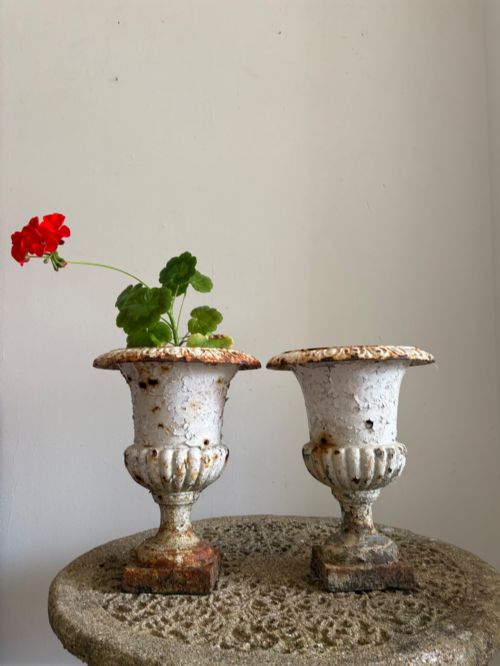
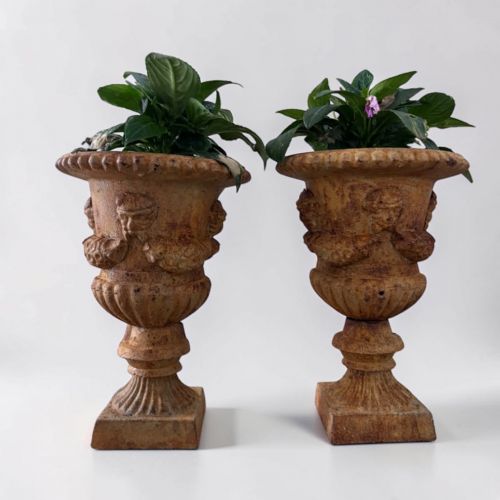
Most examples found in these listings date from the Victorian period through to the early twentieth century, spanning styles from Regency to French neoclassical. They appear frequently as matched pairs intended for garden terraces, gateways, or entranceways.
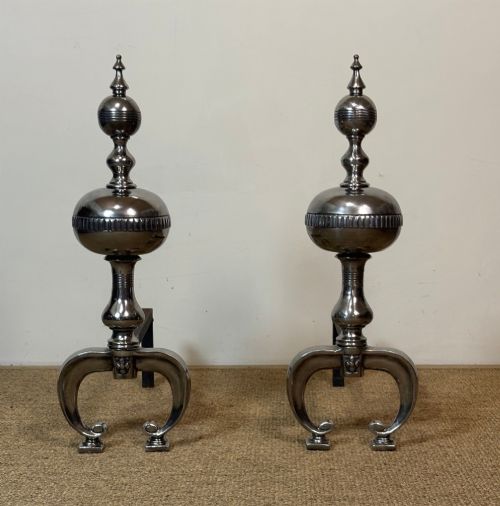
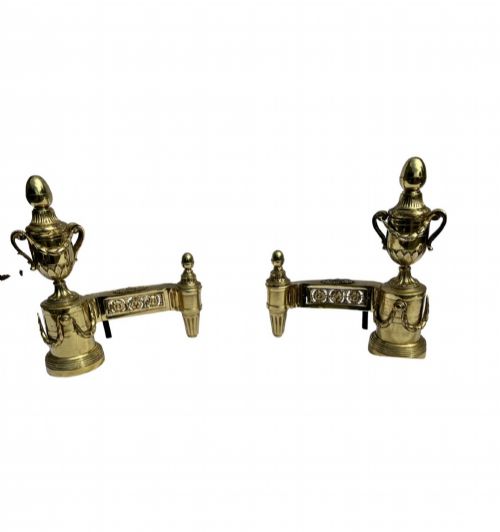
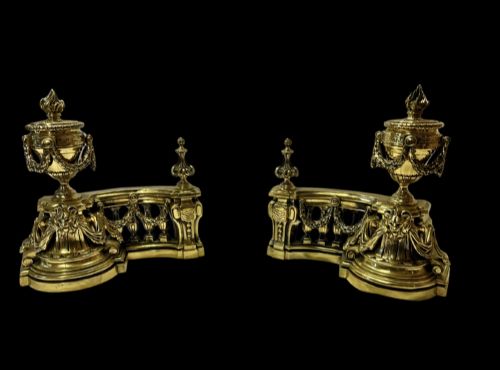
Beyond garden urns and planters, the category also encompasses related ironwork such as fire dogs and fireplace accessories sharing the same classical vocabulary. The dominant form on this page remains the cast iron campana urn, often mounted on stone pedestals or integral plinths.
How they were made
Foundries utilised sand-casting techniques to pour molten metal into moulds, producing thick-walled vessels with crisp relief details such as acanthus leaves and gadrooned borders. Prominent makers like Falkirk Carron, Coalbrookdale, Andrew Handyside, and the Val d'Osne foundry employed these methods to achieve durable architectural ornaments.
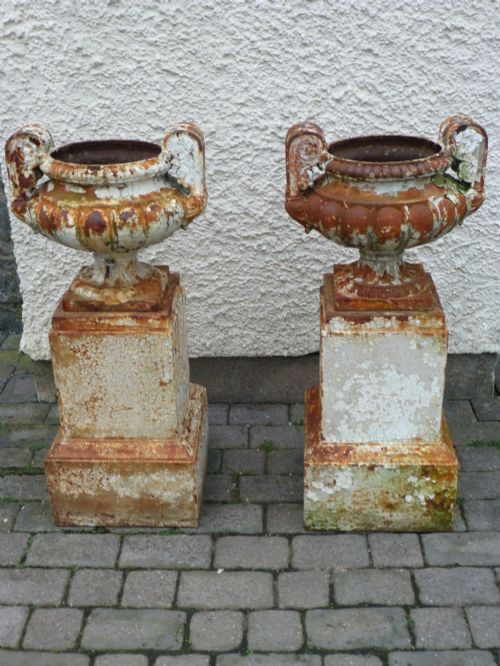
The primary material is cast iron, frequently complemented by painted surfaces, stone pedestals, or brass and steel components found in specific fireplace pieces. Many surviving examples retain weathered paint finishes or oxidation that chart their decades outdoors.
Some nineteenth-century foundry catalogues offered urns with optional lids, turning a garden planter into an imposing classical monument.
What varies in quality
Quality rests in the crispness of the cast relief ornament, where superior pieces exhibit sharply defined foliage, classical motifs, and smooth casting surfaces without excessive pitting. The presence of founders' marks or attributed foundry origins further elevates a piece.
Proportion and completeness also determine standing, particularly whether an urn retains its original lid, matching plinth base, or stone pedestal. Heavy, thick-walled castings show a sturdiness that lighter utilitarian pots lack.
Falkirk Carron foundry·Coalbrookdale·Andrew Handyside·Val d'Osne foundry
The Classical Iron Urn Glossary
- Campana
- A bell-shaped vessel form typical of classical garden urns. It flares outward from a narrow base toward a wide rim.
- Tazza
- A shallow cup or basin mounted on a stem and foot. This form appears frequently among nineteenth-century garden urns.
- Plinth base
- A square or rectangular block supporting an urn. Many period examples sit upon these original masonry or iron plinths.
- Gadrooned
- Ornamented with a series of convex curves or flutes. This decorative moulding often encircles the bowl of an urn.
- Neoclassical
- A style reviving classical antiquity in architecture and decorative arts. It informs the symmetry and decorative motifs of Victorian ironwork.
Classical Iron Urn: Frequently Asked Questions
How were classical iron urns used originally?
Nineteenth-century landowners placed these heavy iron vessels along garden terraces, flanking stone pathways, or marking estate gateways as architectural focal points. They served as ornamental planters for seasonal planting or stood empty as sculptural elements.
Indoors, smaller versions functioned as table urns or decorative fireplace accessories, transferring classical motifs from the garden into formal domestic rooms.
Are these urns suitable for outdoor use?
Cast iron is exceptionally durable and withstands outdoor weather across decades, making these pieces well suited for modern gardens and terraces. Many retain historical layers of paint or natural weathering that protect the metal.
Placing them on stone pedestals or plinth bases keeps the iron clear of standing ground moisture, preventing prolonged dampness at the base.
How do I identify a Victorian iron urn?
Victorian examples typically feature heavy cast iron construction displaying neoclassical motifs such as acanthus leaves, gadrooning, or classical campana proportions. Examining the interior texture and casting seams reveals nineteenth-century sand-casting methods.
Many pieces bear foundry stamps or stylistic markers pointing to notable English and French makers from the eighteen-seventies onward.
Do classical iron urns come with pedestals?
Some pieces are paired with their original stone pedestals, iron plinths, or matching bases as catalogued by period foundries. These matched sets provide the correct elevation and architectural balance intended by the maker.
Other urns are designed to stand alone or mount directly onto existing garden masonry and architectural stone blocks.