
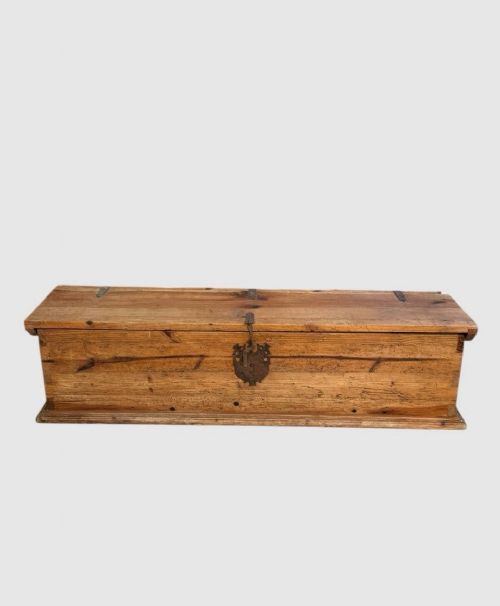
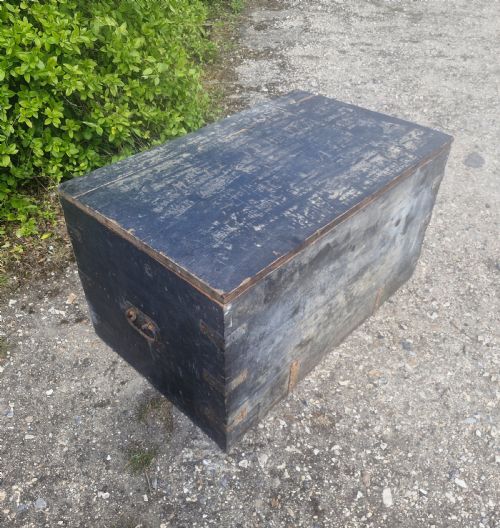


Victorian Iron Coffer
A victorian iron coffer brings heavy-duty metal straps and substantial timber storage straight into modern rooms, offering robust security and period character.
Victorian Iron Coffer
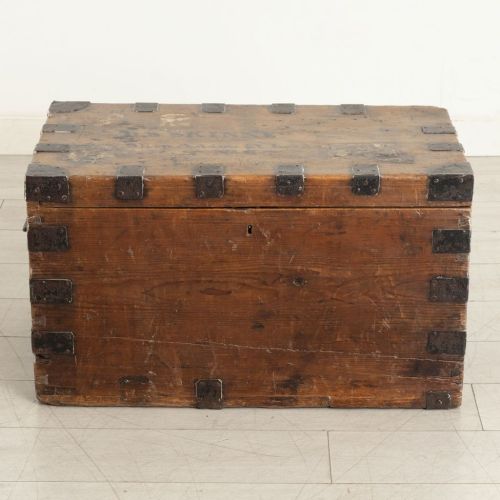
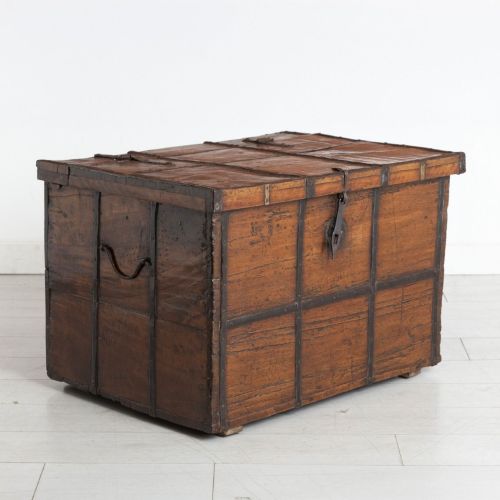
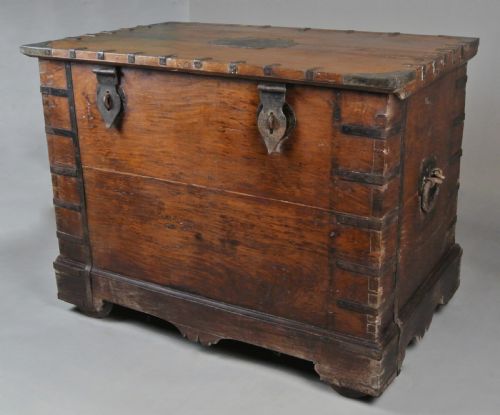
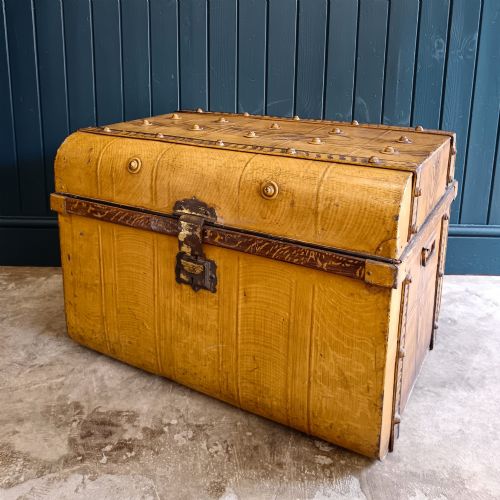
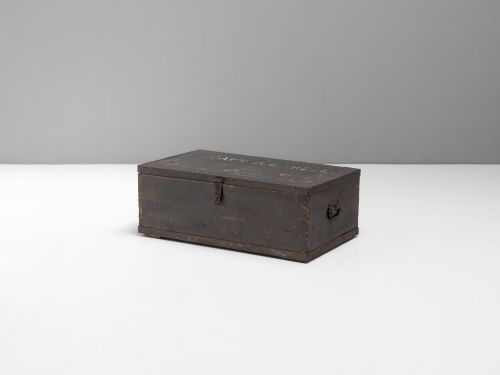
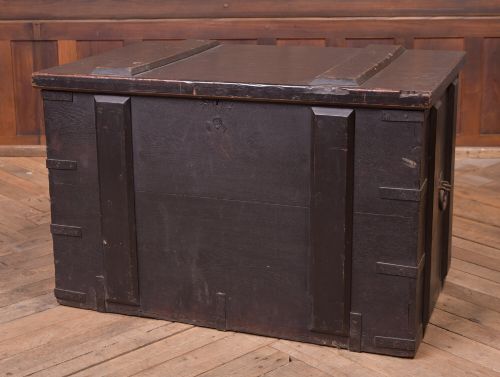
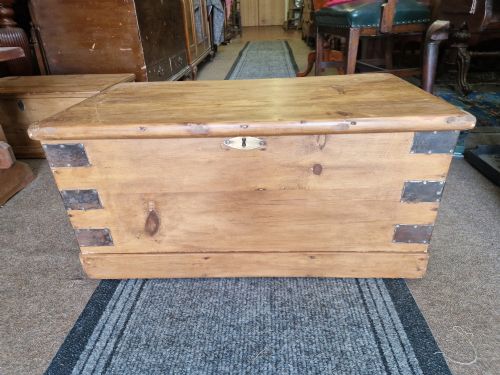
A victorian iron coffer encompasses heavy timber storage chests and travel trunks reinforced with iron banding, corner braces, and secure locks. These vessels served wealthy households, military personnel, and travelling merchants who needed to protect silver, documents, and personal belongings during transit or at home.
Buyers browsing this selection will encounter pine, oak, and teak carcases bound in iron or steel, often bearing the original carrying handles and internal compartments. Formats range from dome-top travelling trunks to heavy silver chests and reinforced log bins dating from the nineteenth century.
How They Were Made
Carpenters constructed the primary bodies from solid timbers such as pine, oak, elm, or teak, joining boards with dovetail or rebate techniques to withstand heavy loads. Blacksmiths and metalworkers then applied iron strapwork, corner brackets, and heavy locks, securing the plates with numerous hand-beaten rivets.
Many examples received protective coats of paint, faux-wood finishes, or brass hardware, while interior compartments utilised baize-lining or fitted wooden trays designed to hold specific household silver or travel goods.
Current listings feature robust pieces fashioned from oak, pine, and teak, complemented by iron, brass, and painted metal finishes.
What Varies in Quality
The distinction between standard utility storage and top-tier pieces lies in the choice of cabinet timber and the complexity of internal fittings. Oak and teak carcases with original compartmentalised trays and functioning lever locks command higher regard than plain pine transport boxes.
Survival of original surface treatments, maker stamps, and mounting hardware determines the integrity of an iron coffer, distinguishing items preserved in domestic service from heavily battered travelling gear.
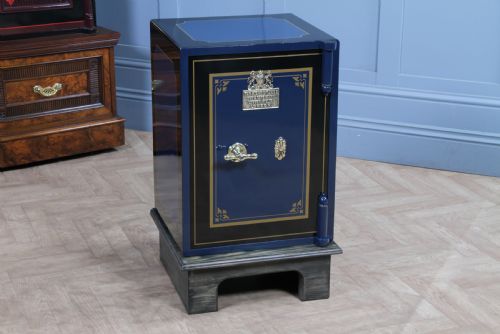
Tanns Defiance London·Elkington
The Victorian Iron Coffer Glossary
- Silver chest
- A heavy timber box reinforced with iron straps and fitted internally to hold flatware and holloware securely. These containers often retain retailer plaques from prominent silversmiths.
- Campaign trunk
- A portable storage box constructed for military officers on the move, frequently equipped with recessed brass handles and robust iron banding. These chests break down or withstand rough transport conditions.
- Dowry chest
- A large storage receptacle intended to hold household linens and personal possessions for marriage. They display substantial timber construction and heavy iron reinforcement.
- Log bin
- A deep container designed for holding firewood near a hearth, frequently utilising pine or oak panels banded in iron. Their robust build accommodates heavy logs and daily domestic use.
- Dovetail joint
- A method of interlocking timber boards by cutting interlocking wedge-shaped fingers. This technique provides exceptional tensile strength for heavy chests and trunks.
Victorian Iron Coffer: Frequently Asked Questions
What were iron coffers used for originally?
These strong containers protected valuables, important documents, and family silver during long journeys or within large country houses.
Owners relied on their heavy iron banding and secure locks to deter theft and withstand rough transport conditions.
How do I clean an iron coffer?
Wipe wooden surfaces gently with a dry cloth and apply occasional wax to maintain the grain and prevent the timber from drying out.
Treat iron straps with a light coat of oil to inhibit rust without disturbing the aged surface patina.
Where should I place one at home?
A sturdy trunk functions well as a coffee table in a living room while offering concealed storage for blankets and books.
They also serve effectively at the foot of a bed or as an entryway storage bench for shoes.
Are these chests waterproof?
While metal banding and tight timber construction offer protection against moisture and dust during transit, historic chests are not hermetically sealed.
They suit indoor environments where humidity remains relatively stable.